
















Copyright: ©Author(s) 2027.
World J Gastroenterol. Jan 7, 2027; 33(1): 123490
Published online Jan 7, 2027. doi: 10.3748/wjg.123490
Published online Jan 7, 2027. doi: 10.3748/wjg.123490
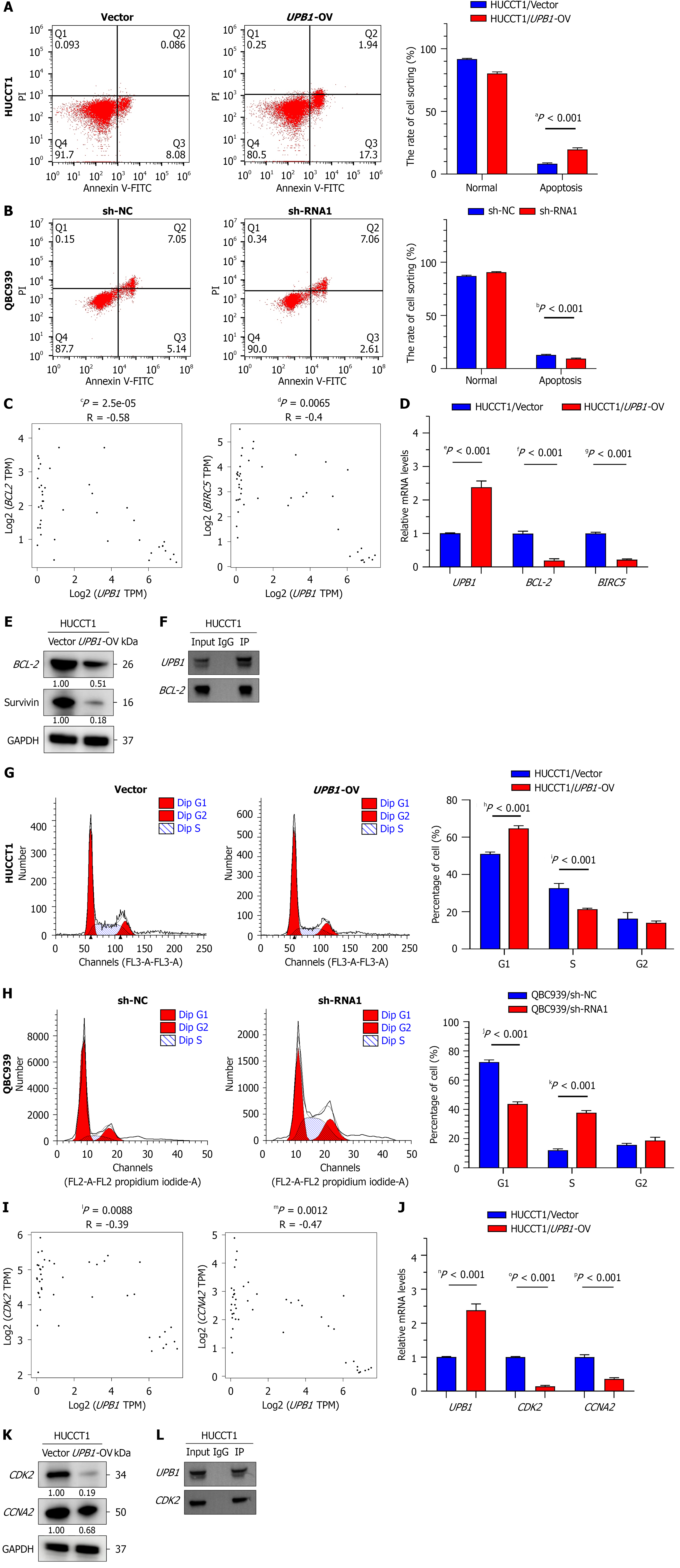
Figure 5 The overexpression of UPB1 arrests cell cycle and promotes apoptosis of cholangiocarcinoma cells.
A and B: Flow cytometry showed that UPB1 over-expression increased the percentage of apoptotic HUCCT1 cells (A), while UPB1 knockdown reduced the percentage of apoptotic QBC939 cells (B); C: Correlations of UPB1 expression with BCL-2 and BIRC5 in Gene Expression Profiling Interactive Analysis web server; D and E: Real-time quantitative polymerase chain reaction (RT-qPCR) (D) and western blot (E) validated the expression of BCL-2 and BIRC5 was down-regulated in HUCCT1/UPB1-over-expression cells; F: Co-immunoprecipitation (Co-IP) experiment confirmed the interaction of UPB1 with BCL-2 in HUCCT1 cells; G and H: Flow cytometry showed over-expression of UPB1 triggered G1/S blockade in HUCCT1 cells, while knockdown of UPB1 increased the percentage of S phase in QBC939 cells; I: Correlations of UPB1 expression with CDK2 and CCNA2 in Gene Expression Profiling Interactive Analysis web server; J and K: RT-qPCR (J) and western blot (K) validated UPB1 over-expression reduced the expression of CDK2 and CCNA2 in HUCCT1 cells; L: CO-IP experiment confirmed the interaction of UPB1 with CDK2 in HUCCT1 cells. OV: Over-expression; sh-NC: Short hairpin RNA negative control; shRNA: Short hairpin RNA; FITC: Fluorescein isothiocyanate; mRNA: Messenger RNA; TPM: Transcripts per million; GAPDH: Glyceraldehyde-3-phosphate dehydrogenase; IP: Immunoprecipitation; IgG: Immunoglobulin G.
- Citation: Sun ZH, Zeng BC, Sun J, Li BL, Ma ZY. Identification of UPB1 as a tumor suppressor associated with immune infiltration in cholangiocarcinoma. World J Gastroenterol 2027; 33(1): 123490
- URL: https://www.wjgnet.com/1007-9327/full/v33/i1/123490.htm
- DOI: https://dx.doi.org/10.3748/wjg.123490