
















Copyright: ©Author(s) 2027.
World J Gastroenterol. Jan 7, 2027; 33(1): 123490
Published online Jan 7, 2027. doi: 10.3748/wjg.123490
Published online Jan 7, 2027. doi: 10.3748/wjg.123490
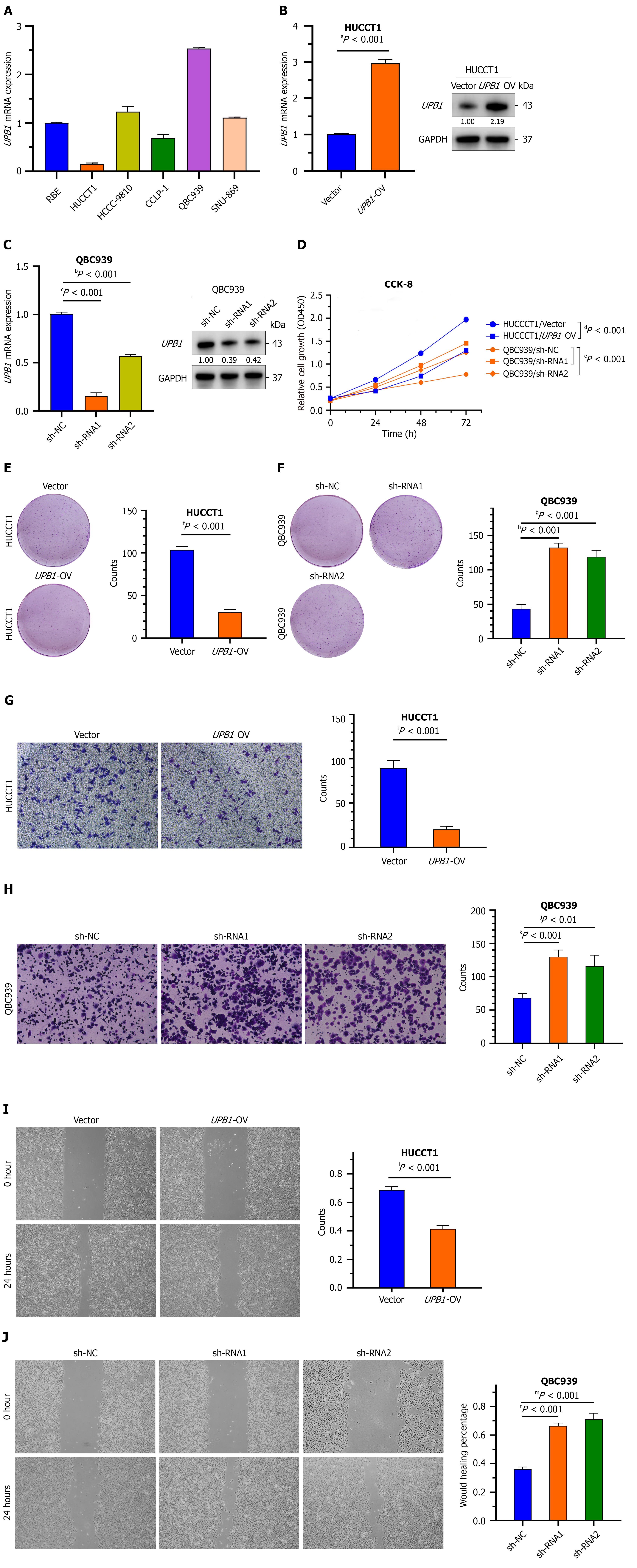
Figure 4 The overexpression of UPB1 inhibits the proliferation and migration of cholangiocarcinoma cells.
A: Real-time quantitative polymerase chain reaction (RT-qPCR) assays showed UPB1 was highly expressed in QBC939 cells, while relatively low-expressed in HUCCT1 cells among cholangiocarcinoma cell lines; B and C: RT-qPCR and western blot assays were used to assess the over-expression of UPB1 in HUCCT1 cells (B) and the silence of UPB1 in QBC939 cells (C); D-F: Cell counting kit-8 (D) and colony formation assays (E and F) showed that UPB1 over-expression reduced the proliferation of HUCCT1 cells, while UPB1 deletion promoted the proliferation of QBC939 cells; G-J: Transwell assays (G and H) and would healing assays (I and J) showed that UPB1 over-expression reduced the migration of HUCCT1 cells, while UPB1 deletion promoted the migration of QBC939 cells. Scale bars: 150 μm. mRNA: Messenger RNA; OV: Over-expression; GAPDH: Glyceraldehyde-3-phosphate dehydrogenase; sh-NC: Short hairpin RNA negative control; shRNA: Short hairpin RNA; CCK-8: Cell counting kit-8.
- Citation: Sun ZH, Zeng BC, Sun J, Li BL, Ma ZY. Identification of UPB1 as a tumor suppressor associated with immune infiltration in cholangiocarcinoma. World J Gastroenterol 2027; 33(1): 123490
- URL: https://www.wjgnet.com/1007-9327/full/v33/i1/123490.htm
- DOI: https://dx.doi.org/10.3748/wjg.123490