










Copyright: ©Author(s) 2027.
World J Gastroenterol. Jan 7, 2027; 33(1): 123426
Published online Jan 7, 2027. doi: 10.3748/wjg.123426
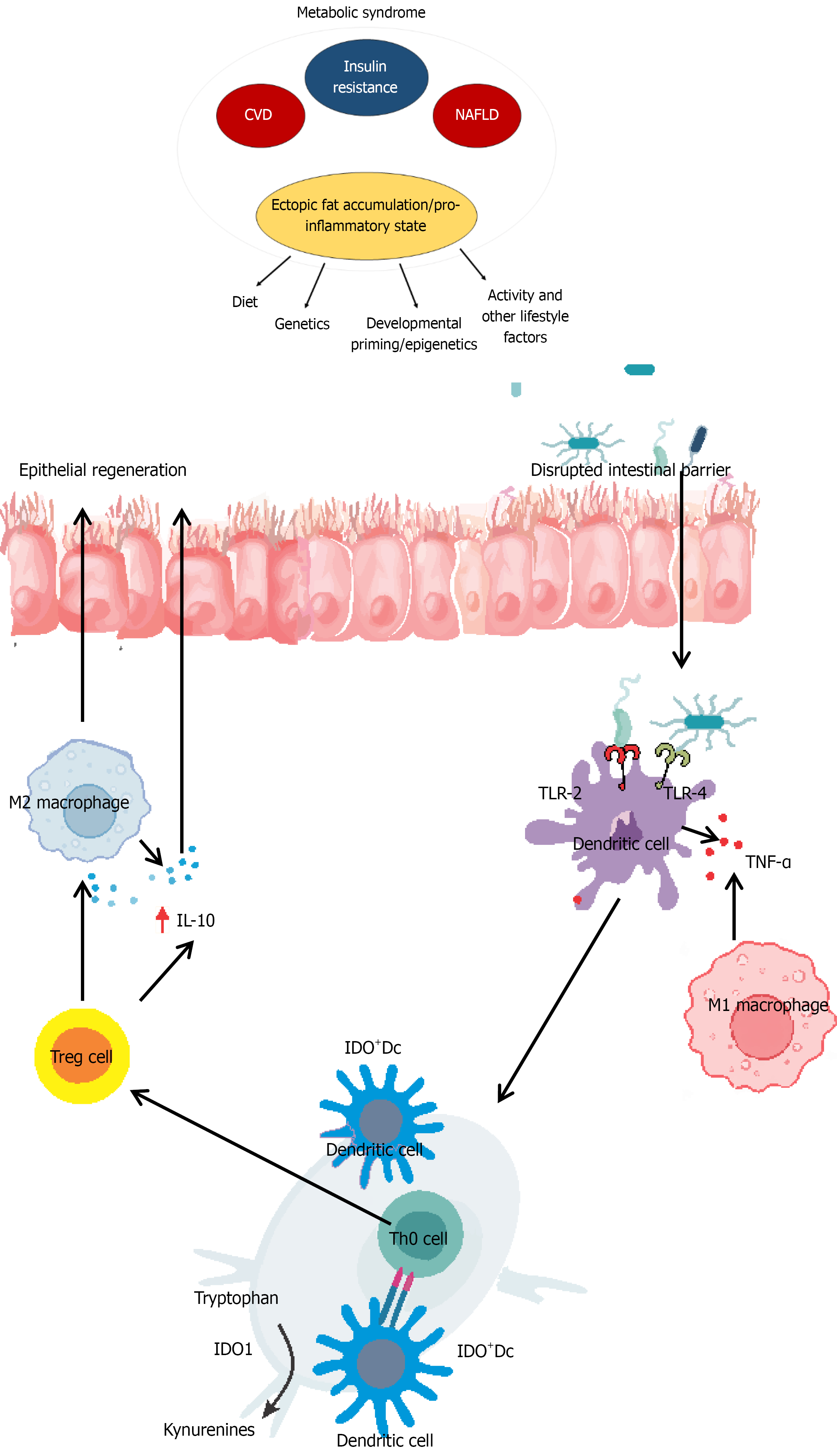
Figure 1 Proposed immunological features associated with a regulatory immune phenotype in ulcerative colitis patients with con comitant metabolic syndrome.
The figure summarizes immunological observations reported in patients exhibiting metabolic characteristics consistent with an early-stage metabolic syndrome profile, including increased frequencies of regulatory T cells (Tregs) and elevated interleukin-10 production. Dendritic cells may sense microbial components through Toll-like receptor (TLR)-2 and TLR-4 signaling pathways and contribute to Treg differentiation, potentially supporting an anti-inflammatory immune environment. Increased representation of M2 macrophages and markers associated with epithelial repair have also been observed. In parallel, lower activity of T helper cell (Th) 1- and Th17-associated immune responses was identified in comparison with patients lacking these immunometabolic features. CVD: Cardiovascular disease; NAFLD: Non-alcoholic fatty liver disease; IL: Interleukin; Treg: Regulatory T cells; IDO: Indoleamine 2,3-dioxygenase; DC: Dendritic cell; TLR: Toll-like receptor; Th0: T helper type 0 cells; TNF: Tumor necrosis factor.
- Citation: Jovanovic MM, Simovic Markovic BJ, Gajovic NM, Jovanovic MM, Jocic MV, Stojanovic BS, Corovic IF, Todorovic N, Jovanovic IP, Amedei A. Bitter side of sweet: A stage-dependent immunometabolic model linking metabolic syndrome and inflammatory bowel disease. World J Gastroenterol 2027; 33(1): 123426
- URL: https://www.wjgnet.com/1007-9327/full/v33/i1/123426.htm
- DOI: https://dx.doi.org/10.3748/wjg.123426