
















©Author(s) (or their employer(s)) 2026.
World J Gastroenterol. Mar 7, 2026; 32(9): 115131
Published online Mar 7, 2026. doi: 10.3748/wjg.v32.i9.115131
Published online Mar 7, 2026. doi: 10.3748/wjg.v32.i9.115131
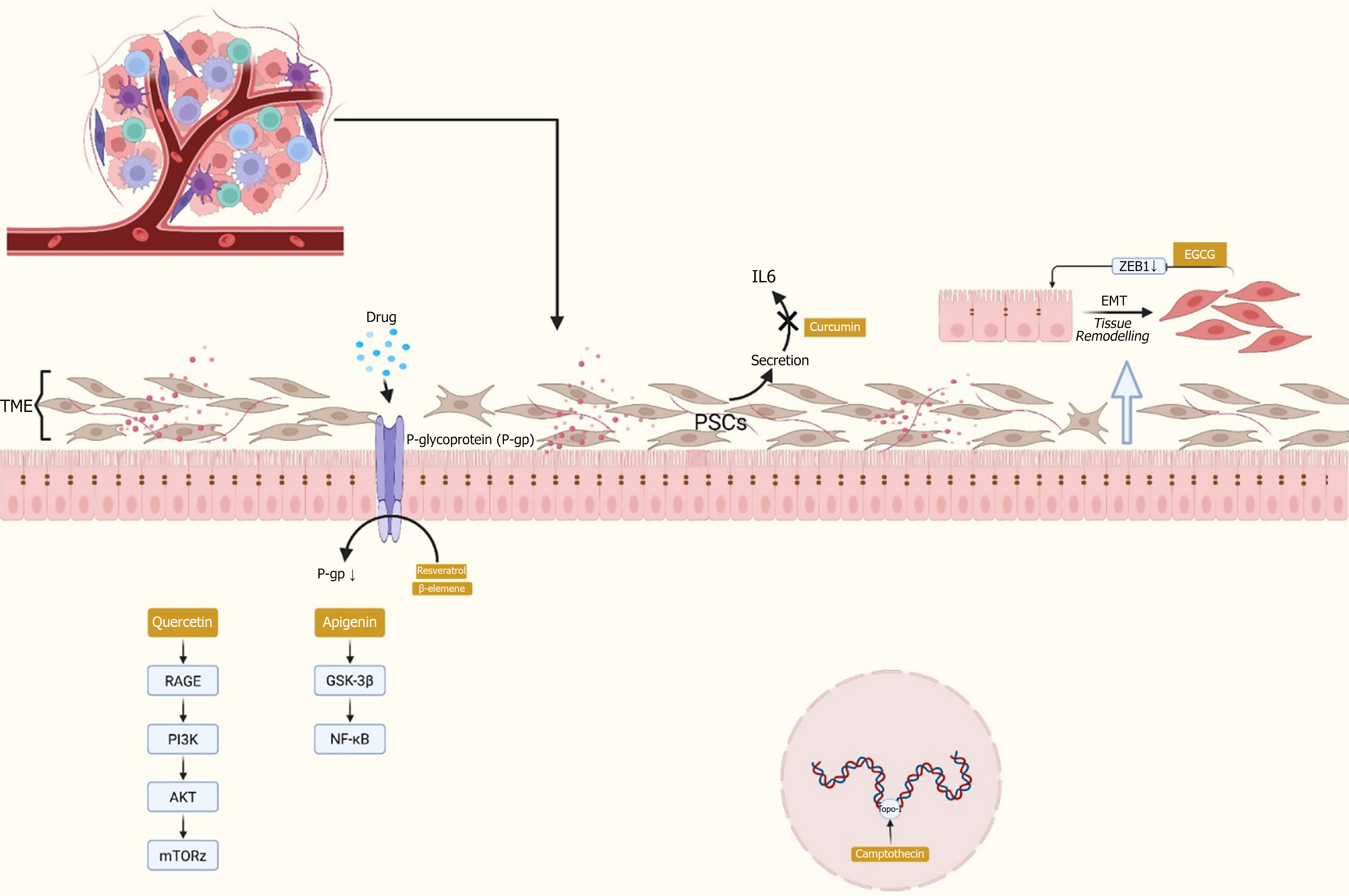
Figure 5 Plant-derived compounds influence drug resistance in pancreatic cancer through multiple mechanisms.
They regulate efflux transporters (e.g., P-glycoprotein), inhibit epithelial-mesenchymal transition, and modulate tumor-stroma interactions mediated by pancreatic stellate cells. The key signaling pathways include phosphatidylinositol 3-kinase/protein kinase B/mechanistic target of rapamycin, nuclear factor kappa B, Janus kinase/signal transducer and activator of transcription, and receptor for advanced glycation end-product pathways. Natural products such as quercetin and apigenin have been shown to target these pathways, thereby sensitizing tumor cells to chemotherapy. TME: Tumor microenvironment; IL: Interleukin; PSCs: Pancreatic stellate cells; ZEB1: Zinc-finger E-box-binding homeobox 1; EMT: Epithelial-mesenchymal transition; EGCG: Epigallocatechin gallate; P-gp: P-glycoprotein; RAGE: Receptor for advanced glycation end-product; PI3K: Phosphatidylinositol 3-kinase; AKT: Protein kinase B; mTOR: Mechanistic target of rapamycin; GSK-3β: Glycogen synthase kinase 3 beta; NF-кB: Nuclear factor kappa B.
- Citation: Yu JQ, Yu SJ, He YH, Xue YZ, Yu XF, Chen W, Hu LY, Fan XF, Gao ZF, Zhou HK, Liu XR, He XS, Wang XG. Research progress of plant-derived chemical compounds for overcoming pancreatic cancer drug resistance. World J Gastroenterol 2026; 32(9): 115131
- URL: https://www.wjgnet.com/1007-9327/full/v32/i9/115131.htm
- DOI: https://dx.doi.org/10.3748/wjg.v32.i9.115131