
















©Author(s) (or their employer(s)) 2026.
World J Gastroenterol. Mar 7, 2026; 32(9): 114544
Published online Mar 7, 2026. doi: 10.3748/wjg.v32.i9.114544
Published online Mar 7, 2026. doi: 10.3748/wjg.v32.i9.114544
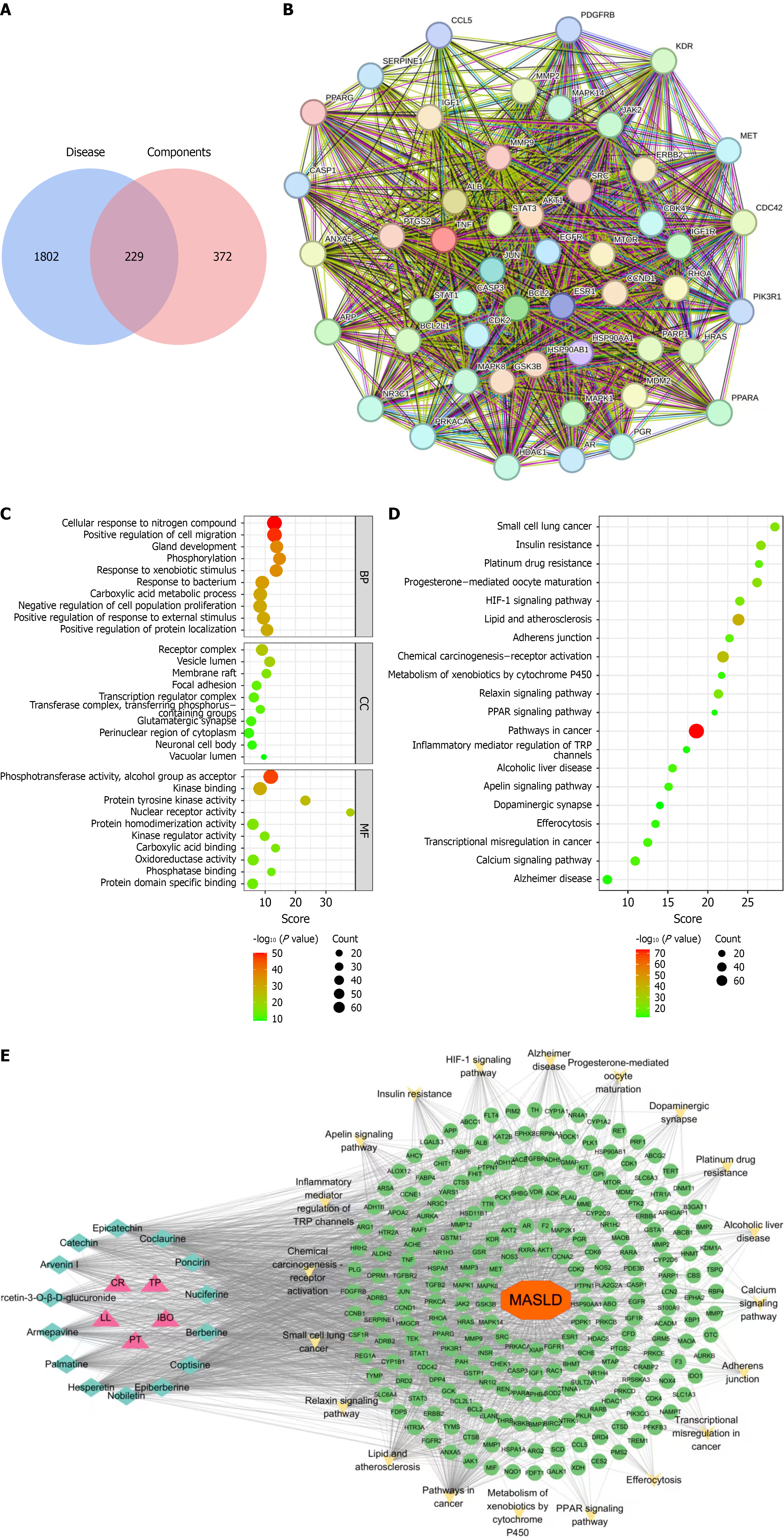
Figure 3 Prediction of key targets, mechanistic pathways impacted, and bioactive components of Lianhe Xiaozhi ointment relevant to metabolic dysfunction-associated steatotic liver disease treatment.
A: Venn diagram of Lianhe Xiaozhi ointment (LXO) targets key to metabolic dysfunction-associated steatotic liver disease (MASLD) treatment; B: Protein-protein interaction network diagram of intersecting targets (top 50); C: Gene Ontology functional enrichment analysis; D: Kyoto Encyclopedia of Genes and Genomes pathway enrichment analysis; E: “Herb-ingredient-disease-pathway-target” network. The pink symbol denotes the five herb constituents of LXO; turquoise indicates bioactive components; green labels indicate molecular targets of LXO in MASLD; yellow highlights the top 20 enriched pathways; orange represents disease. BP: Biological process; CC: Cellular component; MF: Molecular function; HIF: Hypoxia inducible factor; PPAR: Peroxisome proliferator-activated receptor; CR: Coptidis Rhizoma; LL: Lotus leaf; PT: Pericarpium trichosanthis; IBO: Immature bitter orange; TP: Tangerine peel.
- Citation: Nie LJ, Wang GX, Yang XY, Sun J, Cao YT, Lou Y, Lu YF, Yu JY, Zhou XQ. Lianhe Xiaozhi ointment ameliorates metabolic dysfunction-associated steatotic liver disease via peroxisome proliferator-activated receptor alpha pathway activation. World J Gastroenterol 2026; 32(9): 114544
- URL: https://www.wjgnet.com/1007-9327/full/v32/i9/114544.htm
- DOI: https://dx.doi.org/10.3748/wjg.v32.i9.114544