
















©The Author(s) 2026.
World J Gastroenterol. Feb 28, 2026; 32(8): 115077
Published online Feb 28, 2026. doi: 10.3748/wjg.v32.i8.115077
Published online Feb 28, 2026. doi: 10.3748/wjg.v32.i8.115077
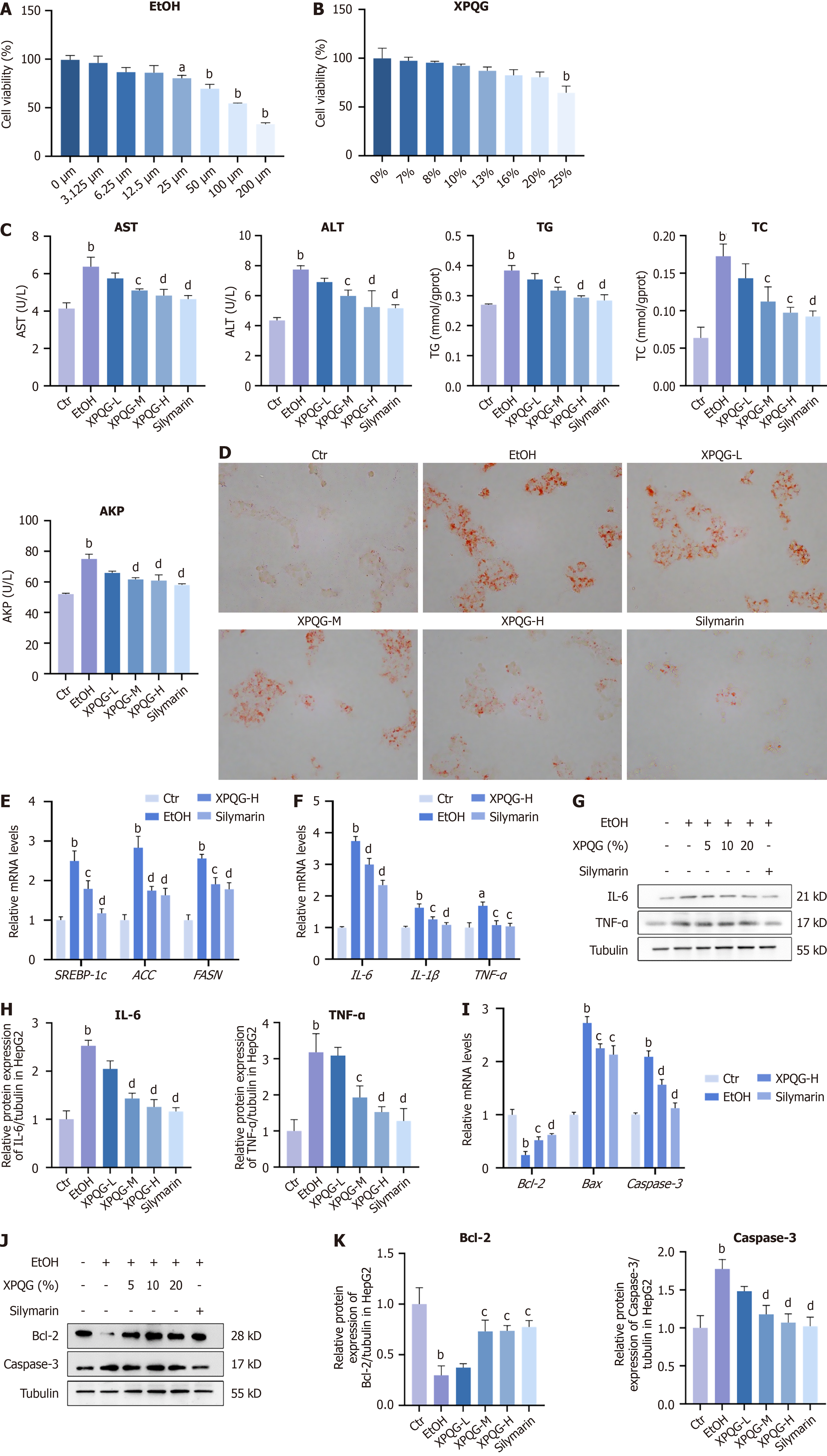
Figure 2 Xing-Pi-Qing-Gan decoction attenuates ethanol-induced dysfunction in HepG2.
A and B: Quantitation of cell viability of HepG2 cells treated with ethanol (A) and with Xing-Pi-Qing-Gan decoction (B) was determined by CCK-8 assay; C: HepG2 alanine aminotransferase, aspartate aminotransferase, triglyceride and alkaline phosphatase levels; D: Oil Red O staining, images were taken (40 ×); E: Relative mRNA levels of lipogenesis; F-H: Relative mRNA levels and relative protein expression of inflammation; I: Relative mRNA levels of Apoptosis; J and K: Relative protein expression of Bcl-2, Caspase-3 in HepG2 (n = 3-5). aP < 0.05 vs the control group; bP < 0.01 vs the control group; cP < 0.05 vs the ethanol-fed group; dP < 0.01 vs the ethanol-fed group. Ctr: Control; EtOH: Ethanol-fed; XPQG: Xing-Pi-Qing-Gan decoction; AST: Aspartate aminotransferase; ALT: Alanine aminotransferase; TG: Triglyceride; TC: Total cholesterol; AKP: Alkaline phosphatase; XPQG-L: Xing-Pi-Qing-Gan decoction-low; XPQG-M: Xing-Pi-Qing-Gan decoction-medium; XPQG-H: Xing-Pi-Qing-Gan decoction-high; IL-6: Interleukin-6; IL-1β: Interleukin-1β; TNF-α: Tumor necrosis factor-α.
- Citation: Huang NF, Ling P, Xu YJ, Feng XF, Zheng Y, Sun T. Xing-Pi-Qing-Gan decoction alleviates alcoholic liver disease by down-regulating DDIT3 and restoring Nrf2/HO-1 antioxidant signaling: Multi-omics and experimental evidence. World J Gastroenterol 2026; 32(8): 115077
- URL: https://www.wjgnet.com/1007-9327/full/v32/i8/115077.htm
- DOI: https://dx.doi.org/10.3748/wjg.v32.i8.115077