
















©The Author(s) 2026.
World J Gastroenterol. Feb 28, 2026; 32(8): 113861
Published online Feb 28, 2026. doi: 10.3748/wjg.v32.i8.113861
Published online Feb 28, 2026. doi: 10.3748/wjg.v32.i8.113861
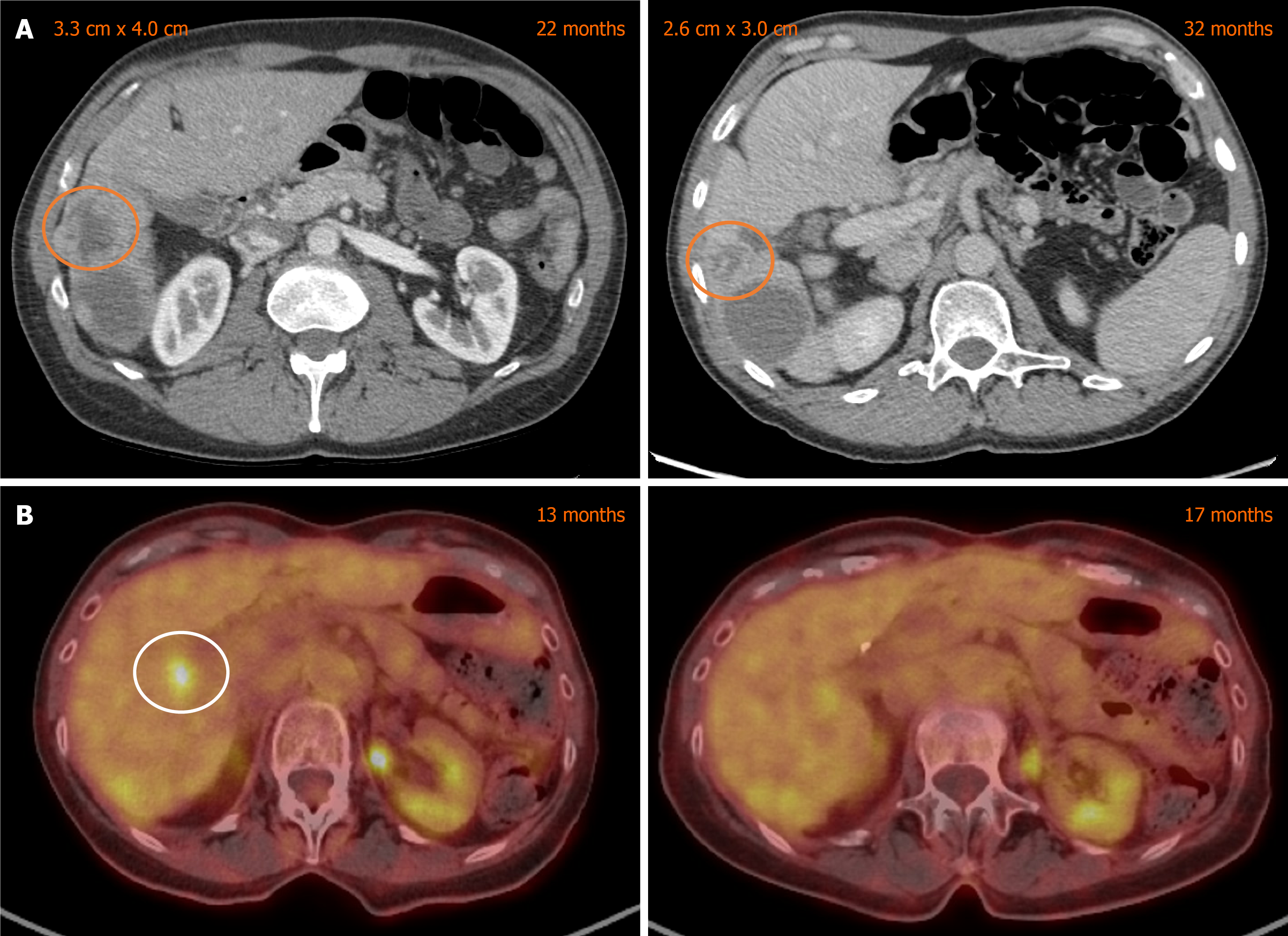
Figure 2 Interval imaging demonstrating activity of yttrium-90 radioembolization.
A: Patient with pancreatic acinar cell carcinoma. Yttrium-90 (Y-90) treatment was performed at 23 months post-diagnosis due to increasing size of some liver metastases. Serial computed tomography scans obtained prior to this treatment (22 months, left) and 9 months after the treatment (32 months, right) demonstrated a decrease in size of right liver lobe lesions, including the tumor outlined by the orange circle. Following this Y-90 procedure, the patient experienced a treatment-free interval of almost 12 months; B: Patient with pancreatoblastoma. Y-90 treatment was performed at 14 months post-resection of pancreatic primary due to the appearance of a new fluorodeoxyglucose-avid liver metastasis (white circle). Serial positron emission tomography/computed tomography scans obtained prior to this treatment (13 months, left) and 3 months after the treatment (17 months, right) demonstrated resolution of fluorodeoxyglucose activity. Y-90 administration resulted in a subsequent treatment-free interval of 5 months.
- Citation: Skorupan N, Sperling D, Nutting C, Miettinen M, Cohn A, Alewine C. Use of yttrium-90 radioembolization to control liver metastases in pancreatic acinar cell carcinoma and pancreatoblastoma: Two case reports. World J Gastroenterol 2026; 32(8): 113861
- URL: https://www.wjgnet.com/1007-9327/full/v32/i8/113861.htm
- DOI: https://dx.doi.org/10.3748/wjg.v32.i8.113861