
















©The Author(s) 2026.
World J Gastroenterol. Feb 7, 2026; 32(5): 115301
Published online Feb 7, 2026. doi: 10.3748/wjg.v32.i5.115301
Published online Feb 7, 2026. doi: 10.3748/wjg.v32.i5.115301
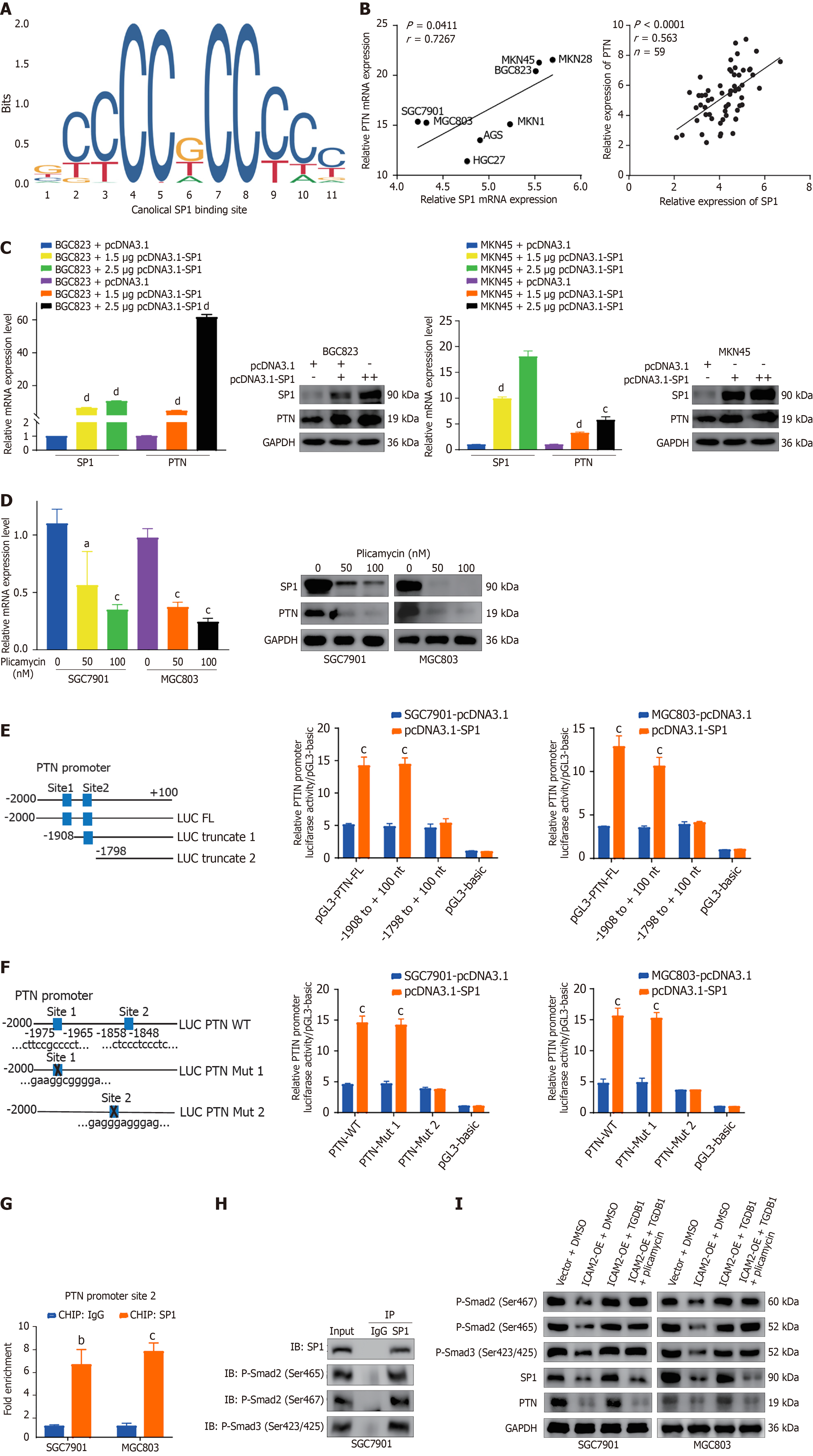
Figure 5 SP1 directly regulates pleiotrophin transcription and mediates TGF-β/Smad signaling in gastric cancer chemoresistance.
A: Prediction of SP1 binding motifs and sites within the pleiotrophin (PTN) promoter region using the JASPAR database; B: Correlation analysis between SP1 and PTN mRNA levels in gastric cancer (GC) cell lines and patient tissue samples; C and D: Immunoblotting and real-time PCR analysis to assess the effect of SP1 overexpression or silencing on PTN expression; E: SP1 binding sites (sites 1 and 2) in the PTN promoter. Luciferase reporter assays demonstrated that SP1 specifically enhanced activity of pGL3-PTN-FL and pGL3-PTN-Truncated 1 promoters; F: Schematic representation of mutations in PTN Mut 1 and Mut 2 plasmids. SP1 failed to activate PTN Mut 2 due to the absence of site 2; G: Chromatin immunoprecipitation (ChIP) assays confirmed direct binding of SP1 to site 2 within the PTN promoter; H: Co-IP assays performed to detect interactions between SP1, P-Smad2, and P-Smad3 in GC cells; I: Immunoblotting analysis of intercellular adhesion molecule 2-overexpressing cells treated with TGF-β1 with or without plicamycin, showing changes in P-Smad2/3, SP1, and PTN levels. aP < 0.05; bP < 0.01; cP < 0.001; dP < 0.0001. PTN: Pleiotrophin.
- Citation: Tang XC, Chen ZJ, Chen CY, Qiu J, Huang JT, Tan RC, Li WY, Chen H, Yang ZL. ICAM2 loss drives 5-fluorouracil resistance via TGF-β/Smad/SP1/PTN-dependent apoptosis evasion and macrophage remodeling in gastric cancer. World J Gastroenterol 2026; 32(5): 115301
- URL: https://www.wjgnet.com/1007-9327/full/v32/i5/115301.htm
- DOI: https://dx.doi.org/10.3748/wjg.v32.i5.115301