
















©The Author(s) 2026.
World J Gastroenterol. Feb 7, 2026; 32(5): 113024
Published online Feb 7, 2026. doi: 10.3748/wjg.v32.i5.113024
Published online Feb 7, 2026. doi: 10.3748/wjg.v32.i5.113024
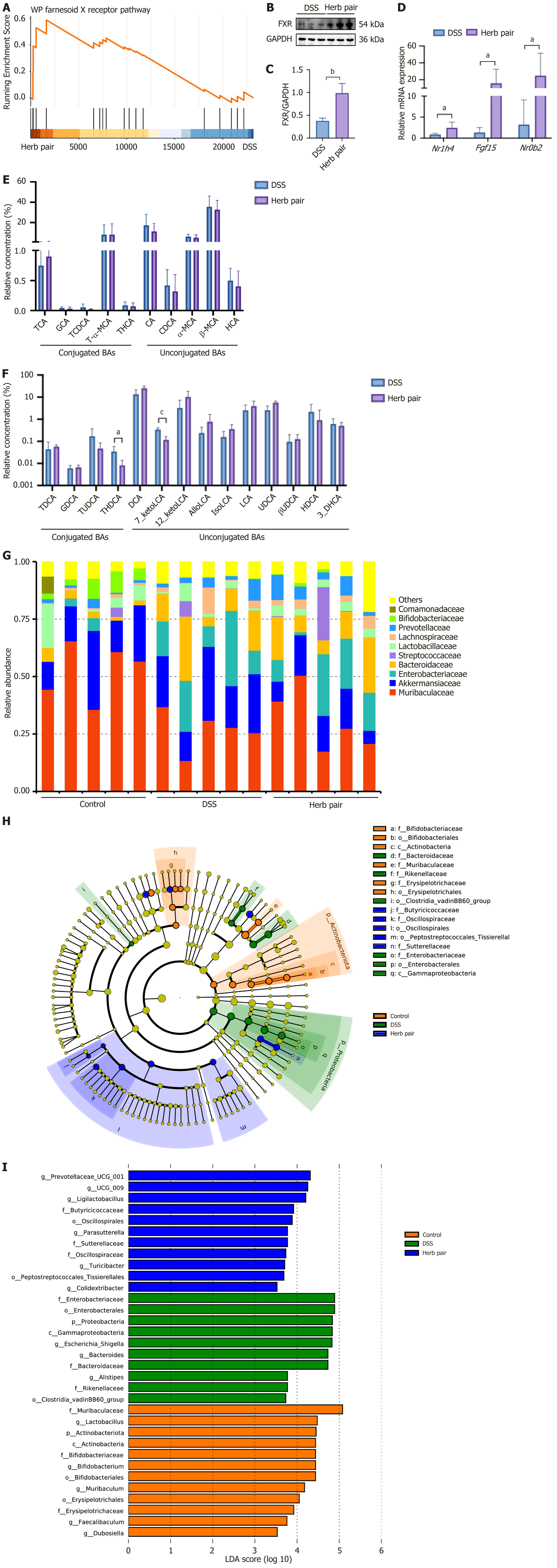
Figure 6 Herb pair altered the composition of bile acids metabolism and gut microbiota in colitis mice.
A: Gene set enrichment analysis; B and C: Western blotting analysis of protein expression of farnesoid X receptor in colon tissues; D: Quantitative polymerase chain reaction analysis of mRNA expression of nuclear receptor subfamily 1 group H member 4, fibroblast growth factor 15, and nuclear receptor subfamily 0 group B member 2 in colon tissues; E and F: Influenced bile acids in colitis mice colon contents; G: Abundance of differential bacteria in colitis mice colon contents; H: Taxonomic cladogram analyzed by linear discriminant analysis coupled with effect size; I: Histogram of the linear discriminant analysis coupled with effect size analysis. For western blotting analysis: n = 3, for quantitative polymerase chain reaction analysis: n = 6, for bile acids measurement: n = 7, for 16S rRNA sequencing: n = 5. aP < 0.05 vs dextran sulfate sodium group, bP < 0.01 vs dextran sulfate sodium group, cP < 0.001 vs dextran sulfate sodium group. FXR: Farnesoid X receptor; DSS: Dextran sulfate sodium; GAPDH: Glyceraldehyde 3-phosphate dehydrogenase; Nr1h4: Nuclear receptor subfamily 1 group H member 4; Fgf15: Fibroblast growth factor 15; Nr0b2: Nuclear receptor subfamily 0 group B member 2; BAs: Bile acids.
- Citation: Xu T, Hou WX, Yang ST, Shao YP, Wang J, Han TT, Li JN. Danggui-Baishao herb pair protects against dextran sulfate sodium-induced colitis by modulating the Wnt/β-catenin pathway. World J Gastroenterol 2026; 32(5): 113024
- URL: https://www.wjgnet.com/1007-9327/full/v32/i5/113024.htm
- DOI: https://dx.doi.org/10.3748/wjg.v32.i5.113024