
















Copyright: ©Author(s) 2026.
World J Gastroenterol. Dec 28, 2026; 32(48): 119352
Published online Dec 28, 2026. doi: 10.3748/wjg.119352
Published online Dec 28, 2026. doi: 10.3748/wjg.119352
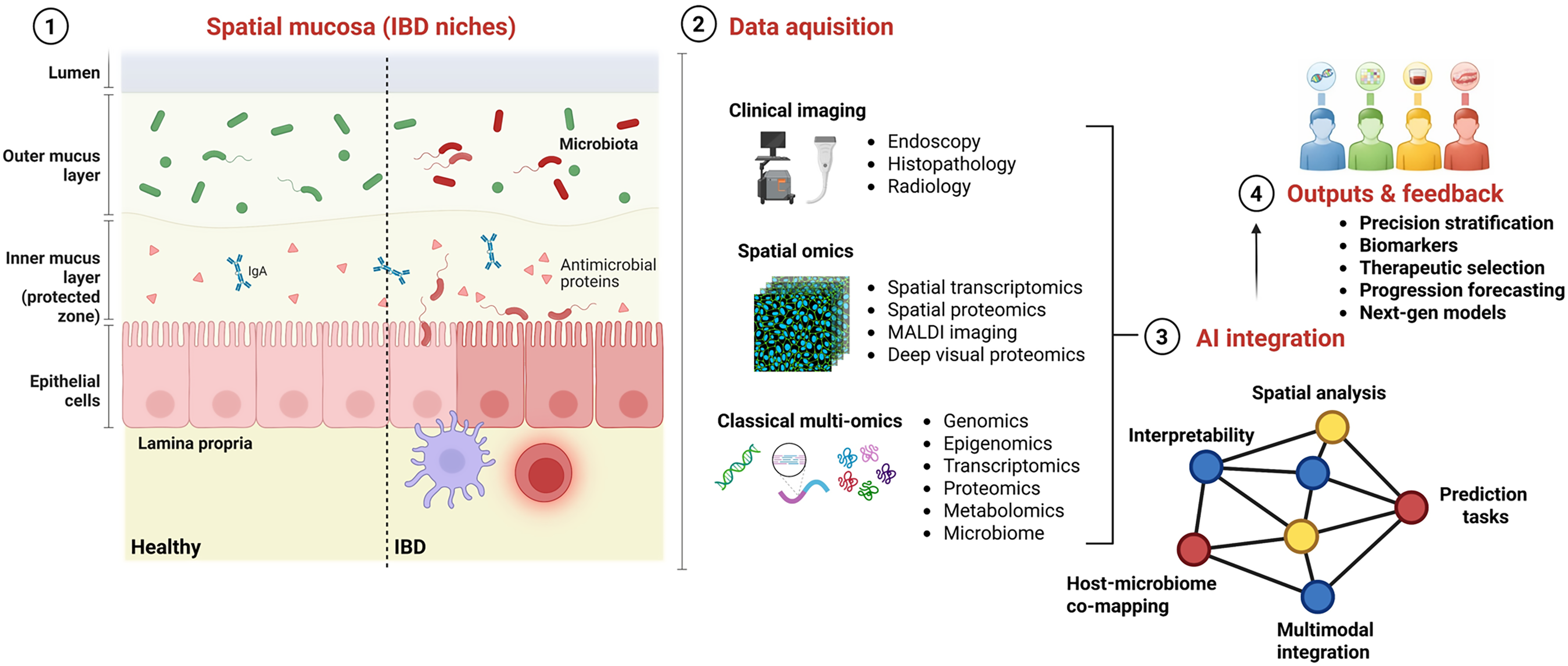
Figure 1 Illustration of a framework that integrates multi-omics, spatial omics, and artificial intelligence for the study of inflammatory bowel disease.
Panel (1): Depicts the intestinal mucosa as a spatially organized ecosystem, where disruptions in epithelial integrity, localization of immune cells, and interactions between the host and microbiota lead to disease-specific inflammatory environments in inflammatory bowel disease (IBD); (2) The acquisition of multimodal data merges clinical imaging with spatial omics and traditional multi-omics techniques to capture molecular and cellular changes across various anatomical levels; (3) Artificial intelligence facilitates the integration and spatial examination of these diverse datasets, revealing intricate interactions between the host and microbiome, as well as cellular networks, and identifying predictive features of the disease; and (4) This comprehensive framework advances clinical application by fostering precision medicine approaches for IBD. IBD: Inflammatory bowel disease; AI: Artificial intelligence; MALDI: Matrix assisted laser desorption/ionization.
- Citation: Shirima CA, Sabuholo GA, Bubulac L, Patel P, Pircalabioru GG. Application of spatial omics, multi-omics, and artificial intelligence in inflammatory bowel disease: Current applications and emerging opportunities. World J Gastroenterol 2026; 32(48): 119352
- URL: https://www.wjgnet.com/1007-9327/full/v32/i48/119352.htm
- DOI: https://dx.doi.org/10.3748/wjg.119352