
















Copyright: ©Author(s) 2026.
World J Gastroenterol. Dec 21, 2026; 32(47): 122954
Published online Dec 21, 2026. doi: 10.3748/wjg.122954
Published online Dec 21, 2026. doi: 10.3748/wjg.122954
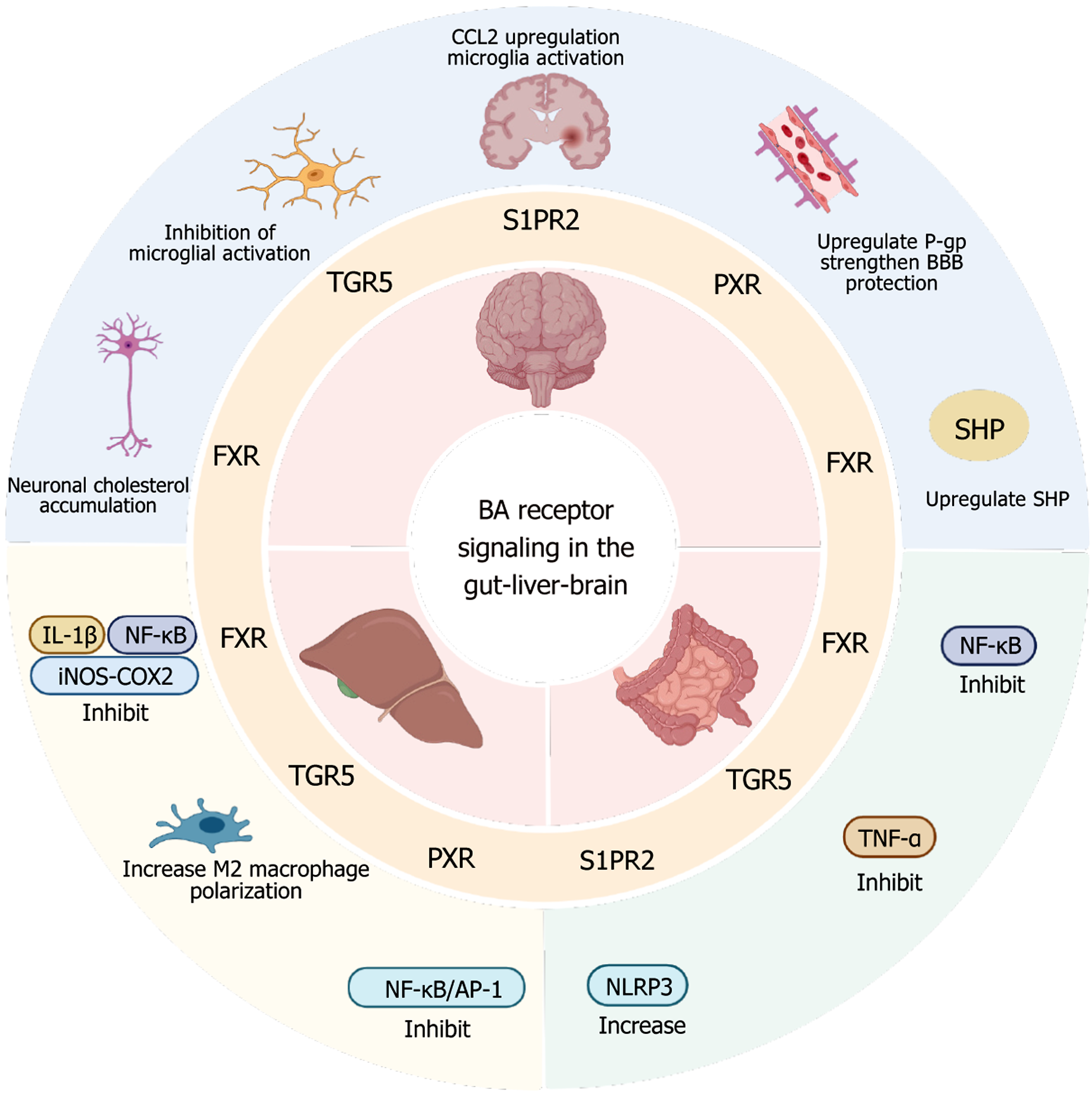
Figure 4 Bile acid receptor signaling in the gut-liver-brain axis.
Bile acids act as signaling molecules to regulate the gut-liver-brain axis through nuclear receptors (farnesoid X receptor and pregnane X receptor) and membrane receptors (Takeda G protein-coupled receptor 5 and sphingosine-1-phosphate receptor 2). Farnesoid X receptor and pregnane X receptor maintain Bile acid homeostasis, enhance intestinal and blood-brain barrier (BBB) integrity, and suppress inflammation. Takeda G protein-coupled receptor 5 exerts anti-neuroinflammatory effects by inhibiting microglial activation and NACHT, LRR and PYD domains-containing protein 3 inflammasome. In contrast, sphingosine-1-phosphate receptor 2 disrupts the BBB, promotes chemokine ligand 2 release, and triggers neuroinflammation. These receptors jointly mediate intestinal barrier damage, liver fibrosis, BBB dysfunction, and central neuroinflammation, thereby driving the pathogenesis of hepatic encephalopathy. BA: Bile acid; S1PR2: Sphingosine-1-phosphate receptor 2; TGR5: Takeda G protein-coupled receptor 5; PXR: Pregnane X receptor; FXR: Farnesoid X receptor; SHP: Small heterodimer partner; BBB: Blood-brain barrier; CCL2: Chemokine ligand 2; P-gp: P-glycoprotein; IL-1β: Interleukin-1β; NF-κB: Nuclear factor κB; iNOS: Inducible nitric oxide synthase; COX2: Cyclooxygenase-2; TNF-α: Tumor necrosis factor-α; NLRP3: NACHT, LRR and PYD domains-containing protein 3; AP-1: Activator protein-1. Created in BioRender.
- Citation: Huo YJ, Liang ZX, Bian JX, Zhang JT, Cha L, Yang QY, Zhao CJ, Li JY, Feng DP, Gao L. Bile acid metabolic disorders and their role in hepatic encephalopathy of cirrhosis. World J Gastroenterol 2026; 32(47): 122954
- URL: https://www.wjgnet.com/1007-9327/full/v32/i47/122954.htm
- DOI: https://dx.doi.org/10.3748/wjg.122954