
















Copyright: ©Author(s) 2026.
World J Gastroenterol. Dec 21, 2026; 32(47): 122954
Published online Dec 21, 2026. doi: 10.3748/wjg.122954
Published online Dec 21, 2026. doi: 10.3748/wjg.122954
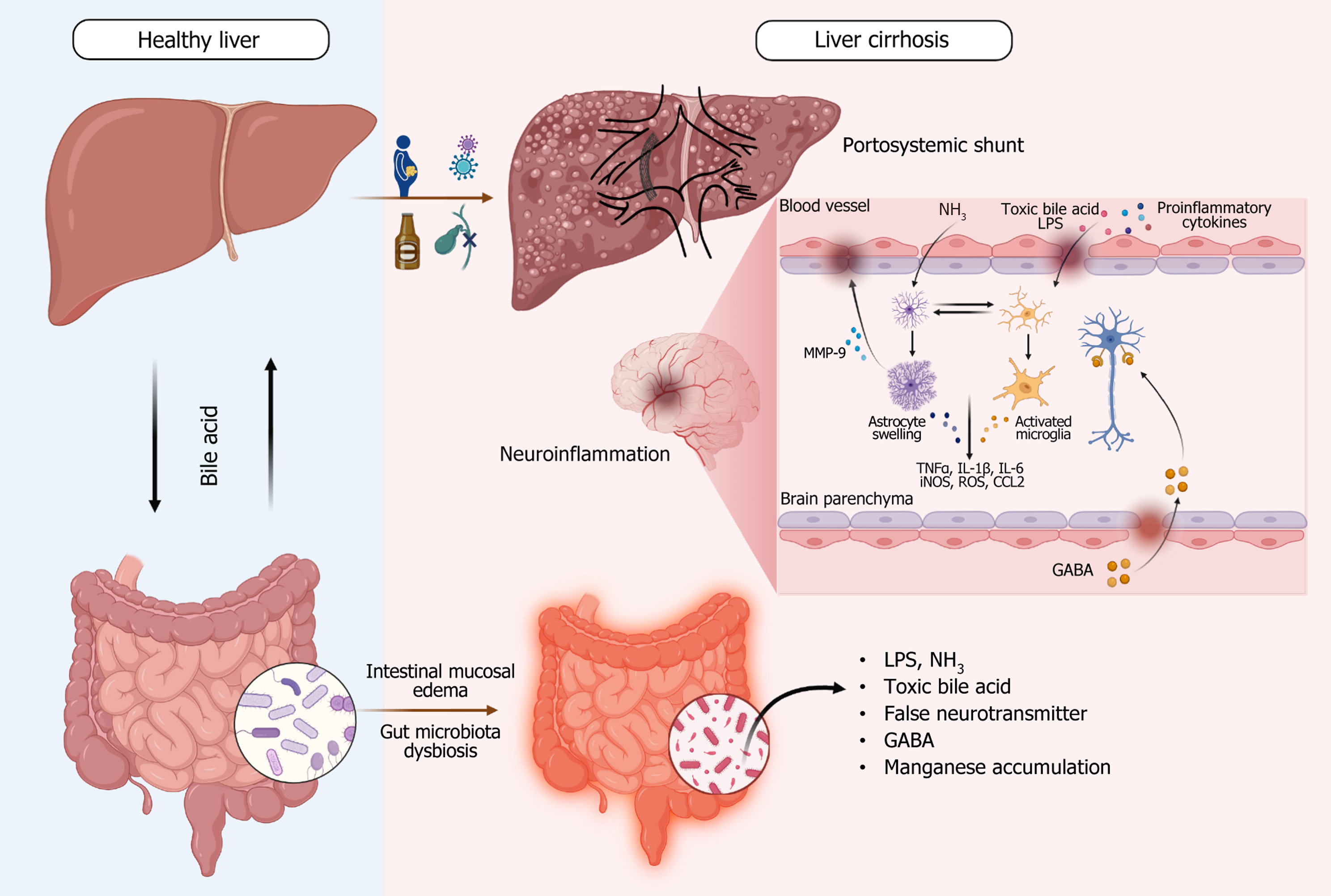
Figure 1 Schematic diagram of the mechanism of hepatic encephalopathy induced by gut-liver-brain axis imbalance in cirrhosis.
In healthy individuals, the liver maintains intestinal homeostasis via normal enterohepatic circulation of bile acids (BAs). In cirrhosis, destruction of liver structure accompanied by portosystemic shunting, together with disordered BA metabolism, intestinal mucosal edema and gut microbiota dysbiosis, leads to the entry of gut-derived toxins such as ammonia, lipopolysaccharide and toxic BAs into the systemic circulation. These toxins cross the blood-brain barrier, inducing neuroinflammation and neurotransmitter imbalance, and ultimately resulting in hepatic encephalopathy. CCL2: Chemokine ligand 2; GABA: Γ-Aminobutyric acid; IL: Interleukin; iNOS: Inducible nitric oxide synthase; LPS: Lipopolysaccharide; MMP-9: Matrix metalloproteinase-9; ROS: Reactive oxygen species; TNF-α: Tumor necrosis factor-α. Created in BioRender.
- Citation: Huo YJ, Liang ZX, Bian JX, Zhang JT, Cha L, Yang QY, Zhao CJ, Li JY, Feng DP, Gao L. Bile acid metabolic disorders and their role in hepatic encephalopathy of cirrhosis. World J Gastroenterol 2026; 32(47): 122954
- URL: https://www.wjgnet.com/1007-9327/full/v32/i47/122954.htm
- DOI: https://dx.doi.org/10.3748/wjg.122954