
















Copyright: ©Author(s) 2026.
World J Gastroenterol. Dec 21, 2026; 32(47): 122370
Published online Dec 21, 2026. doi: 10.3748/wjg.122370
Published online Dec 21, 2026. doi: 10.3748/wjg.122370
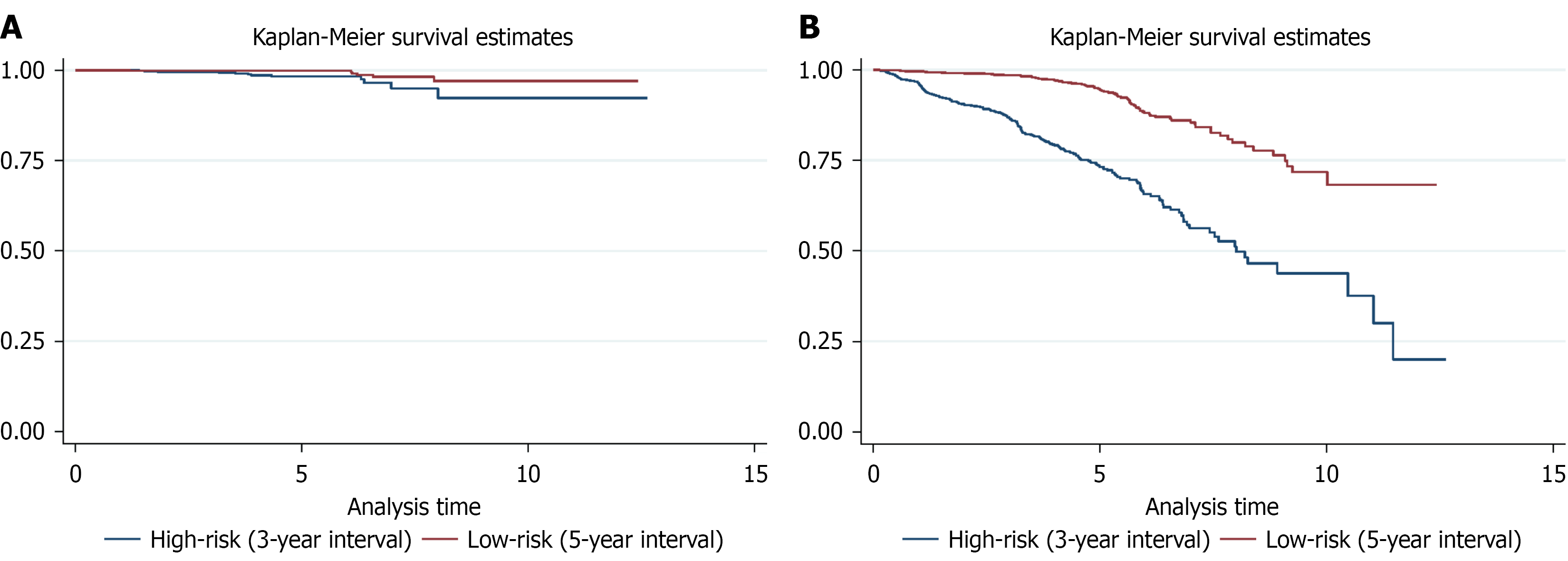
Figure 2 Kaplan-Meier estimates by risk group.
A: Kaplan-Meier estimates of colorectal cancer-free survival by risk group. Kaplan-Meier survival curves illustrate the probability of remaining free of colorectal cancer (CRC) over time (years) for the high-risk group (blue line; recommended 3-year surveillance interval) and the low-risk group (red line; recommended 5-year surveillance interval). Both groups maintained CRC-free survival rates above 99% within guideline-recommended intervals. The high-risk group showed a gradual decline beyond 7 years, whereas the low-risk group remained relatively stable throughout the follow-up period; B: Kaplan-Meier estimates of event-free survival for CRC and advanced polyps by risk group. Kaplan-Meier survival curves illustrate the probability of remaining free of both CRC and advanced polyps over time (years) for the high-risk group (blue line; recommended 3-year surveillance interval) and the low-risk group (red line; recommended 5-year surveillance interval). Event-free survival declined more steeply in the high-risk group, falling below 80% at approximately 3-4 years. The low-risk group maintained event-free survival above 80% for up to 7-8 years, with a more gradual decline thereafter. The marked separation between curves supports risk-stratified surveillance interval recommendations.
- Citation: Pongprasobchai N, Kositamongkol C, Mepramoon E, Phisalprapa P. Incidence of colorectal cancer and advanced polyps by post-polypectomy surveillance interval: Real-world evidence from Thailand. World J Gastroenterol 2026; 32(47): 122370
- URL: https://www.wjgnet.com/1007-9327/full/v32/i47/122370.htm
- DOI: https://dx.doi.org/10.3748/wjg.122370