
















Copyright: ©Author(s) 2026.
World J Gastroenterol. Dec 21, 2026; 32(47): 120094
Published online Dec 21, 2026. doi: 10.3748/wjg.v32.i47.120094
Published online Dec 21, 2026. doi: 10.3748/wjg.v32.i47.120094
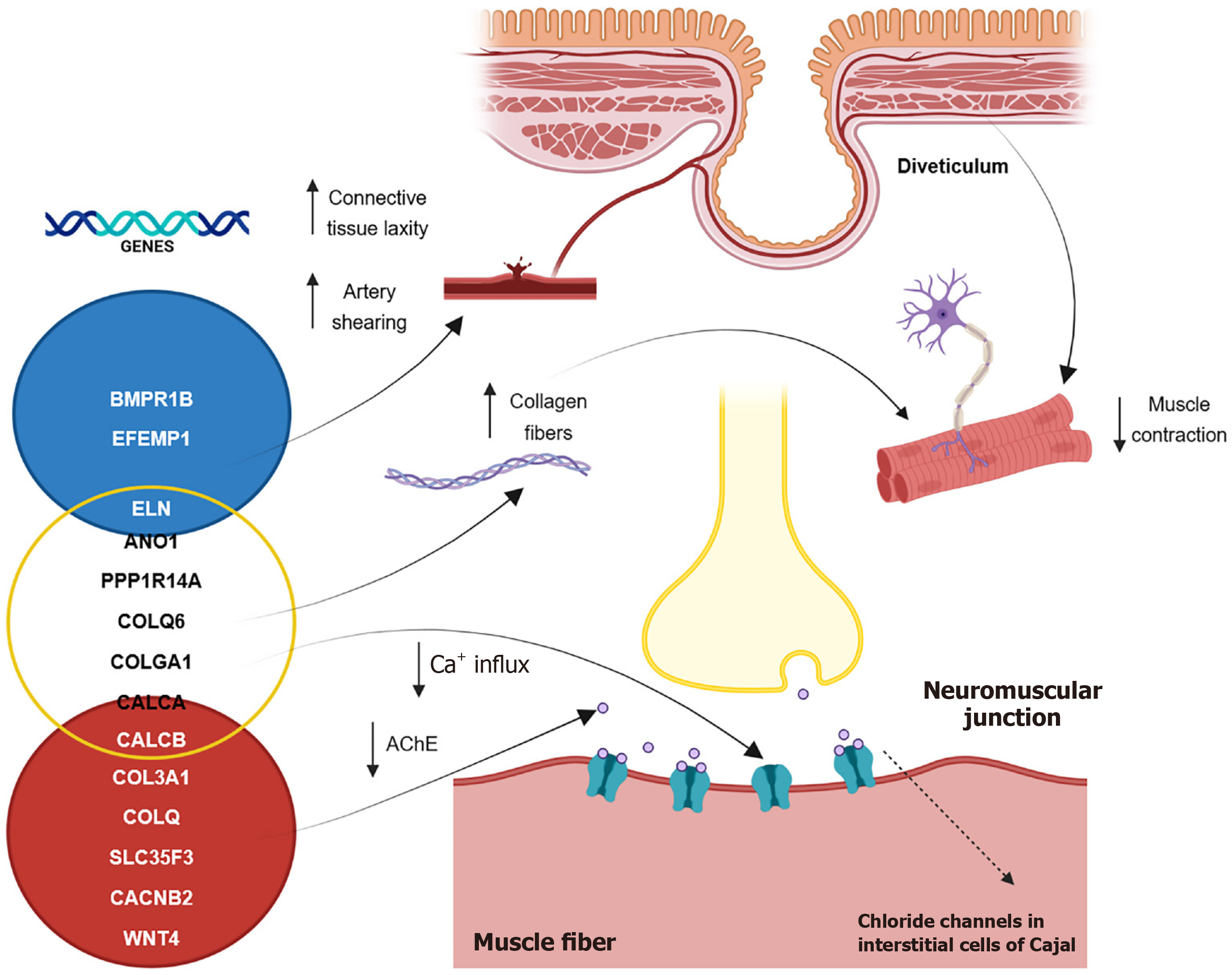
Figure 3 Biomolecular pathways involved in diverticular development.
Genes associated with connective tissue laxity including BMPR1B, EFEMP1 and ELN predispose to arterial shearing at the level of the diverticulum (blue circle). Genes involved in neuromuscular dysfunction such as ANO1, PPP1R14A, COLQ6, COL6A1, CALCA and CALCB (yellow circle) regulate calcium-activated chloride channels in the interstitial cells of Cajal, thereby affecting muscle contraction. Genes linked with vascular damage and structural integrity are CALCB, COL3A1, COLQ, SLC35F3, CACNB2 and WNT4. These genes contribute to vascular smooth muscle cell proliferation, increase collagen fibers between smooth muscle bundles and reduce AChE available at the neuromuscular junction leading to muscle weakness (red circle).
- Citation: Anaya-Prado R, Dominguez-Soto AV, Osorio-Medina KN, Ortiz-Vera RI, Gonzalez-Martinez D, Anaya-Fernández R, Portillo-Mendez R, Anaya-Fernández MM, Azcona-Ramirez CC, Guerrero-Palomera MA, Peña-Cuellar AJ, Soto-Hintze J, Reyna-Rodriguez B. Jejunal diverticula bleeding: A challenging diagnosis entity. World J Gastroenterol 2026; 32(47): 120094
- URL: https://www.wjgnet.com/1007-9327/full/v32/i47/120094.htm
- DOI: https://dx.doi.org/10.3748/wjg.v32.i47.120094