
















Copyright: ©Author(s) 2026.
World J Gastroenterol. Dec 21, 2026; 32(47): 120094
Published online Dec 21, 2026. doi: 10.3748/wjg.v32.i47.120094
Published online Dec 21, 2026. doi: 10.3748/wjg.v32.i47.120094
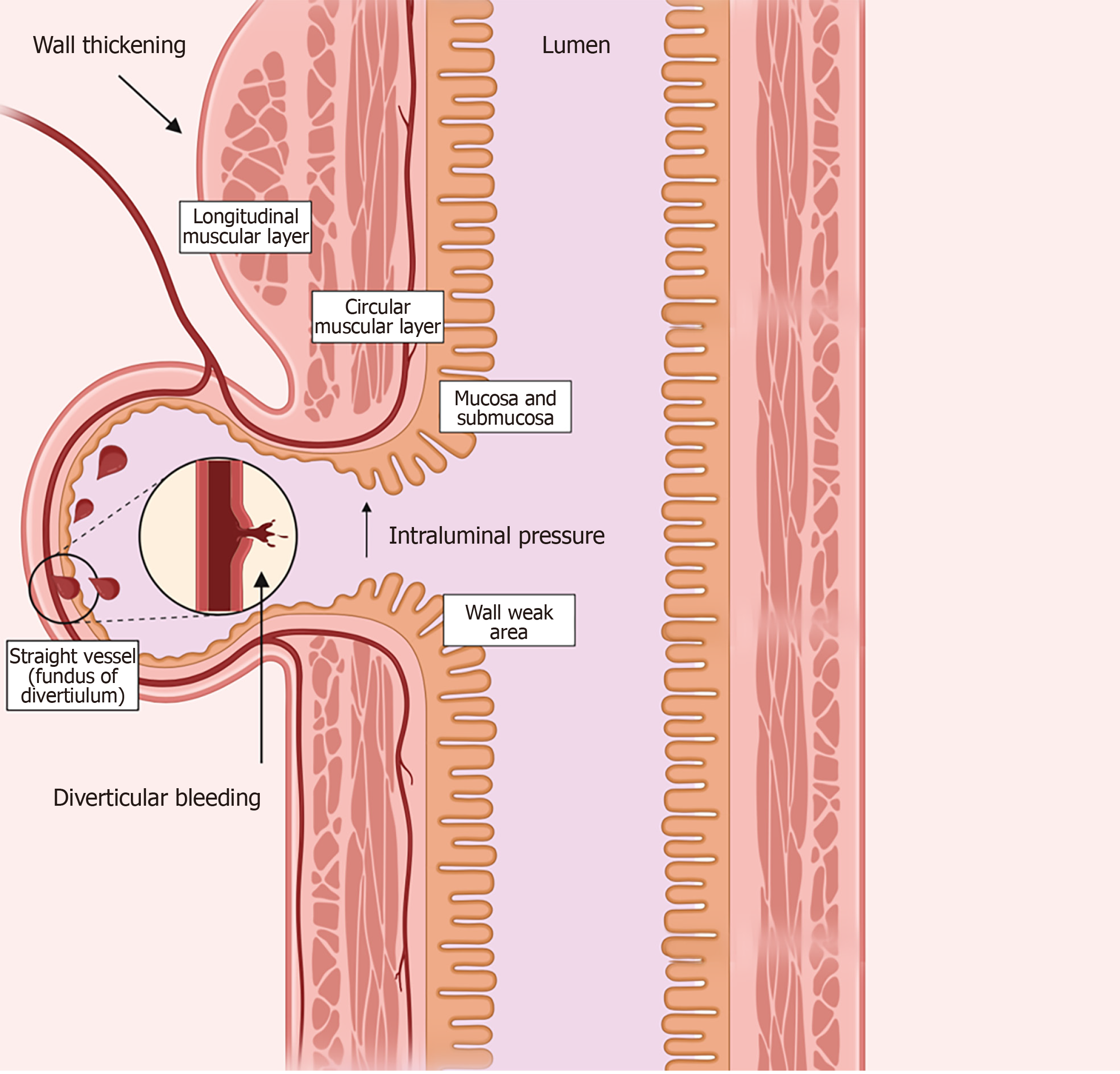
Figure 2 Development and bleeding of gastrointestinal diverticula.
Chronic intraluminal pressure at weak areas along with structural and functional alterations are key elements in gastrointestinal diverticula formation. Weak points are the areas where penetrating vessels traverse the circular muscle layer obliquely to stream within the submucosal plane. Structural alterations include abnormalities in collagen and elastin architecture, characterized by excessive collagen cross-linking, which leads to increased wall stiffness and diminished tensile integrity. Additionally, elastosis in the longitudinal muscular layer contributes to wall thickening. Bleeding occurs due to the erosion or rupture of the straight vessels (vasa recta).
- Citation: Anaya-Prado R, Dominguez-Soto AV, Osorio-Medina KN, Ortiz-Vera RI, Gonzalez-Martinez D, Anaya-Fernández R, Portillo-Mendez R, Anaya-Fernández MM, Azcona-Ramirez CC, Guerrero-Palomera MA, Peña-Cuellar AJ, Soto-Hintze J, Reyna-Rodriguez B. Jejunal diverticula bleeding: A challenging diagnosis entity. World J Gastroenterol 2026; 32(47): 120094
- URL: https://www.wjgnet.com/1007-9327/full/v32/i47/120094.htm
- DOI: https://dx.doi.org/10.3748/wjg.v32.i47.120094