
















Copyright: ©Author(s) 2026.
World J Gastroenterol. Dec 14, 2026; 32(46): 123696
Published online Dec 14, 2026. doi: 10.3748/wjg.123696
Published online Dec 14, 2026. doi: 10.3748/wjg.123696
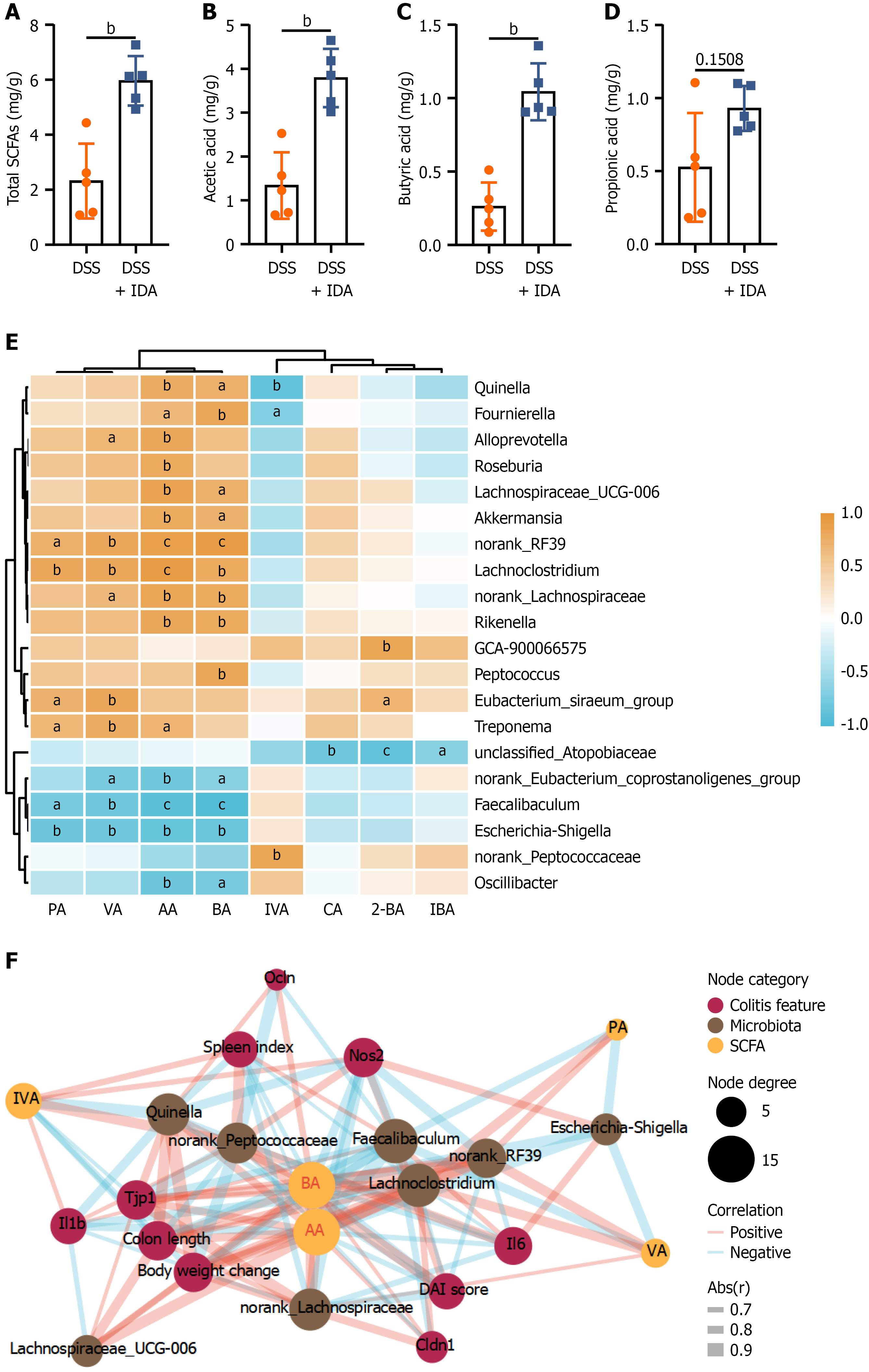
Figure 8 Trans-3-indoleacrylic acid modulates short-chain fatty acid metabolism and microbiota-short-chain fatty acid interactions in mice with colitis.
A-D: Concentrations of total short-chain fatty acids (SCFAs), acetic acid, butyric acid, and propionic acid in cecal contents; E: Spearman correlation heatmap between the differentially abundant bacterial genera and SCFAs; F: Correlation network analysis among colitis features, microbiota, and SCFAs. Node sizes represent the node degree. The data in A-D are shown as the mean ± SD (n = 5 mice per group). Five randomly selected mice from each group were included in the SCFA analysis due to insufficient fecal sample availability. Group comparisons were analyzed using Mann-Whitney test. In E and F, red indicates positive correlations, while blue indicates negative correlations. aP < 0.05, bP < 0.01, cP < 0.001. DSS: Dextran sulfate sodium; IDA: Trans-3-indoleacrylic acid; SCFAs: Short-chain fatty acids; PA: Propionic acid; VA: Valeric acid; AA: Acetic acid; BA: Butyric acid; IVA: Isovaleric acid; CA: Caproic acid; 2-BA: 2-methylbutyric acid; IBA: Isobutyric acid; DAI: Disease activity index; Abs(r): Absolute value of the correlation coefficient.
- Citation: Tuo JW, Wu X, Shen ZH, Wang XY. Trans-3-indoleacrylic acid ameliorates dextran sulfate sodium-induced colitis by modulating macrophage M1 polarization through the aryl hydrocarbon receptor pathway. World J Gastroenterol 2026; 32(46): 123696
- URL: https://www.wjgnet.com/1007-9327/full/v32/i46/123696.htm
- DOI: https://dx.doi.org/10.3748/wjg.123696