
















Copyright: ©Author(s) 2026.
World J Gastroenterol. Dec 14, 2026; 32(46): 123696
Published online Dec 14, 2026. doi: 10.3748/wjg.123696
Published online Dec 14, 2026. doi: 10.3748/wjg.123696
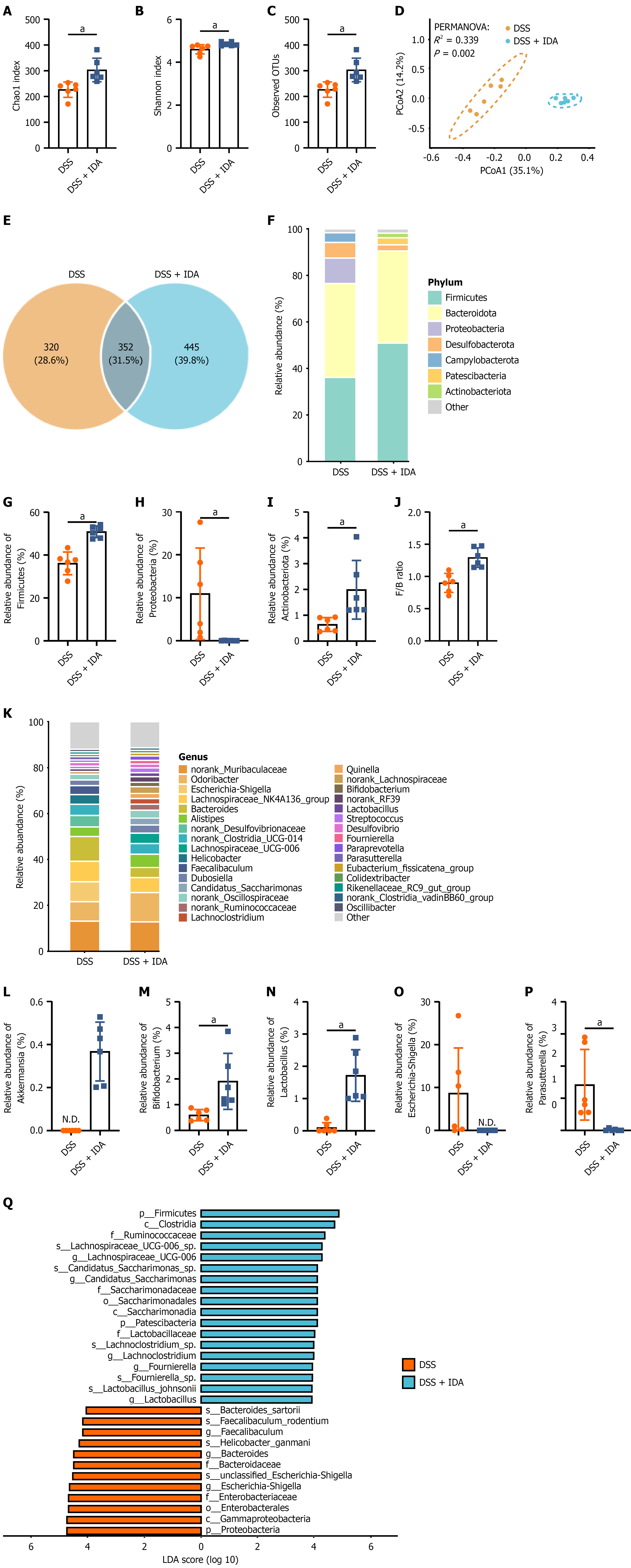
Figure 7 Trans-3-indoleacrylic acid attenuates the dextran sulfate sodium-induced disruption of the gut microbiota.
A-C: Alpha diversity indices of the gut microbiota, including Chao1, Shannon, and observed operational taxonomic units (OTUs); D: Principal coordinate analysis plot based on Bray-Curtis distance; E: Venn diagram illustrating the shared and unique OTUs; F and K: Taxonomic composition of the gut microbiota at the phylum and genus levels; G-I: Relative abundance of specific phyla: Firmicutes, Proteobacteria, and Actinobacteriota; J: Ratio of relative abundance of Firmicutes to Bacteroidota; L-P: Relative abundance of specific genera: Akkermansia, Bifidobacterium, Lactobacillus, Escherichia-Shigella, and Parasutterella; Q: Linear discriminant analysis (LDA) effect size analysis identifying biomarker taxa (LDA score > 4.0). The data are shown as the mean ± SD (n = 6 mice per group). Group comparisons were analyzed using Mann-Whitney test. In D, the P value was determined by PERMANOVA. aP < 0.01. DSS: Dextran sulfate sodium; IDA: Trans-3-indoleacrylic acid; F/B: Firmi
- Citation: Tuo JW, Wu X, Shen ZH, Wang XY. Trans-3-indoleacrylic acid ameliorates dextran sulfate sodium-induced colitis by modulating macrophage M1 polarization through the aryl hydrocarbon receptor pathway. World J Gastroenterol 2026; 32(46): 123696
- URL: https://www.wjgnet.com/1007-9327/full/v32/i46/123696.htm
- DOI: https://dx.doi.org/10.3748/wjg.123696