
















Copyright: ©Author(s) 2026.
World J Gastroenterol. Dec 14, 2026; 32(46): 123696
Published online Dec 14, 2026. doi: 10.3748/wjg.123696
Published online Dec 14, 2026. doi: 10.3748/wjg.123696
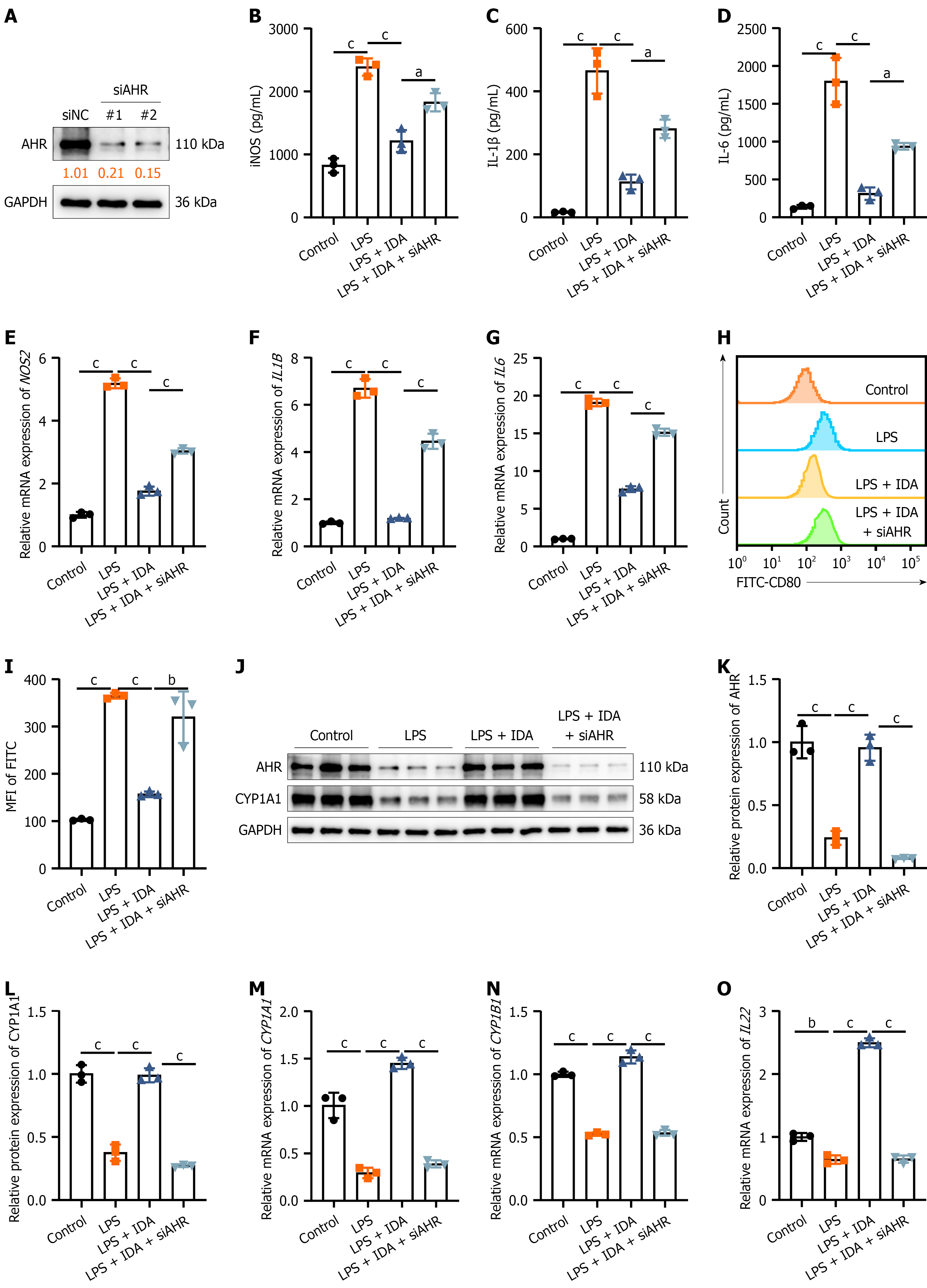
Figure 6 Trans-3-indoleacrylic acid attenuates lipopolysaccharide-stimulated M1 polarization through aryl hydrocarbon receptor signaling in vitro.
A: Representative immunoblots of aryl hydrocarbon receptor (AHR) in AHR knockdown THP-1 macrophages; B-D: Concentration of iNOS, IL-1β, and IL-6 in THP-1 macrophage culture supernatants; E-G: Relative mRNA expression of NOS2, IL1B, and IL6 in THP-1 macrophages; H: Representative flow cytometry histograms of the CD80 expression levels in THP-1 macrophages; I: Quantification of FITC-CD80 mean fluorescence intensity; J-L: Representative immunoblots and the relative protein expression of AHR and CYP1A1 in THP-1 macrophages; M-O: Relative mRNA expression of AHR, CYP1A1, CYP1B1, and IL22 in THP-1 macrophages. The data are shown as the mean ± SD (n = 3 cell per group). Group comparisons were analyzed using one-way ANOVA with Sidak’s multiple comparisons test. aP < 0.01, bP < 0.001, cP < 0.0001. AHR: Aryl hydrocarbon receptor; NC: Negative control; LPS: Lipopolysaccharide; IDA: Trans-3-indoleacrylic acid; MFI: Mean fluorescence intensity.
- Citation: Tuo JW, Wu X, Shen ZH, Wang XY. Trans-3-indoleacrylic acid ameliorates dextran sulfate sodium-induced colitis by modulating macrophage M1 polarization through the aryl hydrocarbon receptor pathway. World J Gastroenterol 2026; 32(46): 123696
- URL: https://www.wjgnet.com/1007-9327/full/v32/i46/123696.htm
- DOI: https://dx.doi.org/10.3748/wjg.123696