
















Copyright: ©Author(s) 2026.
World J Gastroenterol. Dec 7, 2026; 32(45): 121242
Published online Dec 7, 2026. doi: 10.3748/wjg.121242
Published online Dec 7, 2026. doi: 10.3748/wjg.121242
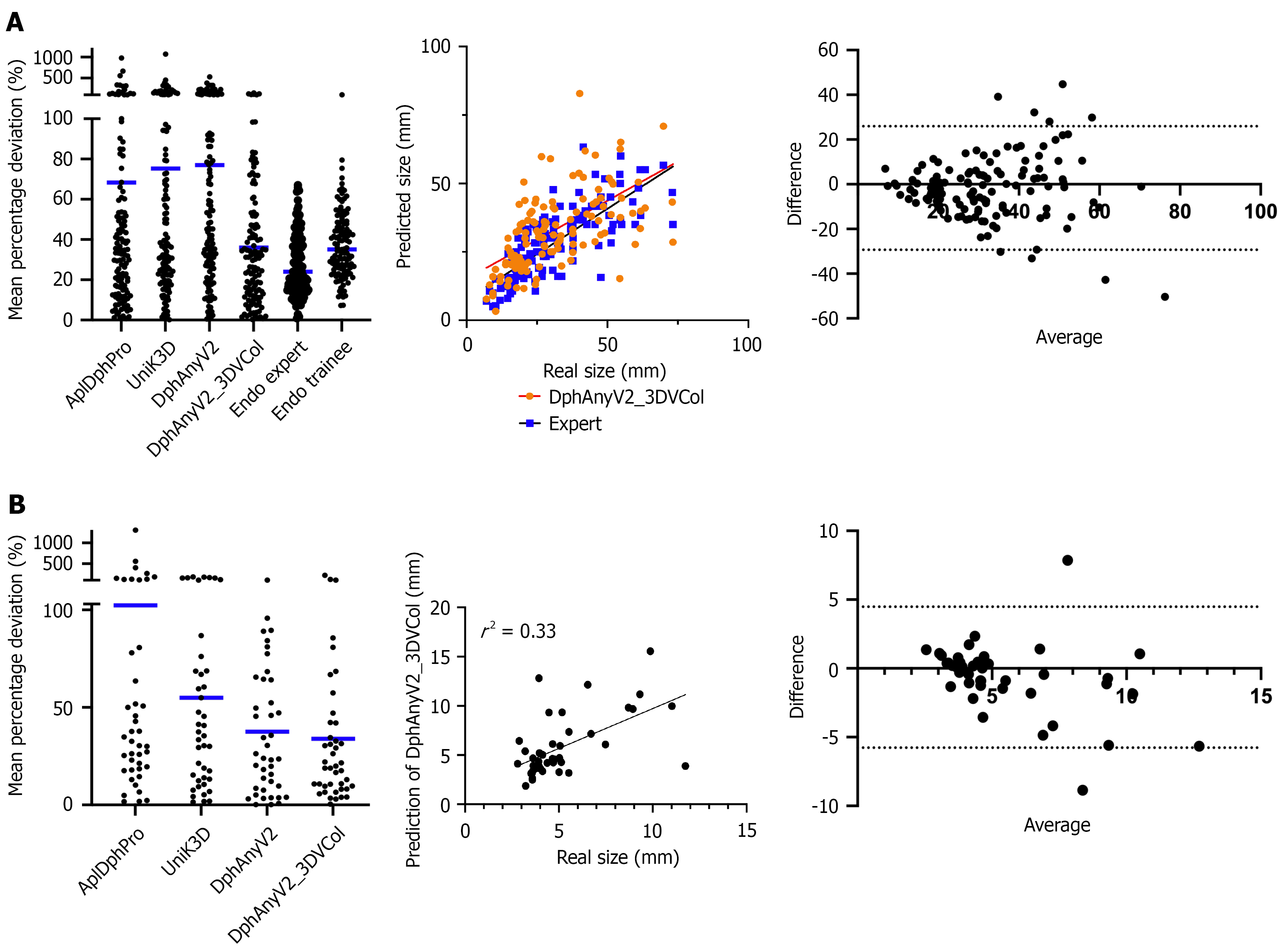
Figure 3 Most prediction errors lie within the limits of agreement, suggesting that the model’s measurements are largely consistent with the gold-standard caliper measurements.
A: In the endoscopic submucosal dissection cohort, the first plot illustrates the mean absolute percentage error across the three baseline models and the finetuned model. The best AI model, DphAnyV2_3DVCol, showed comparable mean percentage deviation as the trainees, while the experts still did more accurate predictions. The second plot depicts the prediction of the fine-tuned Depth Anything V2 model (DphAnyV2_3DVCol) and the experts prediction compared with the ground-truth size. Model and Experts show a similar error distribution. The third plot presents the Bland-Altman analysis for the best fine-tuned Depth Anything V2 model. The majority of this models predictions lie within the limits of agreement, suggesting good agreement of with the gold-standard caliper measurements; B: Results from the external dataset. The first graph shows the mean absolute percentage errors for the three baseline models and the fine-tuned model. The second plot depicts the prediction of the finetuned Depth Anything V2 model against the ground-truth size. Smaller polyp sizes lead to less outliers than larger sizes. The third plot presents the Bland-Altman analysis for the best fine-tuned Depth Anything V2 model.
- Citation: Schulz D, Ebigbo A, Holley E, Nagl S, Nichiporyk O, Probst A, Scheppach MW, Römmele C, Roser D, Zellmer S, Messmann H. Domain specific training with three-dimensional virtual colonoscopy images improves artificial intelligence based automated size prediction for large lesions. World J Gastroenterol 2026; 32(45): 121242
- URL: https://www.wjgnet.com/1007-9327/full/v32/i45/121242.htm
- DOI: https://dx.doi.org/10.3748/wjg.121242