
















Copyright: ©Author(s) 2026.
World J Gastroenterol. Nov 28, 2026; 32(44): 117819
Published online Nov 28, 2026. doi: 10.3748/wjg.117819
Published online Nov 28, 2026. doi: 10.3748/wjg.117819
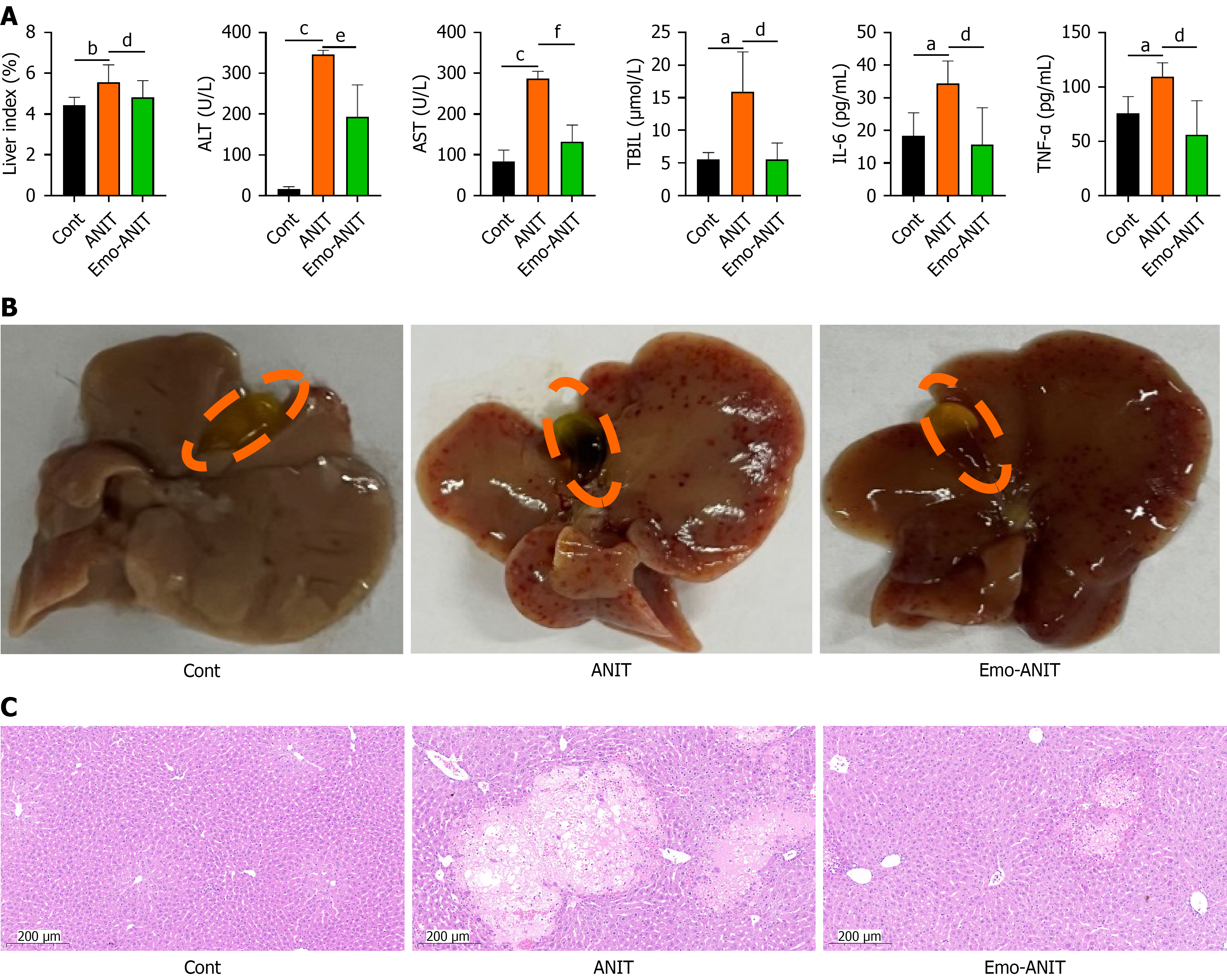
Figure 1 Emodin ameliorated α-naphthylisothiocyanate-induced cholestasis in mice.
A: Liver index and serum biochemical analysis; B: Morphology observation of mice liver and gallbladder; C: Histopathological examination by hematoxylin and eosin staining in mice liver sections, magnification 200 ×, n = 3 (scale bar: 200 μm). Data were analyzed via two-tailed Student’s t-test. n = 6. aP < 0.05 vs control group, bP < 0.01 vs control group, cP < 0.001 vs control group, dP < 0.05 vs α-naphthylisothiocyanate group, eP < 0.01 vs α-naphthylisothiocyanate group, and fP < 0.001 vs α-naphthylisothiocyanate group. Cont: Control; Emo: Emodin; ANIT: Α-naphthylisothiocyanate; ALT: Alanine transaminase; AST: Aspartate aminotransferase; TBIL: Total bilirubin; IL-6: Interleukin-6; TNF-α: Tumor necrosis factor α.
- Citation: Wang CX, Wang LM, Fu ZF, Zhao X, Han LF, Lou YF. Emodin ameliorates cholestatic liver injury by regulating bile acid metabolism and gut microbiota in mice. World J Gastroenterol 2026; 32(44): 117819
- URL: https://www.wjgnet.com/1007-9327/full/v32/i44/117819.htm
- DOI: https://dx.doi.org/10.3748/wjg.117819