
















Copyright: ©Author(s) 2026.
World J Gastroenterol. Nov 21, 2026; 32(43): 121944
Published online Nov 21, 2026. doi: 10.3748/wjg.121944
Published online Nov 21, 2026. doi: 10.3748/wjg.121944
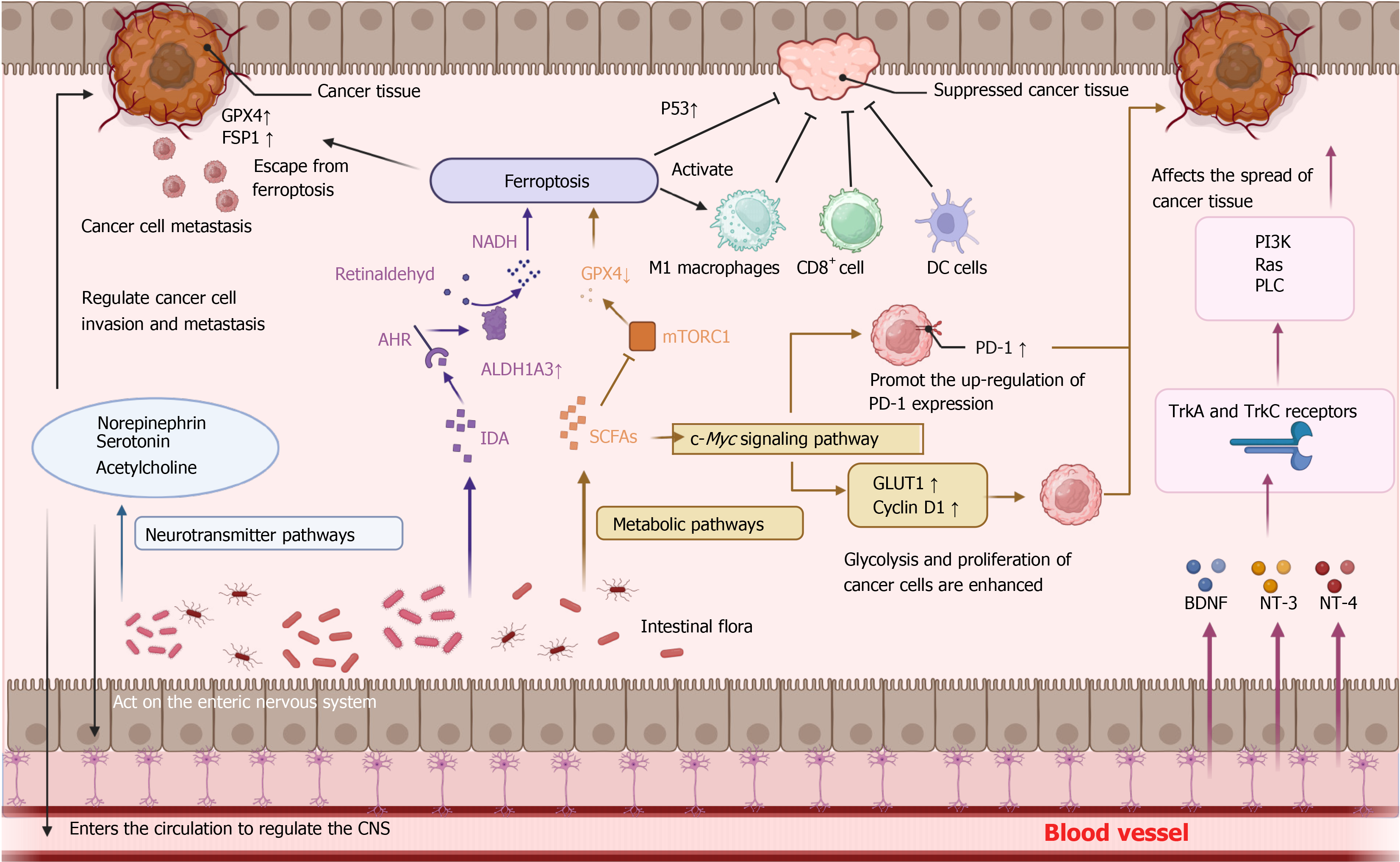
Figure 3 The brain-gut axis system regulates gastrointestinal tumors through multiple pathways.
The gut microbiota and its metabolic products can have dual effects. For instance, short-chain fatty acids can enhance c-Myc-mediated programmed cell death ligand 1 expression to promote immune escape of tumor cells and increase their glycolysis. Meanwhile, short-chain fatty acids can also promote ferroptosis of tumor cells and enhance the killing function of immune cells against tumors through the mammalian target of rapamycin signaling pathway. Additionally, specific microbial metabolites, such as indoleacrylic acid, can upregulate ALDH1A3 and increase nicotinamide adenine dinucleotide production by activating the aryl hydrocarbon receptor pathway, thereby supporting the ferroptosis suppressor protein 1 defense system and activating the glutathione and glutathione peroxidase 4 axis, which inhibits tumor ferroptosis. Moreover, the tumor microenvironment is also regulated by neural and neurotrophic signals. Neurotransmitters such as norepinephrine, serotonin, and acetylcholine can also be involved in tumor metastasis and invasion, while neurotrophic factors brain-derived neurotrophic factor, neurotrophin (NT)-3, and NT-4 act through tropomyosin receptor kinase A and tropomyosin receptor kinase C receptors to activate downstream pathways including phosphatidylinositol 3-kinase, Ras, and phospholipase C, thereby influencing the development of cancer. GPX4: Glutathione peroxidase 4; FSP1: Ferroptosis suppressor protein 1; CNS: Central nervous system; NADH: Nicotinamide adenine dinucleotide; IDA: Indoleacrylic acid; AHR: Aryl hydrocarbon receptor; SCFA: Short-chain fatty acid; mTORC1: Mammalian target of rapamycin complex 1; CD: Cluster of differentiation; DC: Dendritic cells; PD-1: Programmed death receptor 1; GLUT1: Glucose transporter 1; BDNF: Brain-derived neurotrophic factor; PI3K: Phosphatidylinositol 3-kinase; TrkA: Tropomyosin receptor kinase A; TrkC: Tropomyosin receptor kinase C; PLC: Phospholipase C; NT: Neurotrophin.
- Citation: Xu X, Qu CK, Bao LL, Zhang YX, Wang WJ, Ye YQ. Bridge of imbalance: How does the brain-gut axis act as a catalyst for gastrointestinal tumors in aging. World J Gastroenterol 2026; 32(43): 121944
- URL: https://www.wjgnet.com/1007-9327/full/v32/i43/121944.htm
- DOI: https://dx.doi.org/10.3748/wjg.121944