
















Copyright: ©Author(s) 2026.
World J Gastroenterol. Nov 21, 2026; 32(43): 121477
Published online Nov 21, 2026. doi: 10.3748/wjg.121477
Published online Nov 21, 2026. doi: 10.3748/wjg.121477
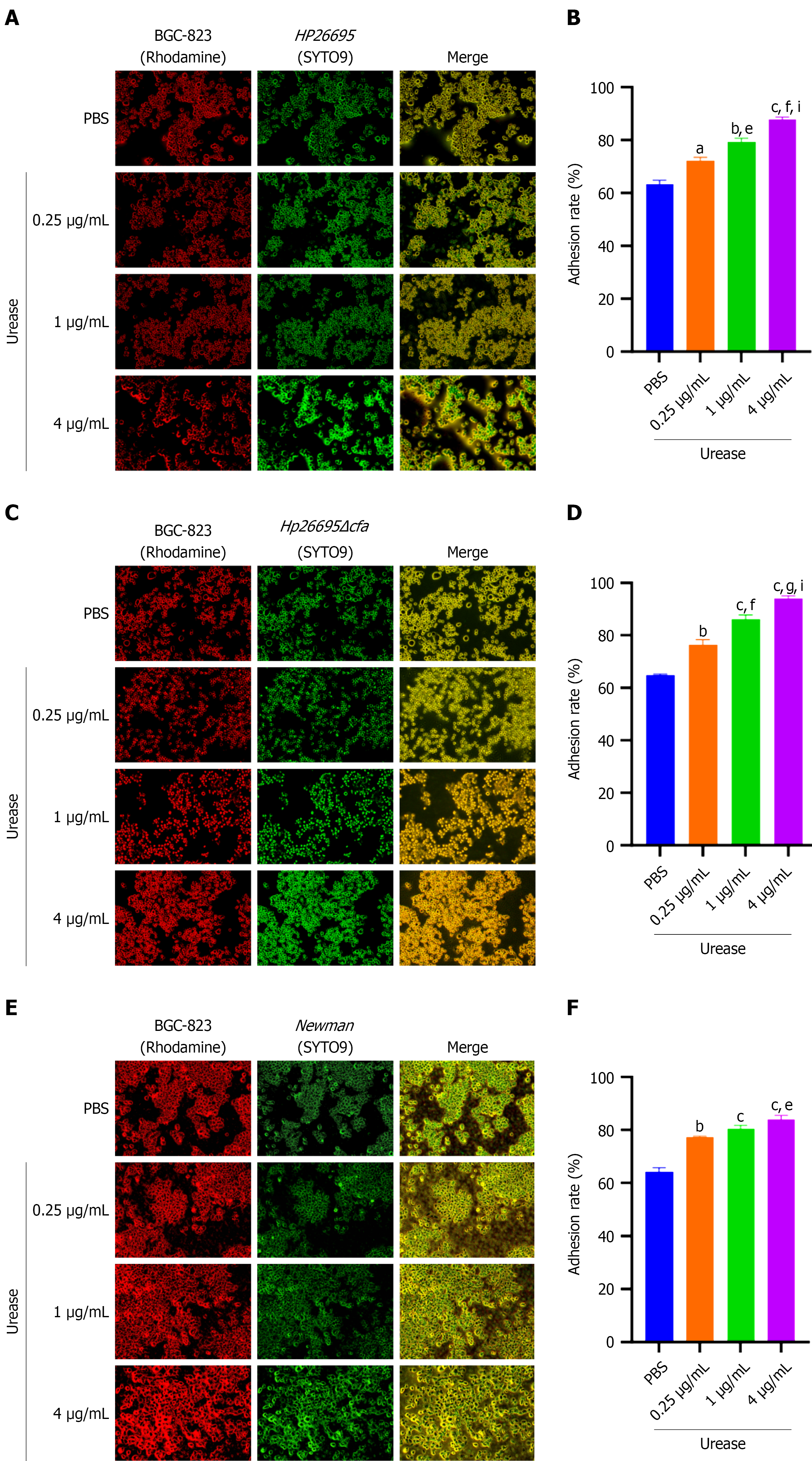
Figure 7 Exogenous urease enhances bacterial adhesion to BGC823 cells.
A and B: Representative fluorescence images and quantification of Helicobacter pylori 26695 adhesion to BGC823 cells in the presence of exogenous urease; C and D: Representative fluorescence images and quantitative analysis of Helicobacter pylori 26695Δcfa adhesion to BGC823 cells in the presence of exogenous urease; E and F: Representative fluorescence images and quantitative analysis of the adhesion of the Newman strain to BGC823 cells in the presence of exogenous urease. BGC823 cells are shown in rhodamine red, bacteria are labelled with SYTO9 green, and merged images show bacterial attachment to host cells. aP < 0.05 vs phosphate-buffered saline, bP < 0.01 vs phosphate-buffered saline, cP < 0.001 vs phosphate-buffered saline, eP < 0.05 vs 0.25 μg/mL urease, fP < 0.01 vs 0.25 μg/mL urease, gP < 0.001 vs 0.25 μg/mL urease, iP < 0.05 vs 1 μg/mL urease. PBS: Phosphate-buffered saline.
- Citation: Pang GF, Xu JY, Guan AX, Yang SX, Duangsonk K, Huang YQ, Zhou QH, Zhou WT. Study on the adhesive effect of deoxyshikonin on Helicobacter pylori. World J Gastroenterol 2026; 32(43): 121477
- URL: https://www.wjgnet.com/1007-9327/full/v32/i43/121477.htm
- DOI: https://dx.doi.org/10.3748/wjg.121477