











Copyright: ©Author(s) 2026.
World J Gastroenterol. Nov 14, 2026; 32(42): 121690
Published online Nov 14, 2026. doi: 10.3748/wjg.121690
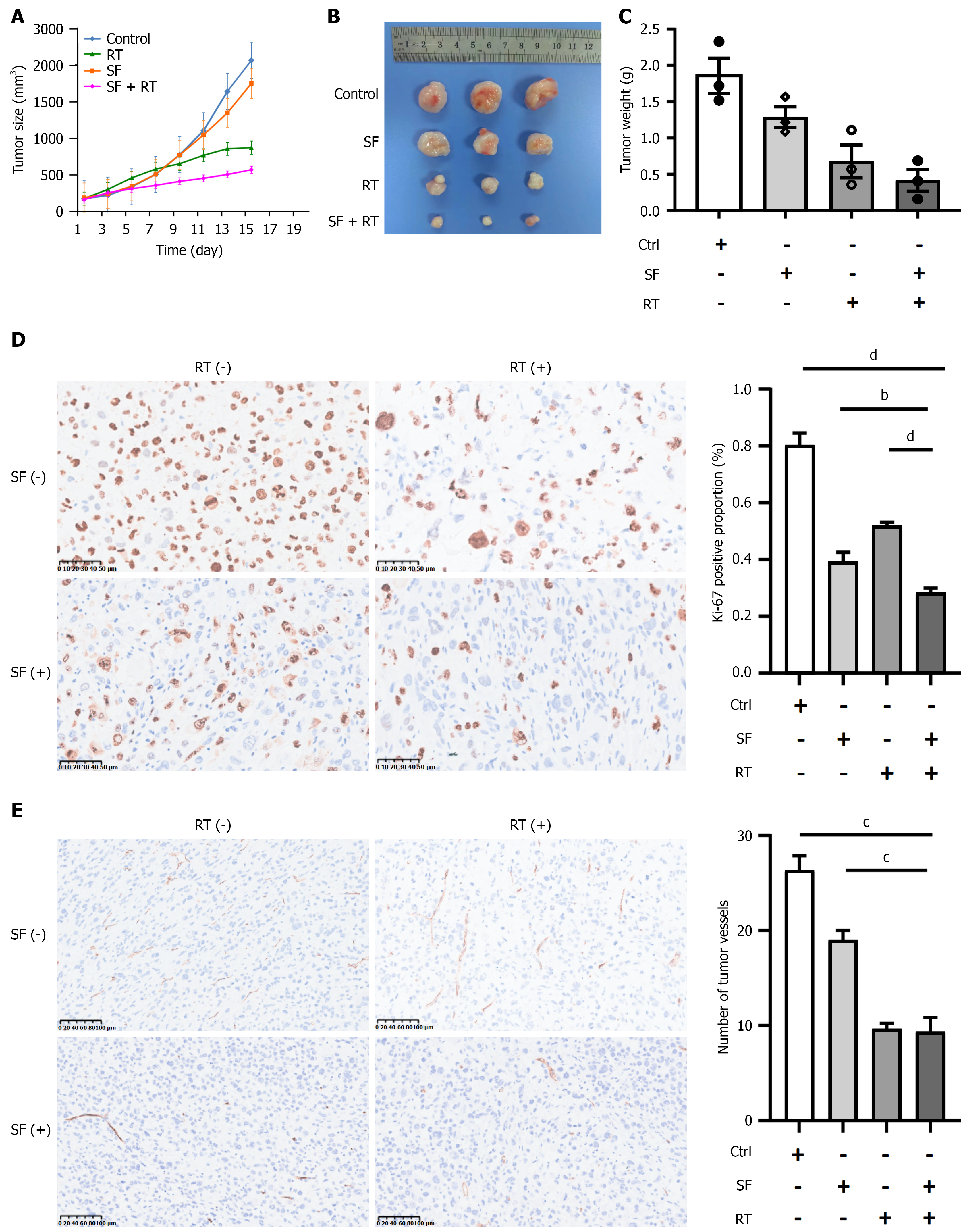
Figure 2 Surufatinib is associated with radiation sensitization in a nude mouse tumor transplantation model by inhibiting tumor proli feration and angiogenesis.
A: Tumor growth curves of different treatment groups. Data are mean values from 4 mice in control, surufatinib, and radiotherapy groups, and 3 mice in the combination group (one mouse died from anesthesia); B: Representative tumor images of different treatment groups (control, surufatinib, radiation, and combination); C: Histogram of tumor weight of each mouse in the 4 groups; D: Representative immunohistochemistry staining image for Ki-67 in the 4 groups and the histogram for Ki-67 positive proportions. All immunohistochemical scoring was performed blindly; E: Representative immunohistochemistry staining image for CD31 in the 4 groups and the histogram for number of tumor vessels. bP < 0.01, cP < 0.001, dP < 0.0001. Ctrl: Control; SF: Surufatinib. RT: Radiotherapy alone.
- Citation: Huang A, Cao Y, Li B, Xiao J, Zhan SD, Wang NY, Mei XP, Zhao SZ, Han J, Xiao Y, Wang LF, Ma H. Surufatinib achieves radiosensitivity in cholangiocarcinoma by suppressing GINS4 expression to induce Ca2+/cAMP signaling activation. World J Gastroenterol 2026; 32(42): 121690
- URL: https://www.wjgnet.com/1007-9327/full/v32/i42/121690.htm
- DOI: https://dx.doi.org/10.3748/wjg.121690