
















Copyright: ©Author(s) 2026.
World J Gastroenterol. Nov 14, 2026; 32(42): 117873
Published online Nov 14, 2026. doi: 10.3748/wjg.117873
Published online Nov 14, 2026. doi: 10.3748/wjg.117873
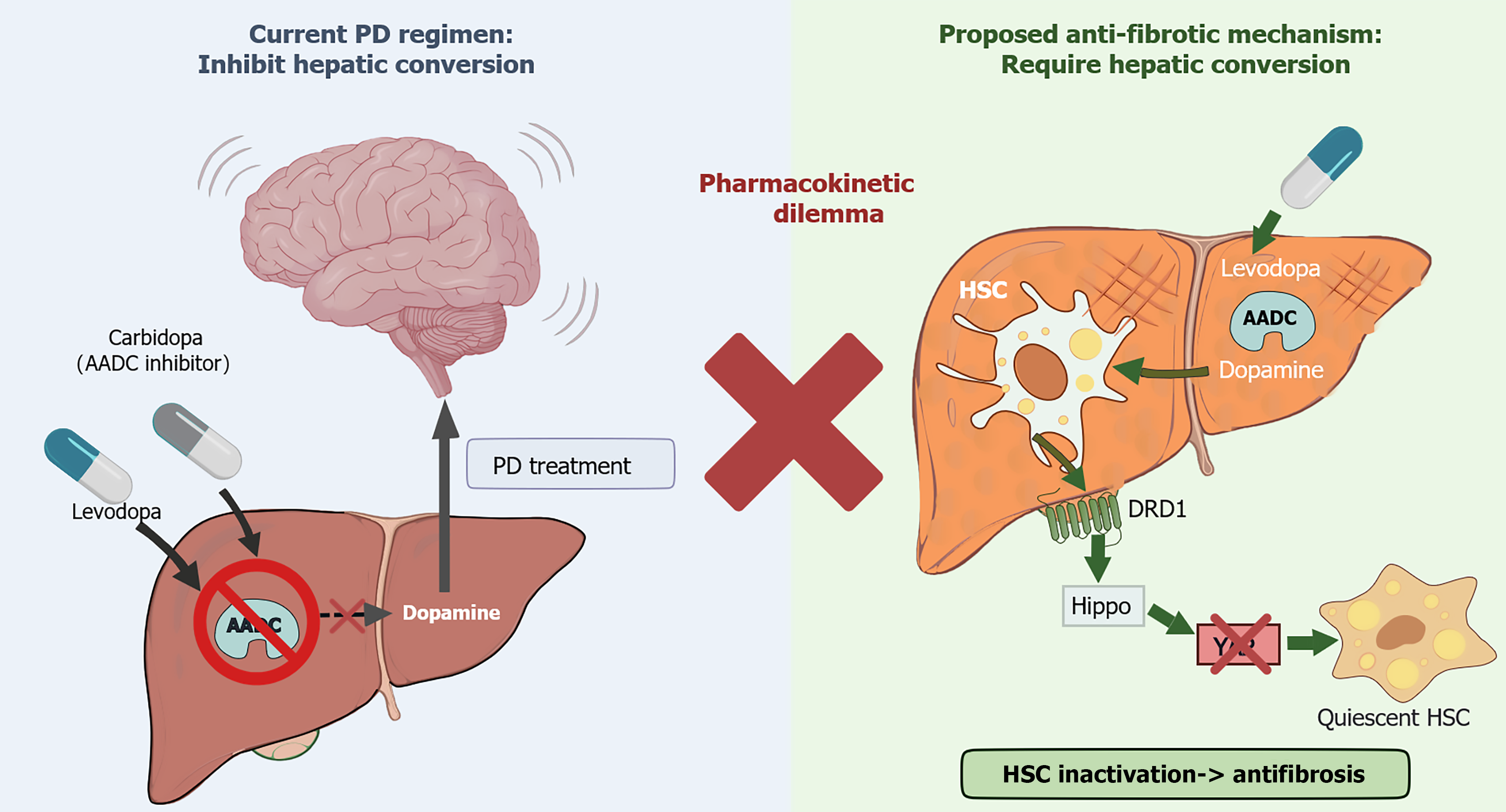
Figure 1 Pharmacokinetic incompatibility between standard levodopa therapy and its proposed antifibrotic mechanism.
Standard Parkinson’s disease treatment combines levodopa with peripheral aromatic L-amino acid decarboxylase inhibitors to limit peripheral dopamine synthesis, thereby restricting hepatic dopamine generation. In contrast, the proposed antifibrotic mechanism requires intrahepatic dopamine production, activation of dopamine receptor D1 on hepatic stellate cells (HSCs), and suppression of Hippo/yes-associated protein signaling, resulting in HSC inactivation. This mismatch illustrates a fundamental pharmacokinetic dilemma for translational application. PD: Parkinson’s disease; AADC: Aromatic L-amino acid decarboxylase; HSC: Hepatic stellate cell; DRD1: Dopamine receptor D1; YAP: Yes-associated protein.
- Citation: Yin DY, Liu XY, Li A, Ren ZG. From the brain to the liver: A pharmacokinetic dilemma and safety barriers in levodopa-based antifibrotic therapy. World J Gastroenterol 2026; 32(42): 117873
- URL: https://www.wjgnet.com/1007-9327/full/v32/i42/117873.htm
- DOI: https://dx.doi.org/10.3748/wjg.117873