
















Copyright: ©Author(s) 2026.
World J Gastroenterol. Nov 7, 2026; 32(41): 120954
Published online Nov 7, 2026. doi: 10.3748/wjg.120954
Published online Nov 7, 2026. doi: 10.3748/wjg.120954
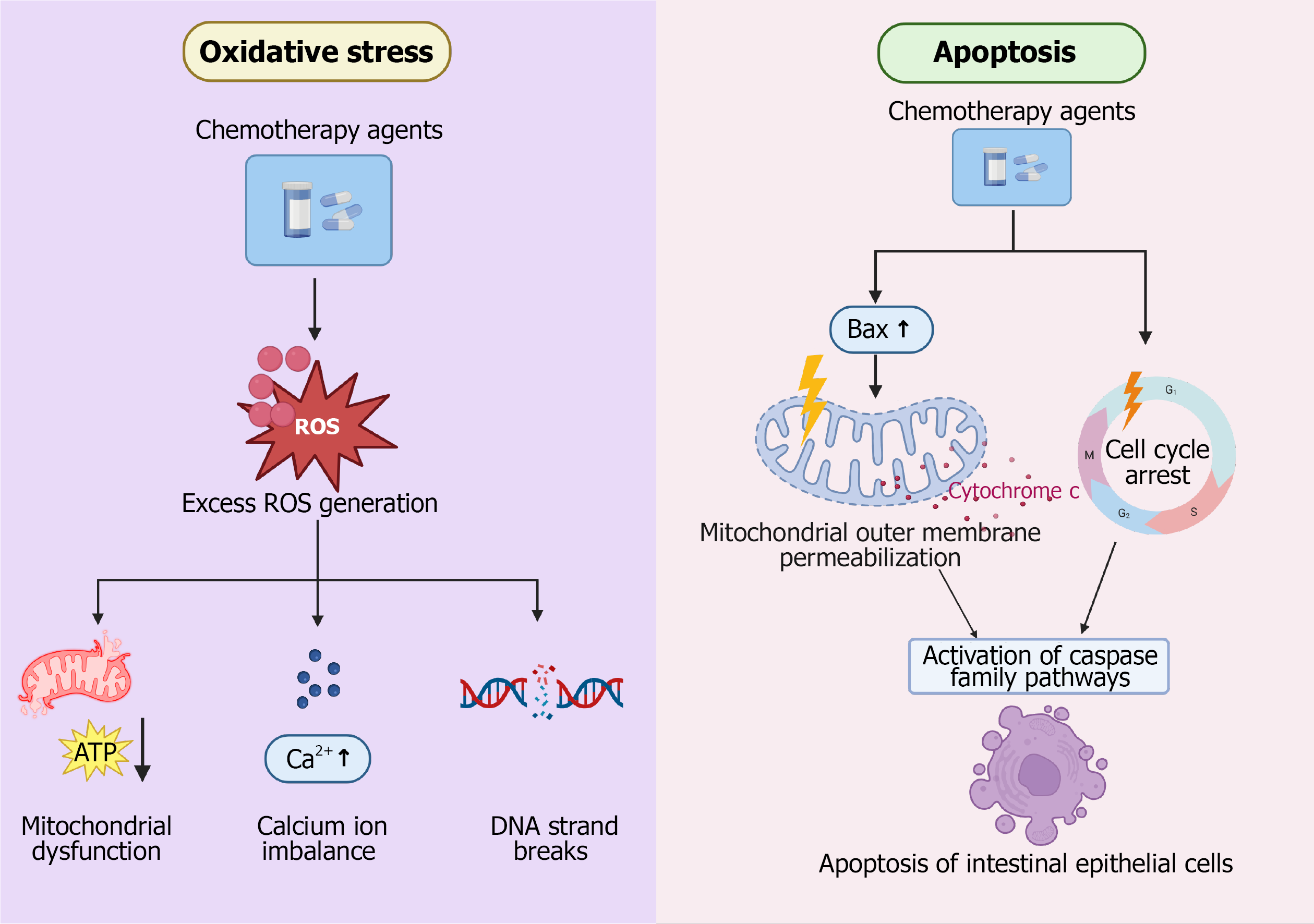
Figure 2 Mechanisms of chemotherapy-induced intestinal injury: Oxidative stress and apoptosis.
Left: Chemotherapeutic agents induce oxidative stress through excessive reactive oxygen species production, resulting in mitochondrial dysfunction, disruption of calcium ion homeostasis, and DNA damage. Right: Chemotherapeutic agents activate apoptotic pathways via Bax-mediated mitochondrial outer membrane permeabilisation, cytochrome c release, and cell cycle arrest, leading to activation of the caspase cascade and apoptosis of intestinal epithelial cells. ROS: Reactive oxygen species. Created using BioRender.
- Citation: Nan YL, Sun TH, Ren KJ, Min TH, Ma YY, Xie X, Deng XY, Peng YC, Liu YY, Tong SY, Wang W, Dang CX, Zhang H. Cancer therapy-induced intestinal injury: Mechanisms, clinical manifestations, and management strategies. World J Gastroenterol 2026; 32(41): 120954
- URL: https://www.wjgnet.com/1007-9327/full/v32/i41/120954.htm
- DOI: https://dx.doi.org/10.3748/wjg.120954