
















Copyright: ©Author(s) 2026.
World J Gastroenterol. Nov 7, 2026; 32(41): 120028
Published online Nov 7, 2026. doi: 10.3748/wjg.120028
Published online Nov 7, 2026. doi: 10.3748/wjg.120028
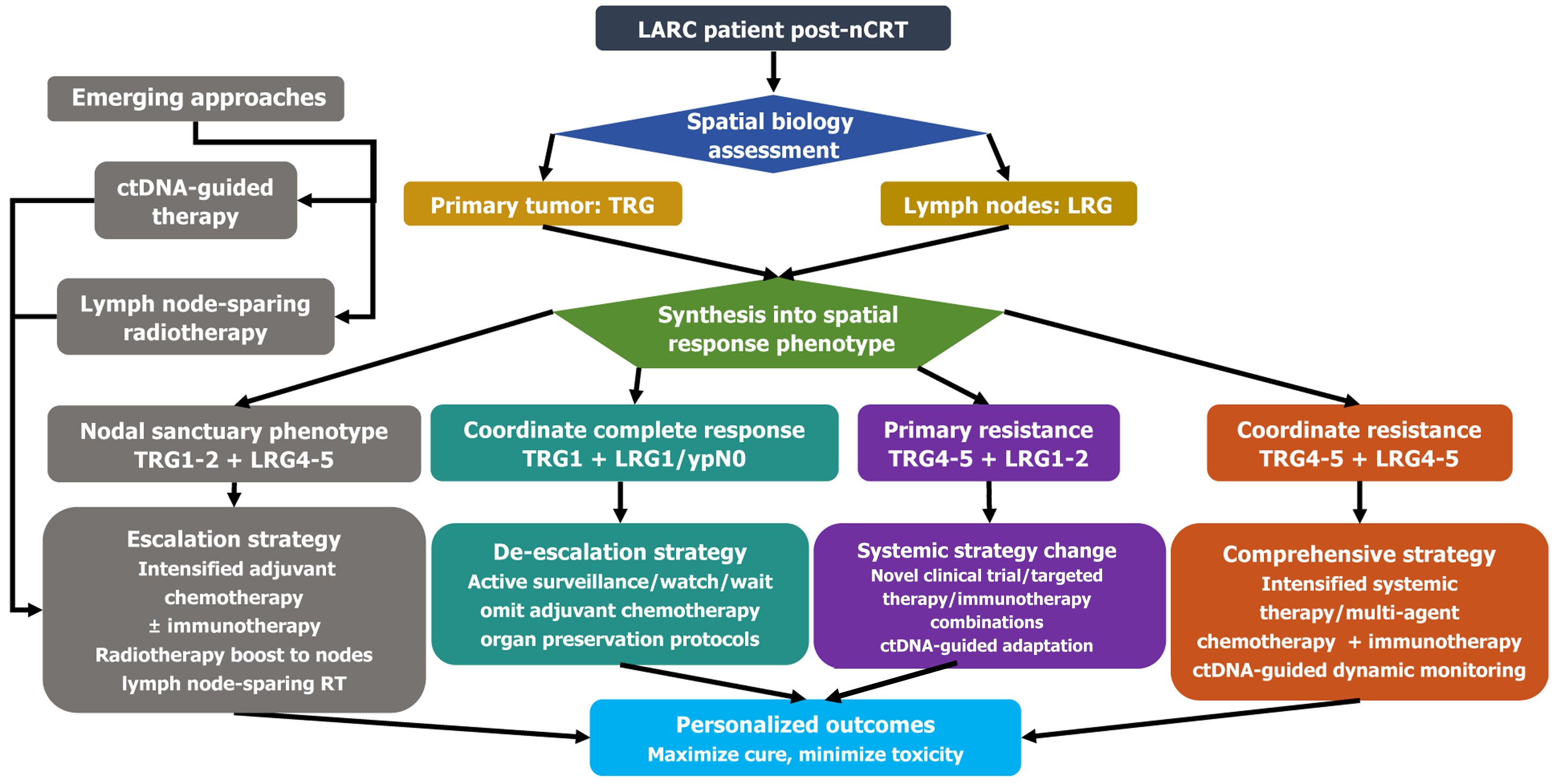
Figure 3 Spatial biology-informed precision oncology treatment pipeline for locally advanced rectal cancer.
The integration of primary tumor regression grade (TRG) and lymph node regression grade (LRG) enables the classification of patients with locally advanced rectal cancer into four distinct spatial response phenotypes: (1) Coordinate complete response (TRG1 + LRG1 or pathological lymph node stage 0); (2) Nodal sanctuary phenotype (TRG1-2 + LRG4-5); (3) Primary resistance (TRG4-5 + LRG1-2); and (4) Coordinate resistance (TRG4-5 + LRG4-5). Each distinct phenotype is associated with a unique therapeutic strategy. Patients exhibiting a coordinated complete response may be considered for treatment de-escalation, encompassing active surveillance or the omission of adjuvant chemotherapy. The nodal sanctuary phenotype is characterised by discordant response, whereby the primary tumor responds well but nodal disease persists. This requires escalation of treatment, including intensified adjuvant chemotherapy, combination immunotherapy, a radiotherapy boost to residual nodes, or emerging lymph node-sparing radiotherapy approaches. Primary resistance and coordinate resistance phenotypes mandate enrolment in novel clinical trials exploring targeted therapy or immunotherapy combinations, frequently guided by circulating tumor DNA dynamic monitoring. Emerging approaches, including circulating tumor DNA-guided therapy, lymph node-sparing radiotherapy and spatial multi-omics profiling, are currently being validated in clinical trials, suggesting potential for further development of the current precision oncology framework. LARC: Locally advanced rectal cancer; nCRT: Neoadjuvant chemoradiotherapy; ctDNA: Circulating tumor DNA; TRG: Tumor regression grade; LRG: Lymph node regression grade; RT: Radiotherapy.
- Citation: Wang RG. Tumor-node response heterogeneity: Exploring the “spatial biology” of neoadjuvant therapy response in rectal cancer and its clinical implications. World J Gastroenterol 2026; 32(41): 120028
- URL: https://www.wjgnet.com/1007-9327/full/v32/i41/120028.htm
- DOI: https://dx.doi.org/10.3748/wjg.120028