
















Copyright: ©Author(s) 2026.
World J Gastroenterol. Nov 7, 2026; 32(41): 120028
Published online Nov 7, 2026. doi: 10.3748/wjg.120028
Published online Nov 7, 2026. doi: 10.3748/wjg.120028
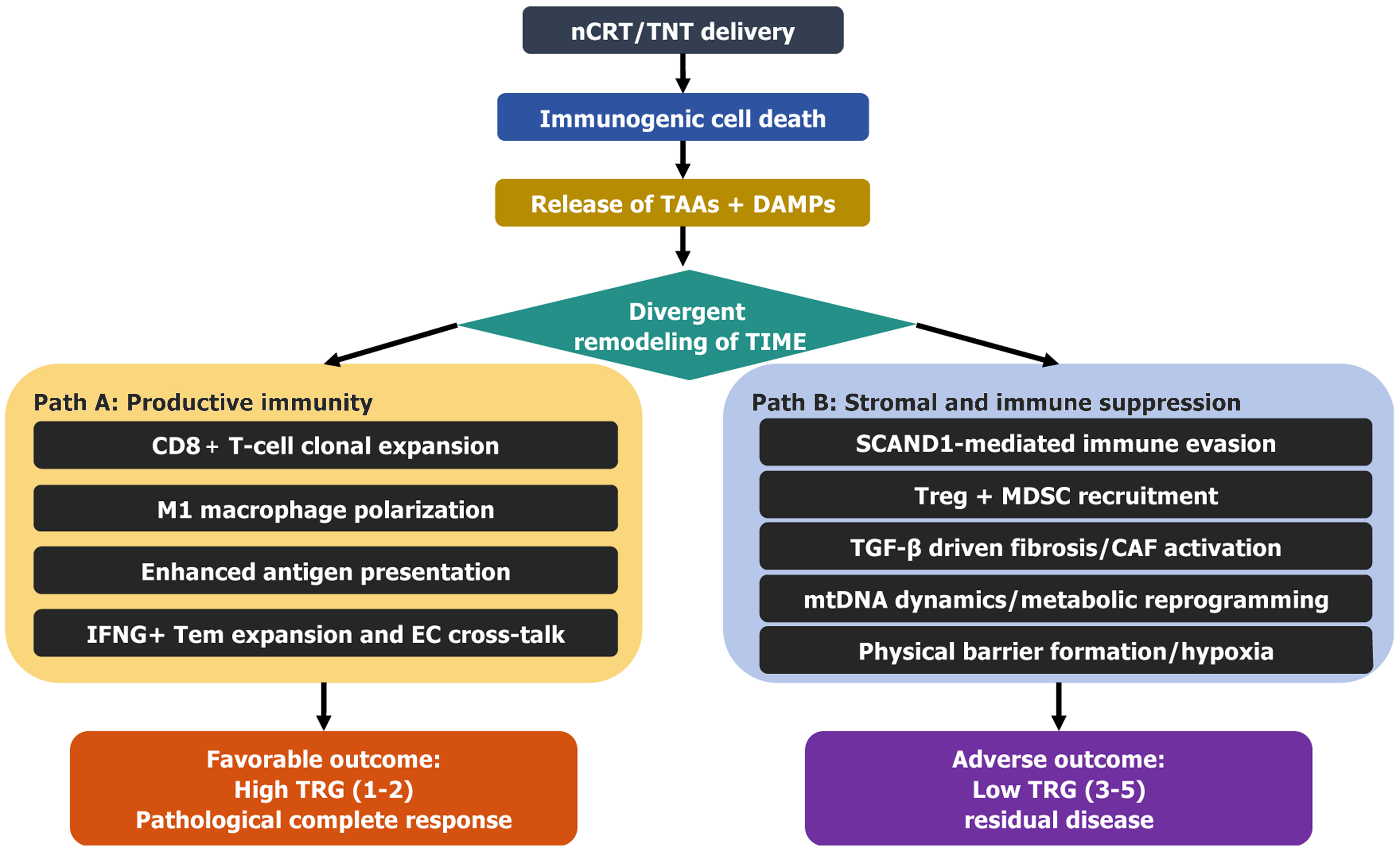
Figure 1 Dynamic remodeling of the primary tumor immune microenvironment following neoadjuvant chemoradiotherapy.
Neoadjuvant chemoradiotherapy or total neoadjuvant therapy initiates an antitumor immune response by inducing immunogenic cell death, which releases tumor-associated antigens and damage-associated molecular patterns. This process has been shown to stimulate CD8+ T-cell expansion, M1 macrophage polarization, and enhanced antigen presentation. Recent single-cell studies have identified a positive feedback loop between Interferon-gamma+ effector memory T cell and atypical chemokine receptor 1+ endothelial cells that potentiates antitumor immunity. However, neoadjuvant chemoradiotherapy simultaneously activates robust immunosuppressive pathways, including transforming growth factor-β-driven fibrosis, cancer-associated fibroblast activation, regulatory T cell and myeloid-derived suppressor cell recruitment, and SCAN-domain-containing protein 1-mediated immune evasion. Mitochondrial DNA dynamics add further to metabolic reprogramming and tumor aggressiveness. The equilibrium between these opposing forces is a pivotal factor in determining the tumor regression grade, thereby signifying the spatial variation of the primary tumor response. nCRT: Neoadjuvant chemoradiotherapy; TNT: Total neoadjuvant therapy; TAAs: Tumor-associated antigens; DAMPs: Damage-associated molecular patterns; TIME: Tumor immune microenvironment; IFNG: Interferon-gamma; EC: Endothelial cell; TRG: Tumor regression grade; SCAND1: SCAN-domain-containing protein 1; MDSC: Myeloid-derived suppressor cell; TGF: Transforming growth factor; CAF: Cancer-associated fibroblast; mtDNA: Mitochondrial DNA; Tem: Effector memory T cell; Treg: Regulatory T cell.
- Citation: Wang RG. Tumor-node response heterogeneity: Exploring the “spatial biology” of neoadjuvant therapy response in rectal cancer and its clinical implications. World J Gastroenterol 2026; 32(41): 120028
- URL: https://www.wjgnet.com/1007-9327/full/v32/i41/120028.htm
- DOI: https://dx.doi.org/10.3748/wjg.120028