










Copyright: ©Author(s) 2026.
World J Gastroenterol. Oct 28, 2026; 32(40): 119684
Published online Oct 28, 2026. doi: 10.3748/wjg.119684
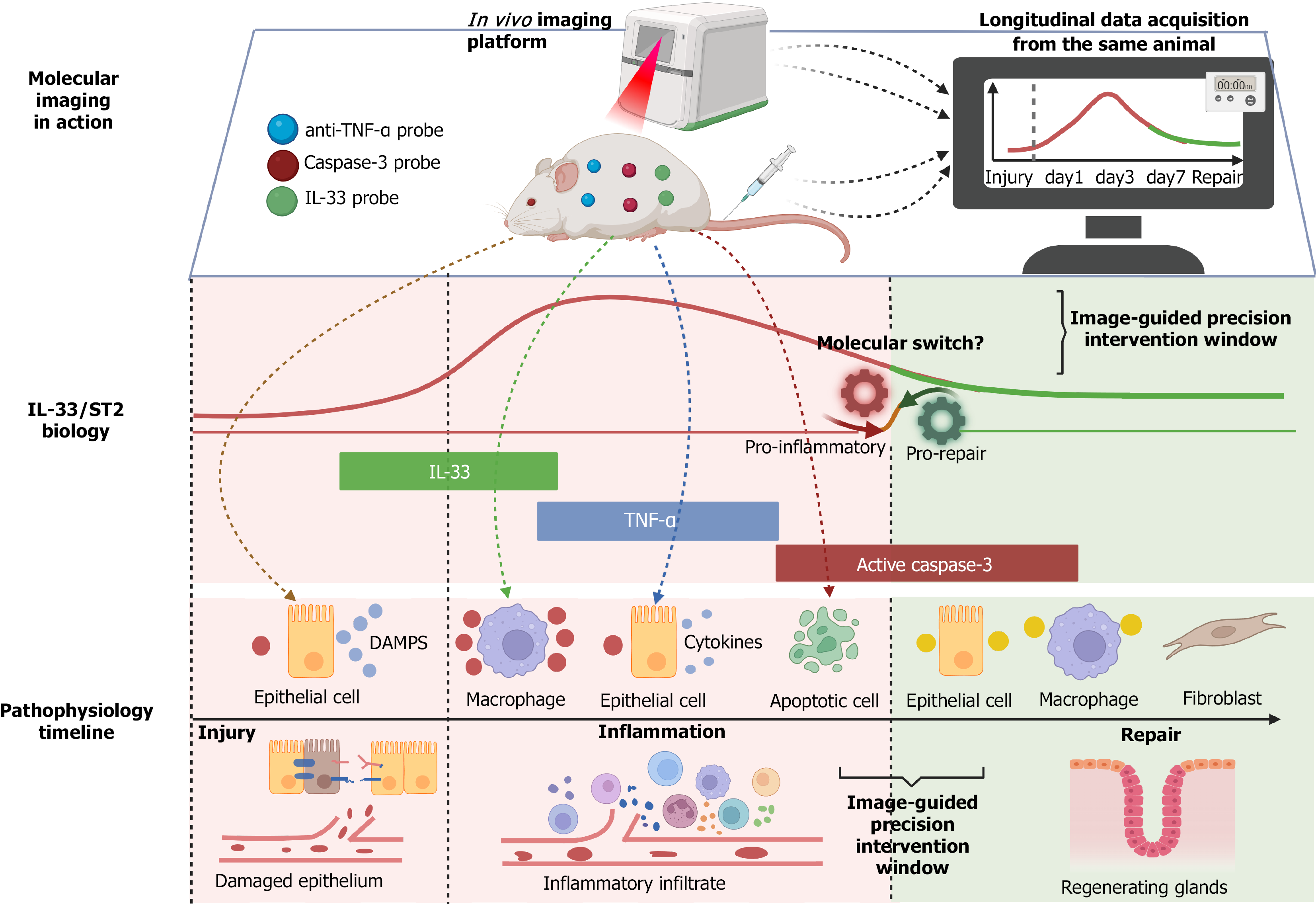
Figure 1 Visualizing the spatiotemporal dynamics of interleukin-33/suppression of tumorigenicity 2 signaling to establish a molecular ima ging framework for precision intervention in gastric injury.
This figure demonstrates how molecular imaging technology reveals the spatiotemporal dynamics of the interleukin (IL)-33/suppression of tumorigenicity 2 (ST2) signaling axis during gastric injury and repair through a three-tiered integrated framework. The top layer presents the core elements of the in vivo imaging platform. Through tail vein injection of targeted molecular probes [e.g., anti- tumor necrosis factor-alpha (TNF-α) probe, caspase-3 probe, IL-33 probe] combined with in vivo imaging equipment, continuous, non-invasive monitoring of the same animal model at different time points is achieved. Dynamic curves displayed on monitors visually represent real-time changes in signal intensity, embodying the core advantages of molecular imaging: Dynamic, real-time, in vivo, and continuous. The middle layer elucidates the molecular mechanisms of the signaling axis. IL-33, released as an alarm signal from damaged epithelial cells, activates downstream pathways by binding to the ST2 receptor. This dual action promotes the production of pro-inflammatory factors like TNF-α and IL-1β by inflammatory cells such as macrophages, while simultaneously activating T cells to generate cytokines like IL-4, IL-5, and IL-13 that participate in tissue repair, revealing the dual role of this signaling axis in inflammation and repair. The bottom layer delineates three critical phases of gastric injury: The injury phase, during which damaged epithelial cells release damage-associated molecular patterns; the inflammatory phase, marked by pathway activation and massive production of pro-inflammatory factors; and the repair phase, involving tissue regeneration and restoration of homeostasis. Each phase corresponds to molecular events in the middle layer and imaging probe activity windows in the top layer. IL: Interleukin; TNF-α: Tumor necrosis factor-alpha; ST2: Suppression of tumorigenicity 2.
- Citation: Qi WT, Jia XH, Xue KL, Wang JW, Liang L. Interleukin-33/suppression of tumorigenicity 2 signaling in gastric injury: From mechanistic validation to spatiotemporal precision. World J Gastroenterol 2026; 32(40): 119684
- URL: https://www.wjgnet.com/1007-9327/full/v32/i40/119684.htm
- DOI: https://dx.doi.org/10.3748/wjg.119684