
















©The Author(s) 2026.
World J Gastroenterol. Jan 28, 2026; 32(4): 114420
Published online Jan 28, 2026. doi: 10.3748/wjg.v32.i4.114420
Published online Jan 28, 2026. doi: 10.3748/wjg.v32.i4.114420
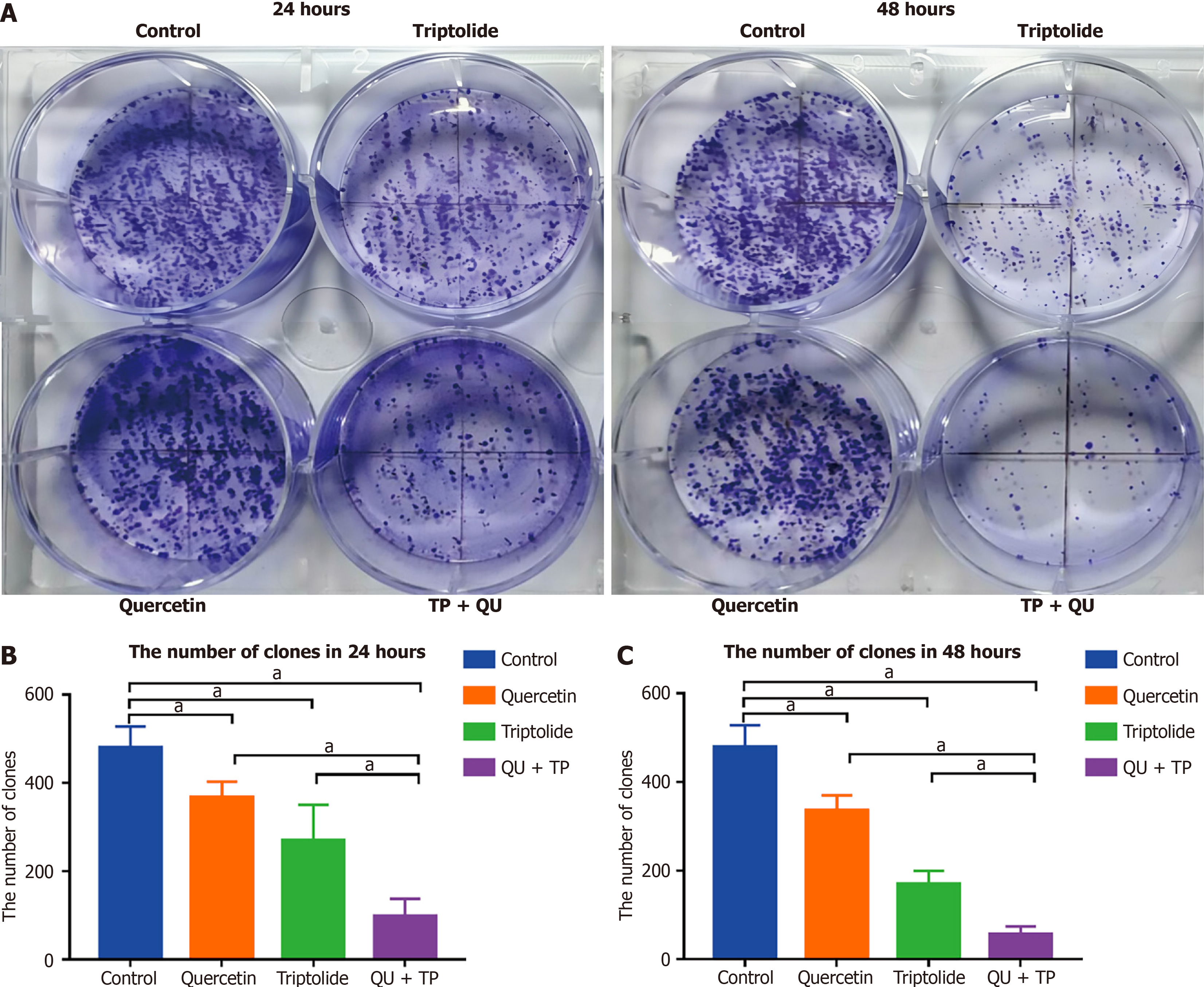
Figure 5 The colony formation of triptolide and/or quercetin in HepG2 cell line.
A: The photos of HepG2 cell line’s colonies with 1000 seeding cell number that treated with 25 nmol/L triptolide and/or 100 μmol/L quercetin for 24 hours; B: The photos of HepG2 cell line’s colonies with 1000 seeding cell number that treated with 25 nmol/L triptolide and/or 100 μmol/L quercetin for 48 hours; C: Quantitative representation of the colonies of HepG2 cells. Compared to the control group, the colony formations in treated groups were decreased and the combinational group was lowest. Meanwhile, the colony formation decreased as time goes on in each drug groups. Data was presented as means ± SE of three independent experiments. aP < 0.05. TP: Triptolide; QU: Quercetin.
- Citation: Tong HX, Zhang JL, Nie WY, Jiang LJ, Hu JQ, Lu T. Synergistic anti-hepatoma effect of triptolide and quercetin via co-inhibition and interaction with Janus kinase and mammalian target of rapamycin signal pathway. World J Gastroenterol 2026; 32(4): 114420
- URL: https://www.wjgnet.com/1007-9327/full/v32/i4/114420.htm
- DOI: https://dx.doi.org/10.3748/wjg.v32.i4.114420