
















©The Author(s) 2026.
World J Gastroenterol. Jan 28, 2026; 32(4): 113647
Published online Jan 28, 2026. doi: 10.3748/wjg.v32.i4.113647
Published online Jan 28, 2026. doi: 10.3748/wjg.v32.i4.113647
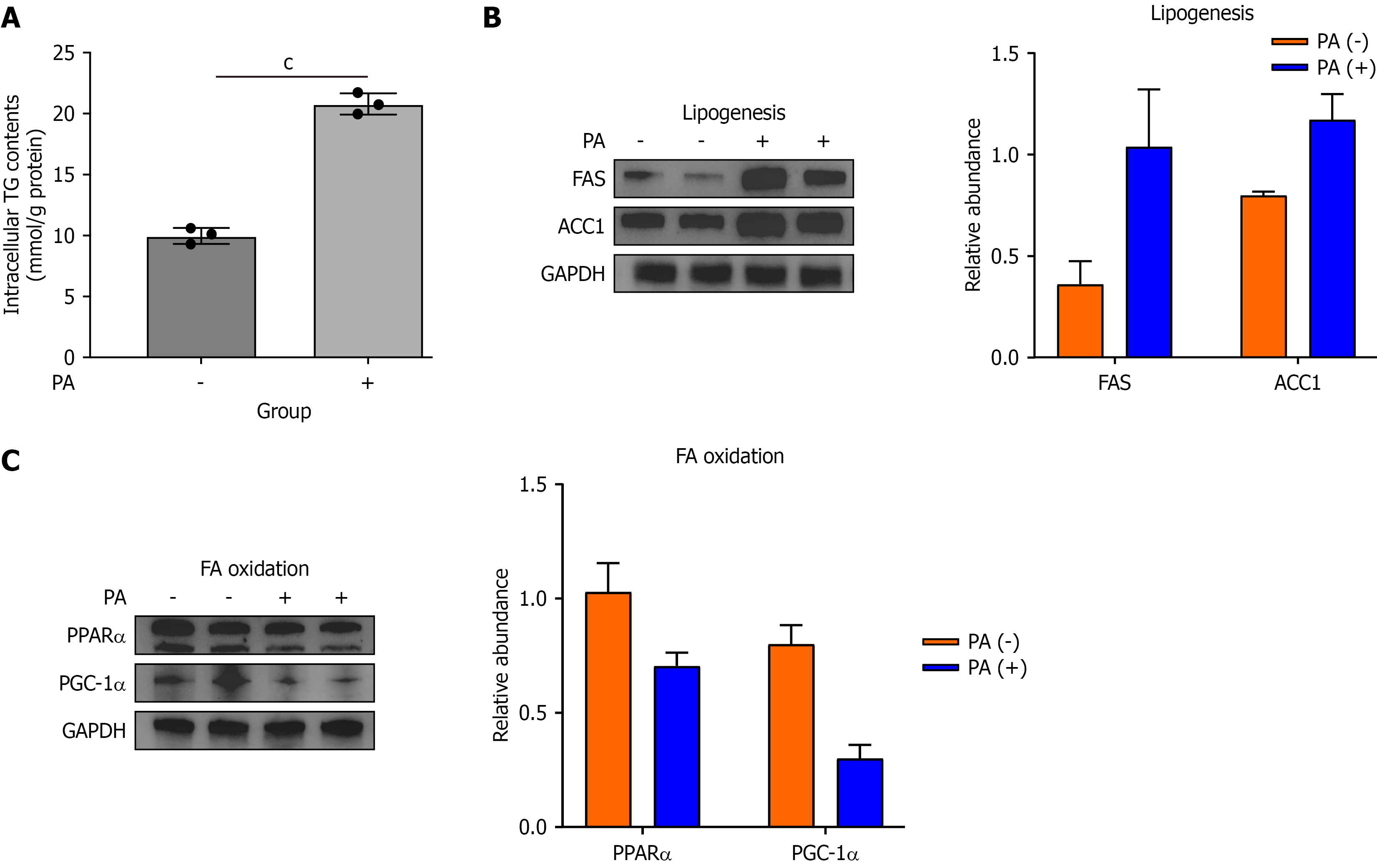
Figure 1 Palmitate acid induces lipid accumulation by promoting hepatic lipogenesis and inhibiting fatty acid β-oxidation in hepatocytes.
AML-12 cells were treated with 300 μM palmitate acid (PA) for 24 hours to establish an in vitro model of metabolic dysfunction-associated steatotic liver disease. A: Intracellular triglyceride content in PA-stimulated AML-12 cells (n = 3/group); B: The protein expressions of lipogenesis target genes, fatty acid synthase, and acetyl-CoA carboxylase 1, were detected via Western blotting; C: The protein expressions of genes involved in fatty acid β-oxidation, such as peroxisome proliferator-activated receptor α and peroxisome proliferator-activated receptor gamma coactivator 1α, were detected via Western blotting. Data are presented as the mean ± SD. cP < 0.001. P value calculated between groups. TG: Triglyceride; PA: Palmitate acid; FA: Fatty acid; FAS: Fatty acid synthase; GAPDH: Glyceraldehyde-3-phosphate dehydrogenase; ACC1: Acetyl-CoA carboxylase 1; PPAR: Peroxisome proliferator-activated receptor; PGC-1α: Peroxisome proliferator-activated receptor gamma coactivator 1α.
- Citation: Gao T, Zhong KP, Wang JZ, Chen Y, Li CX. Allyl isothiocyanate ameliorates metabolic dysfunction-associated steatotic liver disease via vitamin D receptors in hepatocytes. World J Gastroenterol 2026; 32(4): 113647
- URL: https://www.wjgnet.com/1007-9327/full/v32/i4/113647.htm
- DOI: https://dx.doi.org/10.3748/wjg.v32.i4.113647