
















Copyright: ©Author(s) 2026.
World J Gastroenterol. Oct 21, 2026; 32(39): 120320
Published online Oct 21, 2026. doi: 10.3748/wjg.120320
Published online Oct 21, 2026. doi: 10.3748/wjg.120320
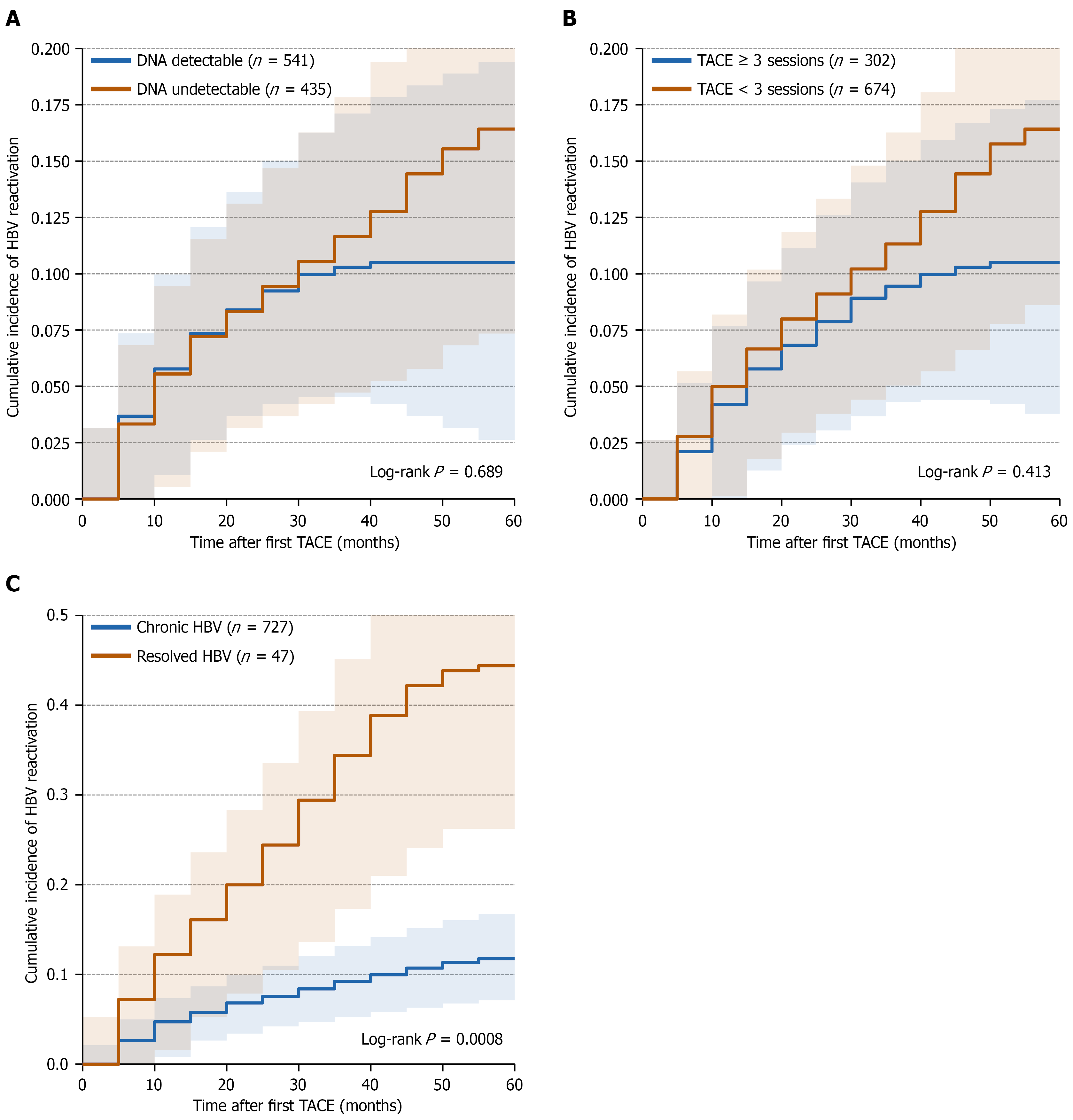
Figure 1 Cumulative incidence of hepatitis B virus reactivation after transarterial chemoembolization.
A: Cumulative incidence stratified according to presence/absence of baseline hepatitis B virus (HBV) DNA (detectable, n = 541; undetectable, n = 435); B: Cumulative incidence stratified according to number of transarterial chemoembolization sessions (at least three sessions, n = 302; fewer than three sessions, n = 674); C: Cumulative incidence stratified according to baseline HBV status: Chronic HBV infection (hepatitis B surface antigen-positive, n = 727) and resolved HBV infection (hepatitis B surface antigen-negative/antibody to hepatitis B core antigen-positive, n = 47). Patients for whom serological data were incomplete (n = 202) were excluded. Shaded areas represent 95% confidence intervals. HBV: Hepatitis B virus; TACE: Transarterial chemoembolization.
- Citation: Kim DY, Jeong J, Hong JP, Lee JS, Kim MN, Kim BK, Kim SU, Park JY, Ahn SH, Kim DY, Lee HW. Resolved hepatitis B is associated with higher reactivation risk than chronic infection after chemoembolization for hepatocellular carcinoma. World J Gastroenterol 2026; 32(39): 120320
- URL: https://www.wjgnet.com/1007-9327/full/v32/i39/120320.htm
- DOI: https://dx.doi.org/10.3748/wjg.120320