
















Copyright: ©Author(s) 2026.
World J Gastroenterol. Oct 21, 2026; 32(39): 119800
Published online Oct 21, 2026. doi: 10.3748/wjg.119800
Published online Oct 21, 2026. doi: 10.3748/wjg.119800
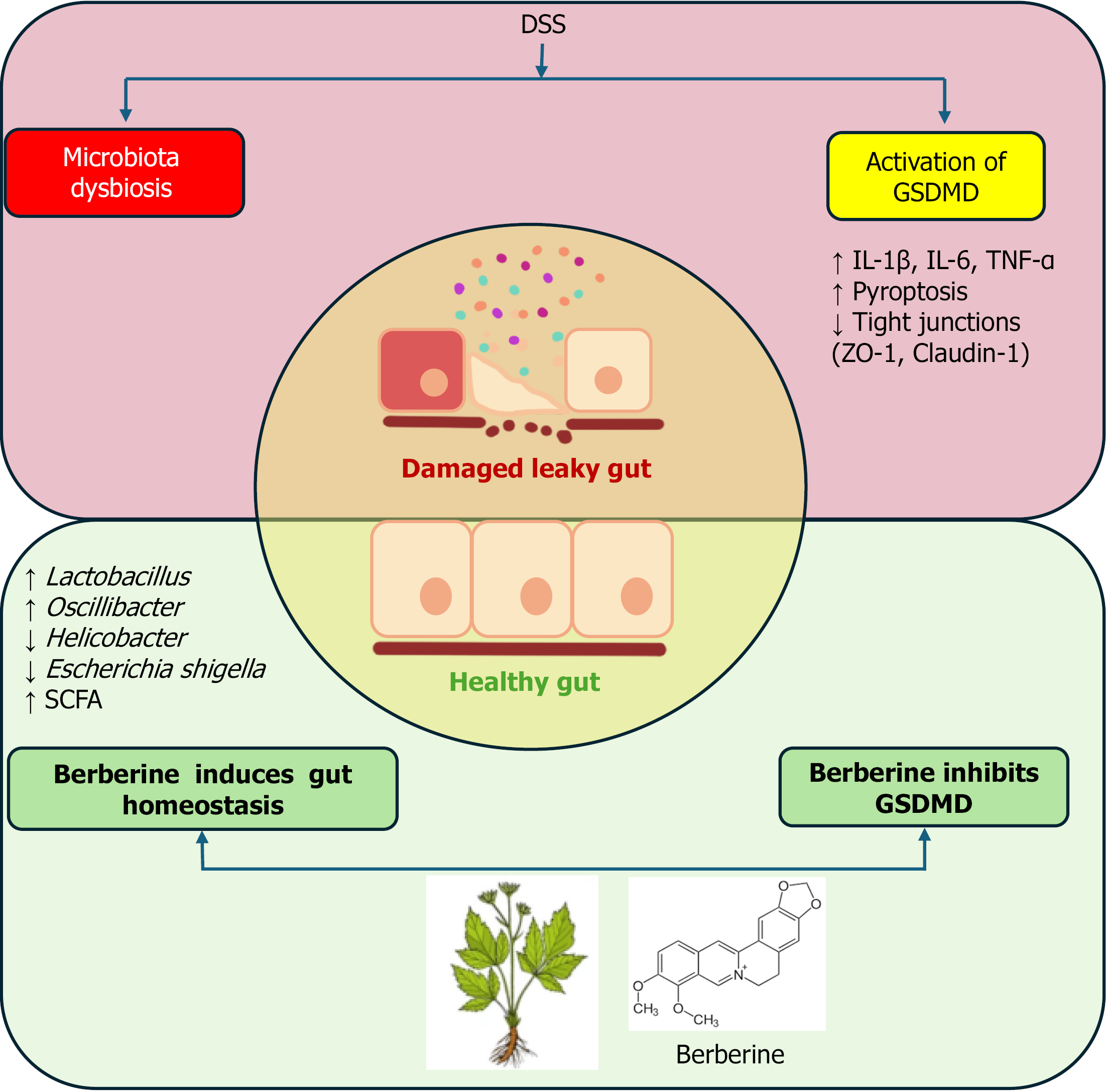
Figure 1 Berberine’s dual pathway in ulcerative colitis.
In the microbiota arm, dysbiosis elevates Proteobacteria, prompting berberine intervention that boosts Lactobacillus and Bacteroidetes populations, enhancing short-chain fatty acid (SCFA) production. Elevated SCFAs upregulate tight junction proteins zonula occludens-1 and claudin-1, restoring intestinal barrier integrity. Concurrently, the gasdermin D (GSDMD) arm activates the NLRP3 inflammasome and caspase-1, cleaving GSDMD to form membrane pores that release interleukin (IL)-1β and IL-18, driving pyroptosis. Berberine directly binds GSDMD, occluding pores and curbing cytokine release. Crosstalk amplifies protection as microbial metabolites inhibit NLRP3 activation, synergistically suppressing GSDMD-mediated pyroptosis and fortifying gut homeostasis. DSS: Dextran sulfate sodium; GSDMD: Gasdermin D; IL: Interleukin; TNF: Tumor necrosis factor; ZO-1: Zonula occludens-1; SCFA: Short-chain fatty acid.
- Citation: Maurya DK, Sharma P. Berberine as a dual-target therapeutic for ulcerative colitis. World J Gastroenterol 2026; 32(39): 119800
- URL: https://www.wjgnet.com/1007-9327/full/v32/i39/119800.htm
- DOI: https://dx.doi.org/10.3748/wjg.119800