
















Copyright: ©Author(s) 2026.
World J Gastroenterol. Oct 7, 2026; 32(37): 119558
Published online Oct 7, 2026. doi: 10.3748/wjg.119558
Published online Oct 7, 2026. doi: 10.3748/wjg.119558
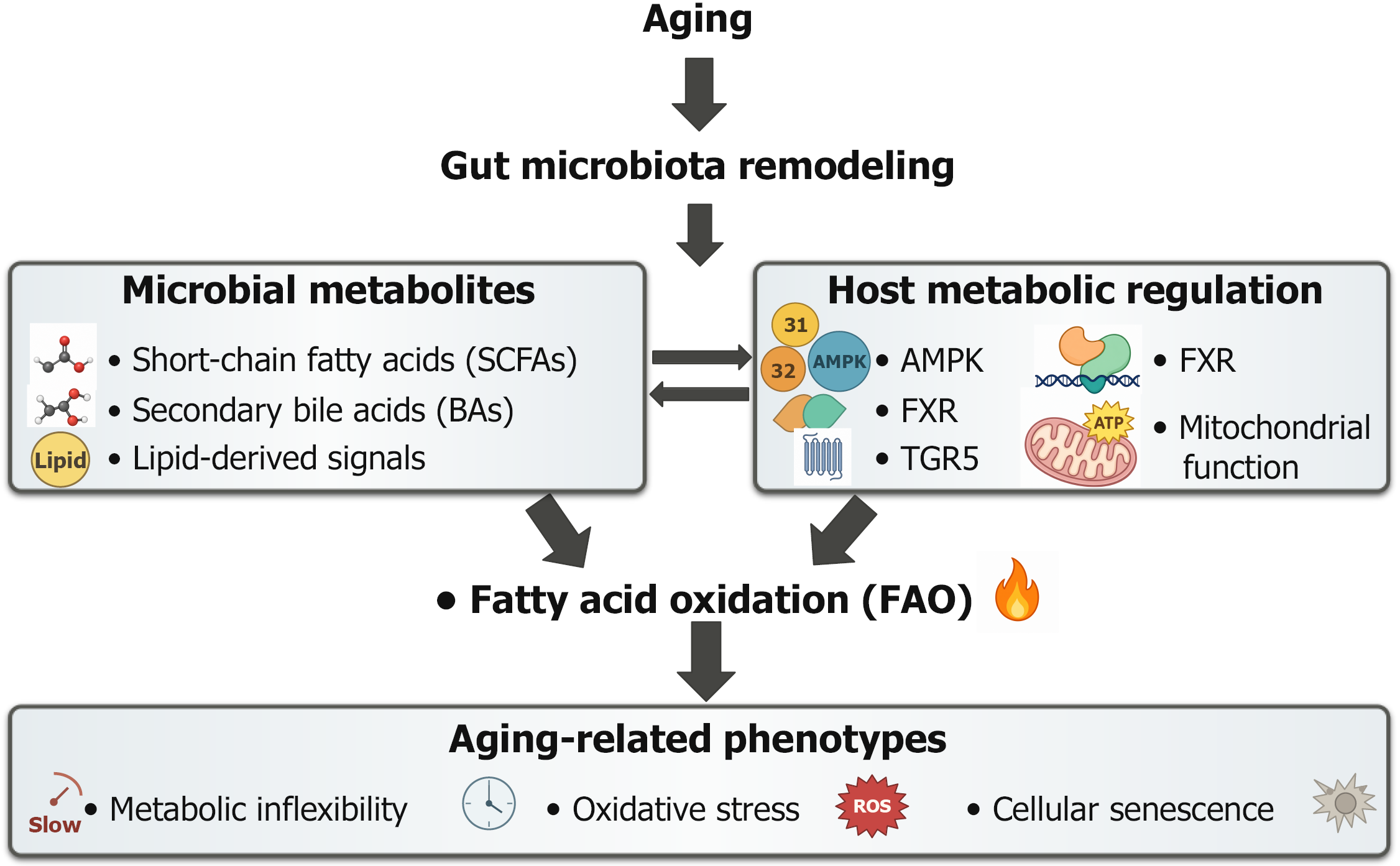
Figure 1 Proposed framework linking gut microbiota remodeling to host metabolic regulation and fatty acid oxidation in aging.
Aging is associated with gut microbiota remodeling, accompanied by altered microbial metabolites, including short-chain fatty acids, secondary bile acids, and lipid-derived signals. These changes may interact with host metabolic regulation, including AMP-activated protein kinase, farnesoid X receptor, Takeda G protein-coupled receptor 5, and mitochondrial function, thereby influencing fatty acid oxidation. Altered fatty acid oxidation may in turn contribute to aging-related phenotypes, including metabolic inflexibility, oxidative stress, and cellular senescence. The author used artificial intelligence tools to assist in the generation of graphical content included in this manuscript. All artificial intelligence-generated images were reviewed, verified, and approved by the author, who takes full responsibility for the accuracy, originality, and integrity of the final content.
- Citation: Ko CY. Gut microbiota-fatty acid oxidation interplay in aging: Mechanisms, controversies, and translational perspectives. World J Gastroenterol 2026; 32(37): 119558
- URL: https://www.wjgnet.com/1007-9327/full/v32/i37/119558.htm
- DOI: https://dx.doi.org/10.3748/wjg.119558