
















Copyright: ©Author(s) 2026.
World J Gastroenterol. Sep 28, 2026; 32(36): 120338
Published online Sep 28, 2026. doi: 10.3748/wjg.120338
Published online Sep 28, 2026. doi: 10.3748/wjg.120338
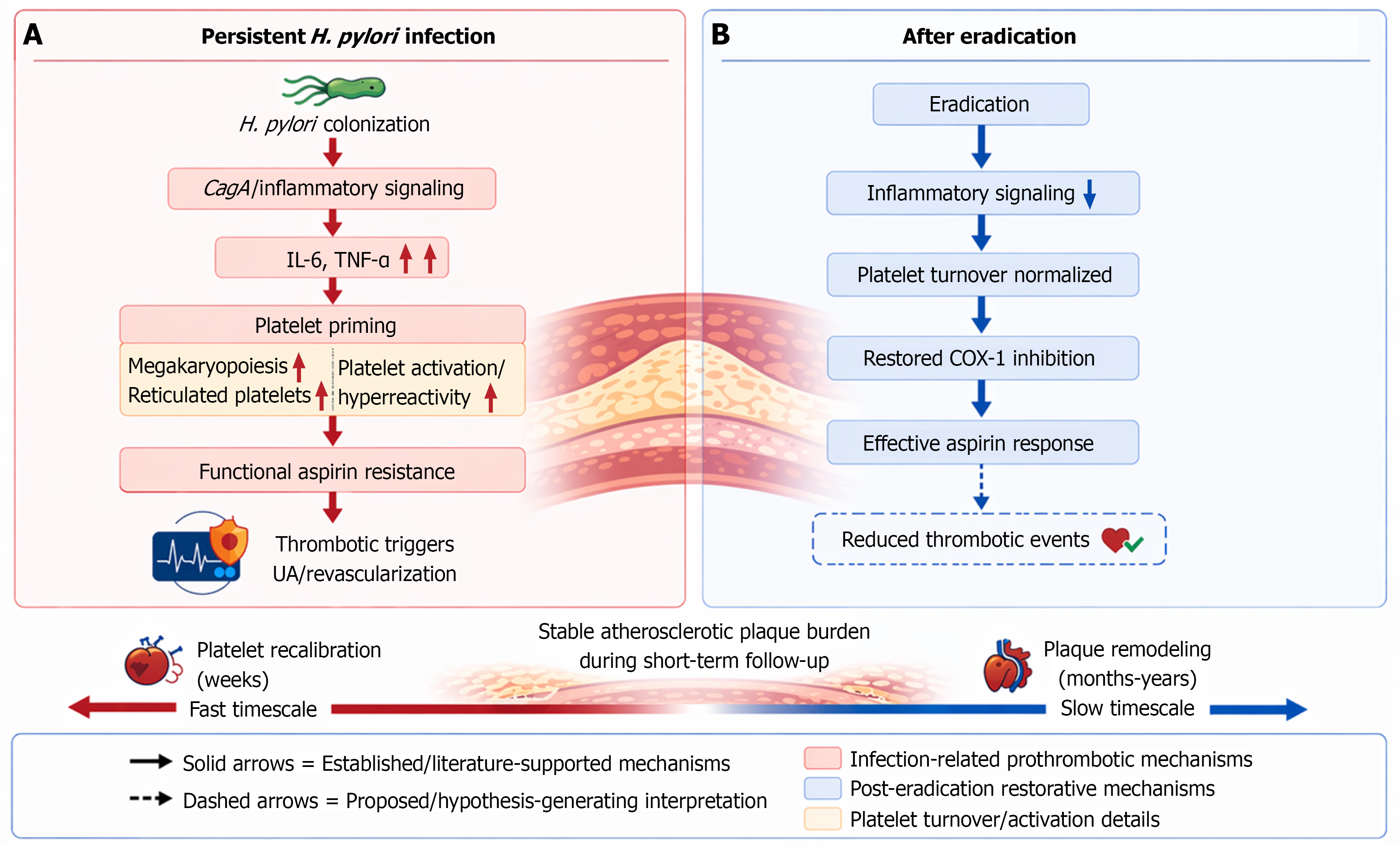
Figure 1 Infection-driven aspirin resistance and pharmacologic resensitization after Helicobacter pylori eradication.
Panel A illustrates the proposed persistent infection phase, in which chronic Helicobacter pylori colonization is associated with cagA-related inflammatory signaling, increased interleukin-6 and tumor necrosis factor-α activity, platelet priming, increased platelet turnover, enhanced platelet activation, and functional aspirin resistance, culminating in thrombotic triggers such as unstable angina or revascularization. Panel B depicts the post-eradication phase, characterized by reduced inflammatory signaling, normalized platelet turnover, restored cyclooxygenase-1 inhibition, and effective aspirin responsiveness, with reduced thrombotic events shown as a hypothesis-generating downstream interpretation. The background plaque represents relatively stable structural atherosclerotic burden during short-term follow-up. The lower timeline highlights the faster timescale of platelet recalibration relative to the slower timescale of plaque remodeling. Solid arrows indicate literature-supported pathways, whereas dashed arrows indicate proposed interpretive links. H. pylori: Helicobacter pylori; IL-6: Interleukin-6; TNF-α: Tumor necrosis factor-α; COX-1: Cyclooxygenase-1; UA: Unstable angina.
- Citation: Song JJ, Li N, Yu YW, Liu S. Letter to the Editor: Helicobacter pylori eradication restores aspirin responsiveness - a thromboinflammatory interpretation. World J Gastroenterol 2026; 32(36): 120338
- URL: https://www.wjgnet.com/1007-9327/full/v32/i36/120338.htm
- DOI: https://dx.doi.org/10.3748/wjg.120338