
















Copyright: ©Author(s) 2026.
World J Gastroenterol. Sep 28, 2026; 32(36): 119724
Published online Sep 28, 2026. doi: 10.3748/wjg.119724
Published online Sep 28, 2026. doi: 10.3748/wjg.119724
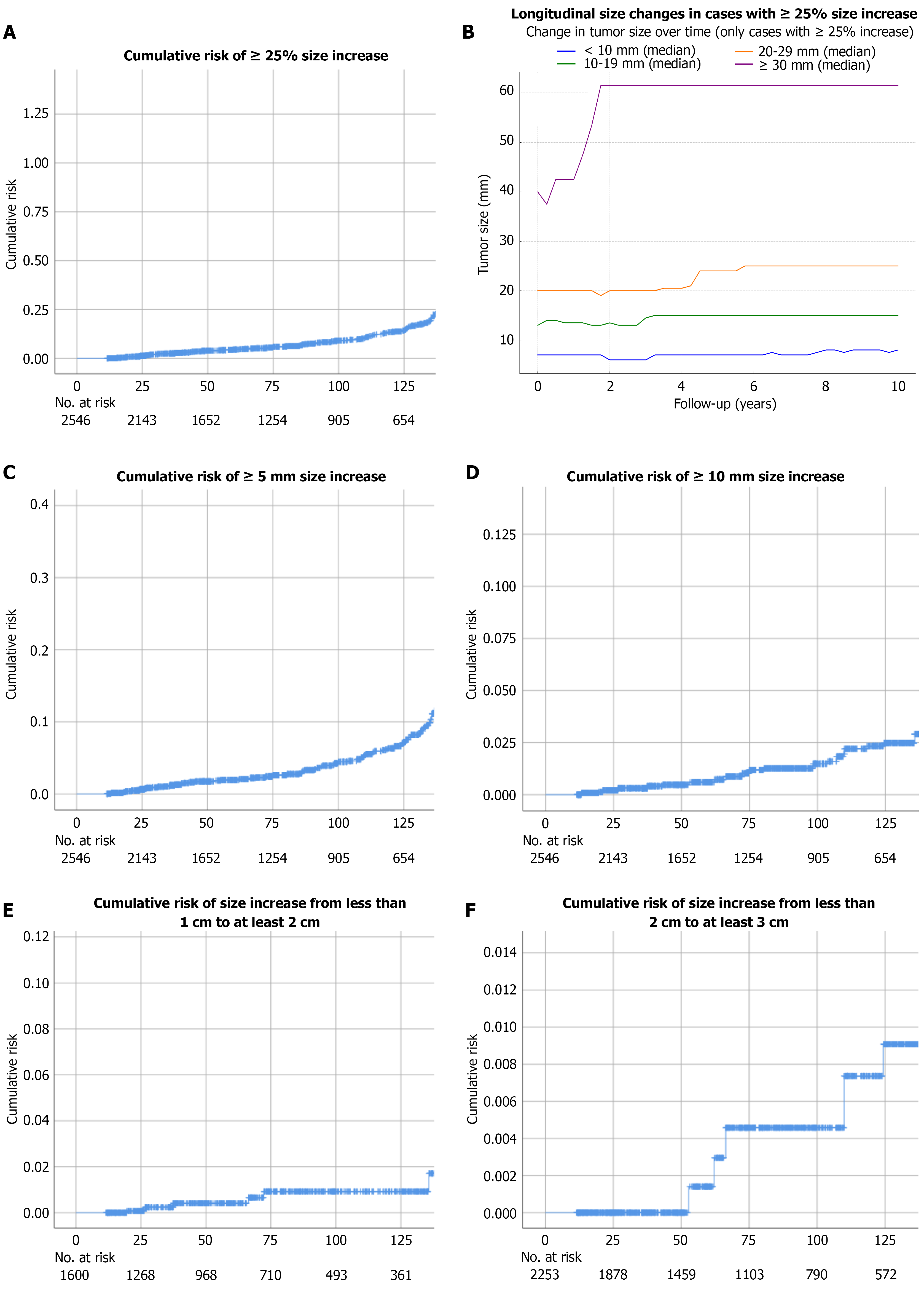
Figure 2 Cumulative risk of lesion size increase.
A: Cumulative risk of ≥ 25% size increase; B: Longitudinal lesion changes in cases with a ≥ 25% size increase; C-F: Cumulative risks of ≥ 5 mm (C), ≥ 10 mm (D), from < 1 cm to ≥ 2 cm (E), and from < 2 cm to ≥ 3 cm (F) size increases. The 5-year cumulative risk of a size increase of ≥ 25%, ≥ 5 mm, and ≥ 10 mm are 4.0%, 2.0%, and 0.6%, respectively. Significantly faster growth is observed in lesions ≥ 3 cm at baseline. The cumulative risk for a size increase from < 1 cm to ≥ 2 cm and from < 2 cm to ≥ 3 cm, are 0.4% and 0.1%, respectively.
- Citation: Choi Y, Park JY, Kim SE, Park JM, Kim JS, Chung H, Kim SH, Park CH, Kim SH, Park SY, Lee BE, Lee SW, Lee A, Lee JH, Jung DH, Jo HH, Yoo IH, Min BH, Jung HY. Natural history of asymptomatic subepithelial lesions of the upper gastrointestinal tract: A multicenter study in Korea. World J Gastroenterol 2026; 32(36): 119724
- URL: https://www.wjgnet.com/1007-9327/full/v32/i36/119724.htm
- DOI: https://dx.doi.org/10.3748/wjg.119724