
















Copyright: ©Author(s) 2026.
World J Gastroenterol. Sep 14, 2026; 32(34): 119467
Published online Sep 14, 2026. doi: 10.3748/wjg.119467
Published online Sep 14, 2026. doi: 10.3748/wjg.119467
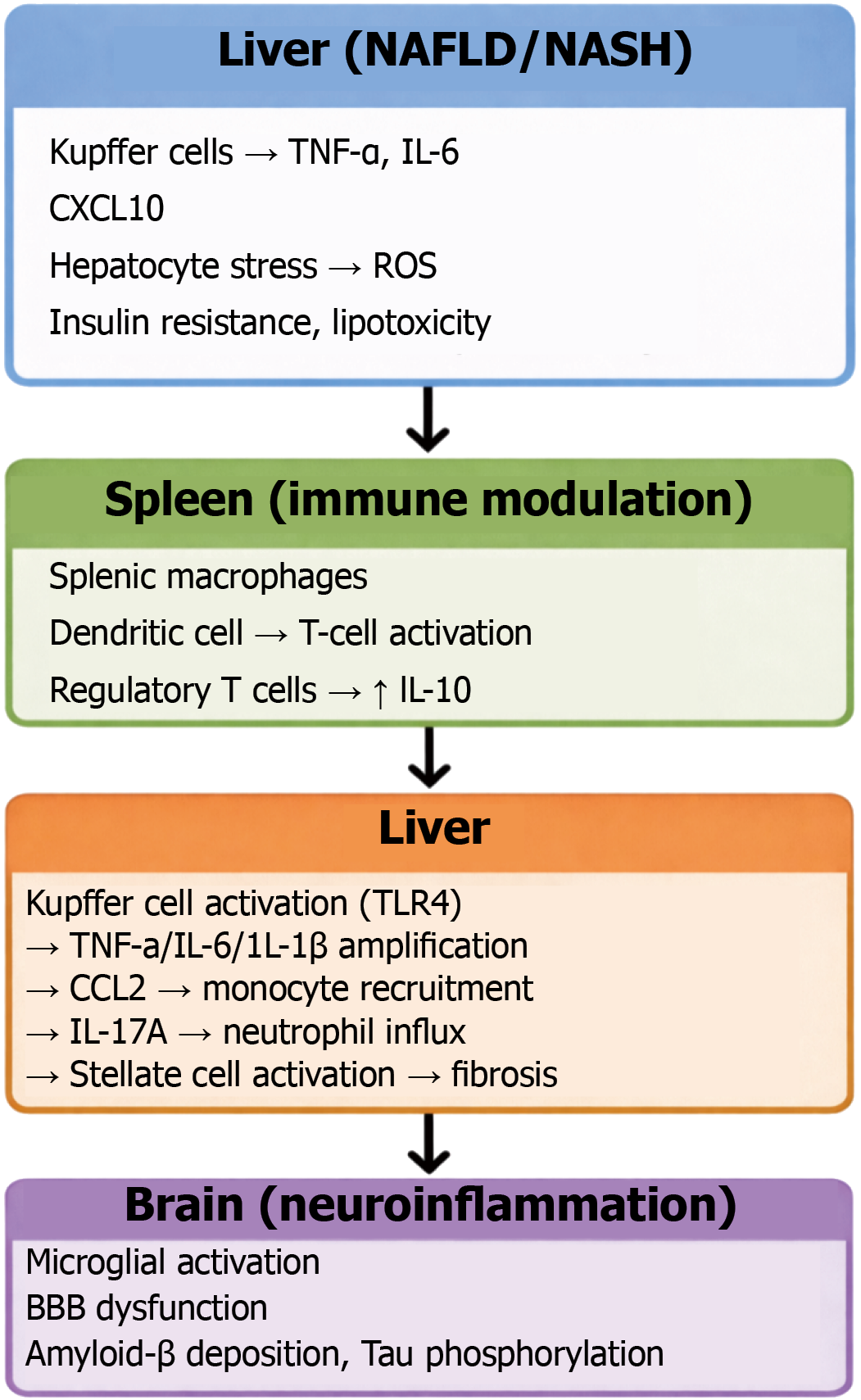
Figure 6 Liver-spleen-brain axis in patients with non-alcoholic fatty liver disease/nonalcoholic steatohepatitis with Alzheimer’s disease comorbidity.
Hepatic steatosis and steatohepatitis trigger systemic inflammation through Kupffer cell activation and tumor necrosis factor alpha (TNF-α) signaling, leading to insulin resistance and immune activation. The spleen acts as a central immune hub, where macrophages, dendritic cells, and monocytes are activated and recruited. These peripheral immune cells traffic to the central nervous system, where they drive neuroinflammation through microglial activation, promoting amyloid-β deposition and tau phosphorylation, key pathological hallmarks of Alzheimer’s disease. NAFLD: Non-alcoholic fatty liver disease; NASH: Nonalcoholic steatohepatitis; IL: Interleukin; CXCL10: C-X-C motif chemokine ligand 10; ROS: Reactive oxygen species; TLR4: Toll-like receptor 4; BBB: Blood-brain barrier.
- Citation: Tarantino G, Citro V. Liver-spleen axis: Deciphering a crucial crosstalk in non-alcoholic fatty liver disease progression and therapeutic implications. World J Gastroenterol 2026; 32(34): 119467
- URL: https://www.wjgnet.com/1007-9327/full/v32/i34/119467.htm
- DOI: https://dx.doi.org/10.3748/wjg.119467