
















Copyright: ©Author(s) 2026.
World J Gastroenterol. Sep 7, 2026; 32(33): 117979
Published online Sep 7, 2026. doi: 10.3748/wjg.117979
Published online Sep 7, 2026. doi: 10.3748/wjg.117979
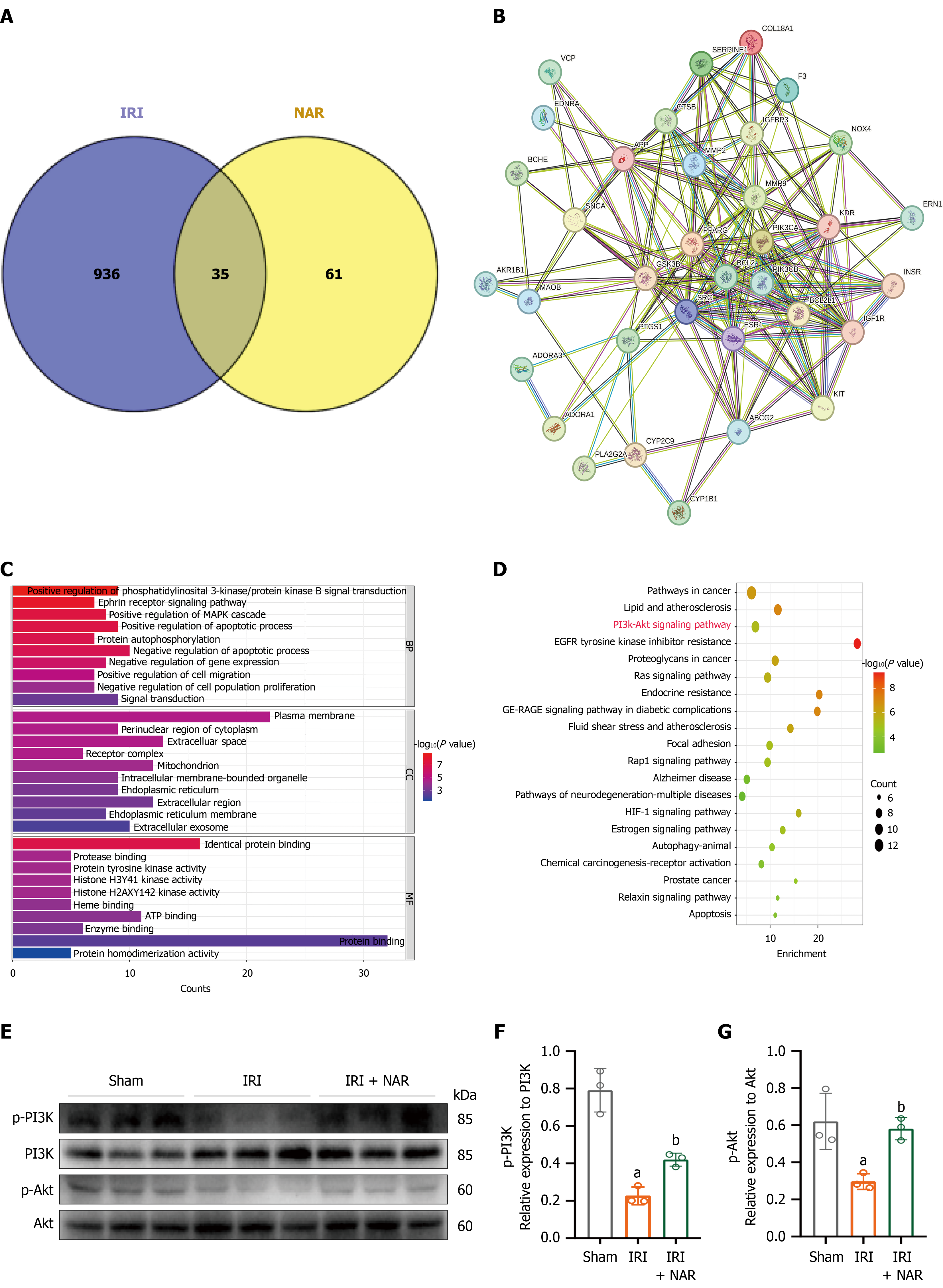
Figure 4 Screen of the mechanisms that naringenin reduces the occurrence of hepatic ischemia-reperfusion injury utilizing network pharmacology analysis.
A: Common genes display of potential target genes of naringenin and liver ischemia-reperfusion injury genes; B: Protein-protein interaction network diagram of naringenin and ischemia-reperfusion injury common genes constructed from String database; C: Gene Ontology analysis of common genes; D: Kyoto Encyclopedia of Genes and Genomes analysis of common genes; E: Western blots showing protein expression levels of p-phosphatidylinositol 3-kinase (PI3K) and p-protein kinase B (Akt); F and G: Densitometric quantification of p-PI3K and p-Akt protein levels normalized to PI3K and Akt (n = 3). aP < 0.05 vs the Sham group, bP < 0.05 vs the ischemia-reperfusion injury group. NAR: Naringenin; IRI: Ischemia-reperfusion injury; PI3K: Phosphatidylinositol 3-kinase; Akt: Protein kinase B.
- Citation: Lu JS, Liang HL, Chen DC, Pan H, Han T, Zhang WY, Fan M, Hou W, Shen ZY. Naringenin pretreatment attenuates hepatic ischemia-reperfusion injury by activating the PI3K-Akt signaling pathway. World J Gastroenterol 2026; 32(33): 117979
- URL: https://www.wjgnet.com/1007-9327/full/v32/i33/117979.htm
- DOI: https://dx.doi.org/10.3748/wjg.117979