
















Copyright: ©Author(s) 2026.
World J Gastroenterol. Aug 28, 2026; 32(32): 120382
Published online Aug 28, 2026. doi: 10.3748/wjg.120382
Published online Aug 28, 2026. doi: 10.3748/wjg.120382
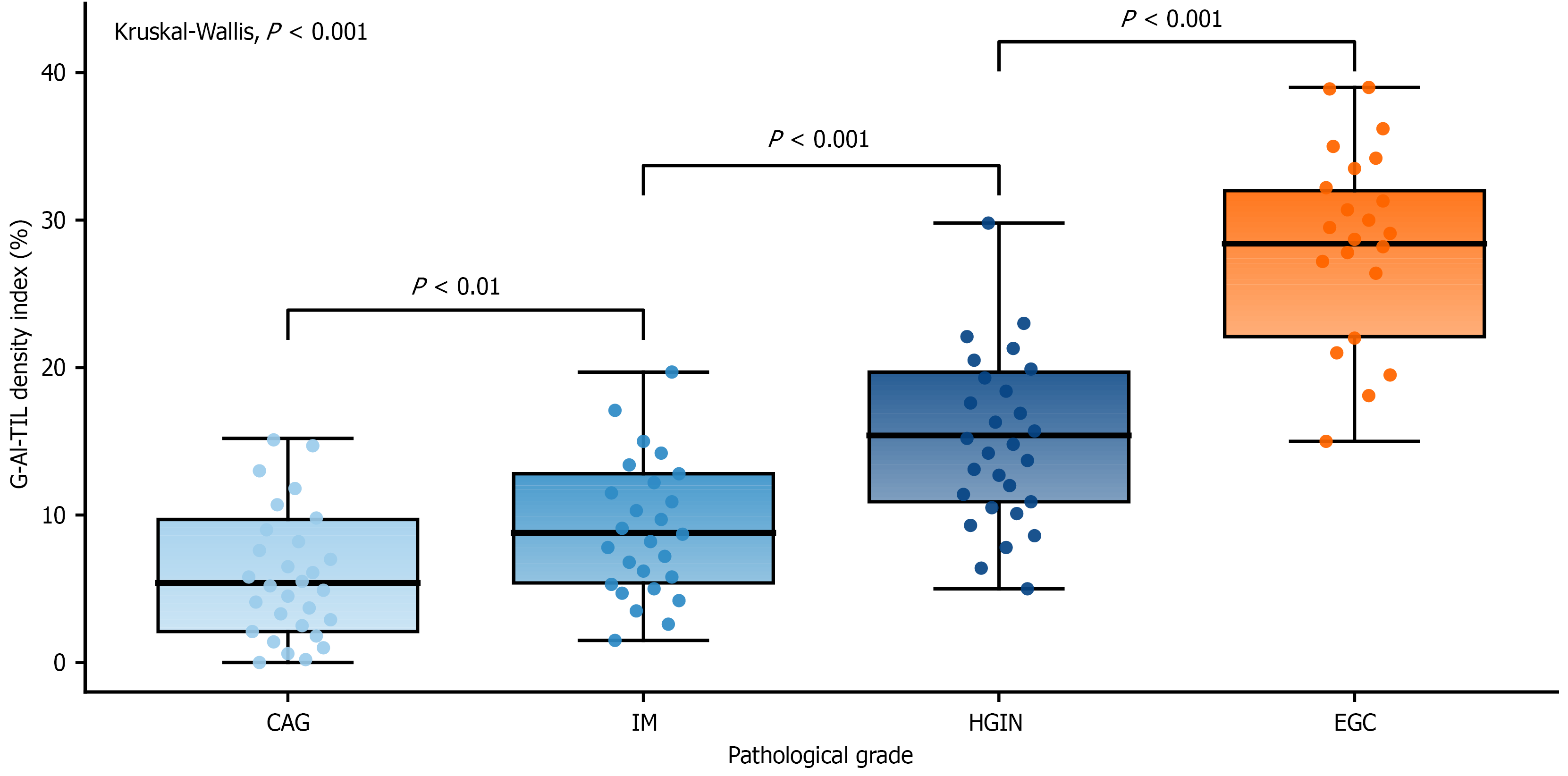
Figure 6 Correlations between the gastric artificial intelligence-based tumor-infiltrating lymphocytes and pathological grade of gastric mucosal lesions.
The box plot shows the gastric artificial intelligence-based tumor-infiltrating lymphocytes (G-AI-TIL) distribution across the four lesion types (24 cases each) in the test set, with the x-axis ordered by increasing malignancy [chronic atrophic gastritis (CAG)→intestinal metaplasia (IM)→high-grade intraepithelial neoplasia (HGIN)→early gastric cancer (EGC)]. The results of the Kruskal-Wallis test and the Tukey post hoc test confirmed a stepwise increase in the median G-AI-TIL: CAG (5.3%) < IM (8.7%, P < 0.01) < HGIN (15.2%, P < 0.001) < EGC (28.5%, P < 0.001). The G-AI-TIL is positively correlated with lesion malignancy and serves as a quantitative index for grading gastric mucosal lesions. CAG: Chronic atrophic gastritis; IM: Intestinal metaplasia; HGIN: High-grade intraepithelial neoplasia; EGC: Early gastric cancer; G-AI-TIL: Gastric artificial intelligence-based tumor-infiltrating lymphocytes.
- Citation: Fan Y, Wang SN, Jiang B, Li YY, Zhu CY, Liao XH, Zhang FS, Wang YK. Automatic recognition of tumour-infiltrating lymphocytes in pathological biopsy images of the gastric mucosa. World J Gastroenterol 2026; 32(32): 120382
- URL: https://www.wjgnet.com/1007-9327/full/v32/i32/120382.htm
- DOI: https://dx.doi.org/10.3748/wjg.120382