
















Copyright: ©Author(s) 2026.
World J Gastroenterol. Aug 28, 2026; 32(32): 119744
Published online Aug 28, 2026. doi: 10.3748/wjg.119744
Published online Aug 28, 2026. doi: 10.3748/wjg.119744
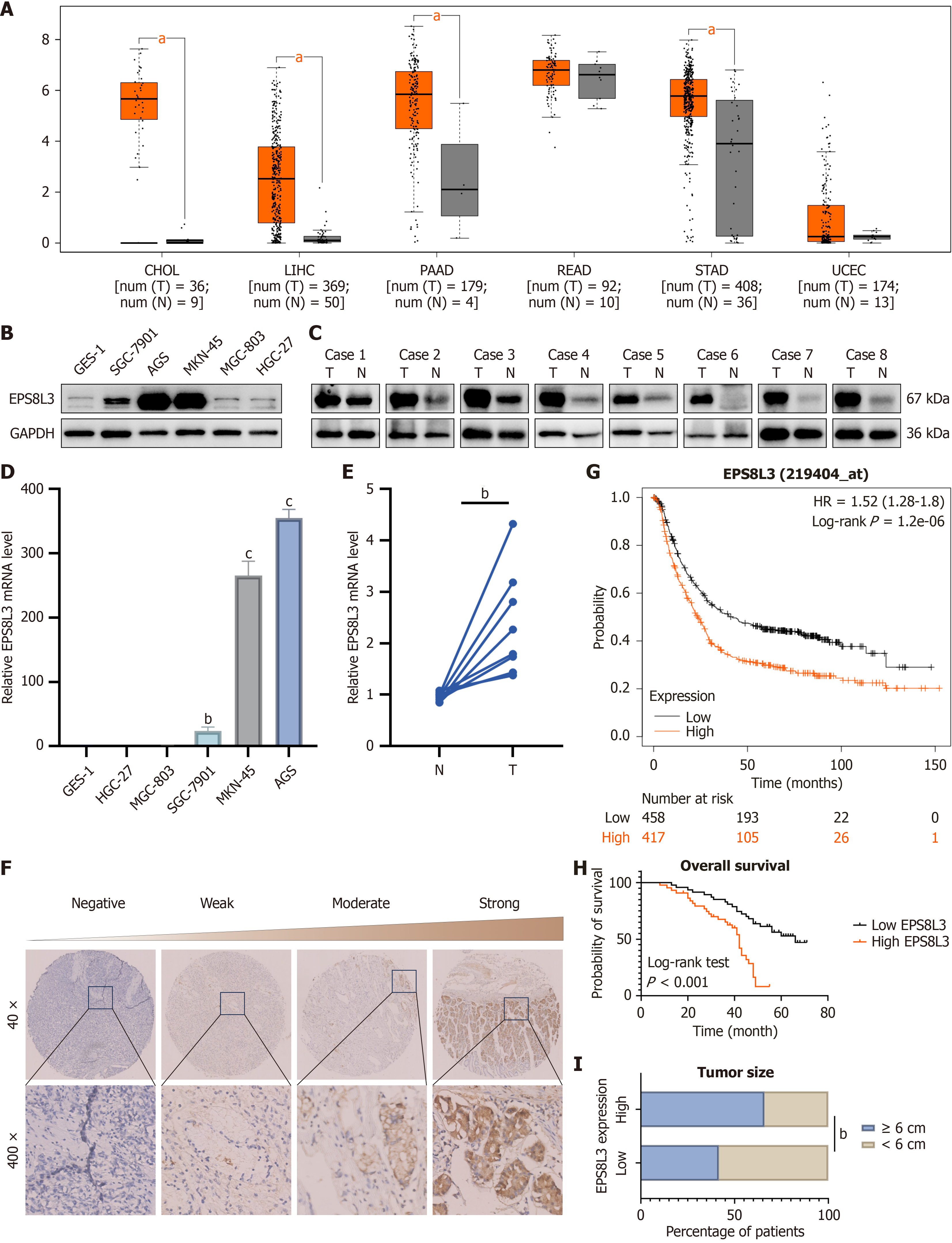
Figure 1 Epidermal growth factor receptor kinase substrate 8-like protein 3 upregulation in patients with gastric cancer indicated a poor prognosis.
A: GEPIA analysis revealed that epidermal growth factor receptor kinase substrate 8-like protein 3 (EPS8L3) is upregulated across various tumor types, including cholangiocarcinoma, pancreatic adenocarcinoma, and gastric cancer (GC); B and C: Western blot analysis confirmed a marked upregulation of EPS8L3 protein in GC cell lines (B) and tissues(C); D and E: Quantitative reverse transcription polymerase chain reaction demonstrated significantly higher EPS8L3 mRNA expression in GC cell lines (D) and patient tissues (E); F: Representative EPS8L3 immunohistochemical staining images in a GC tissue microarray; G: Kaplan-Meier survival curve of EPS8L3 expression obtained from the Kaplan-Meier plotter database; H: Kaplan-Meier survival curve of patients with GC exhibiting low and high EPS8L3 expression in our study; I: Immunohistochemical score indicated that the EPS8L3 expression score correlated with tumor size. Data are shown as the mean ± SD (n = 3). aP < 0.05 vs group normal, bP < 0.01 vs control, and cP < 0.001 vs control. CHOL: Cholangiocarcinoma; LIHC: Liver hepatocellular carcinoma; PAAD: Pancreatic adenocarcinoma; READ: Rectum adenocarcinoma; STAD: Stomach adenocarcinoma; UCEC: Uterine corpus endometrial carcinoma; GAPDH: Glyceraldehyde-3-phosphate dehydrogenase.
- Citation: Ma MD, Chen WJ, Yu KX, Wang HZ, Li YX. Helicobacter pylori promotes gastric cancer progression by upregulating EPS8L3 to inhibit ferroptosis. World J Gastroenterol 2026; 32(32): 119744
- URL: https://www.wjgnet.com/1007-9327/full/v32/i32/119744.htm
- DOI: https://dx.doi.org/10.3748/wjg.119744