
















©The Author(s) 2026.
World J Gastroenterol. Jan 21, 2026; 32(3): 114176
Published online Jan 21, 2026. doi: 10.3748/wjg.v32.i3.114176
Published online Jan 21, 2026. doi: 10.3748/wjg.v32.i3.114176
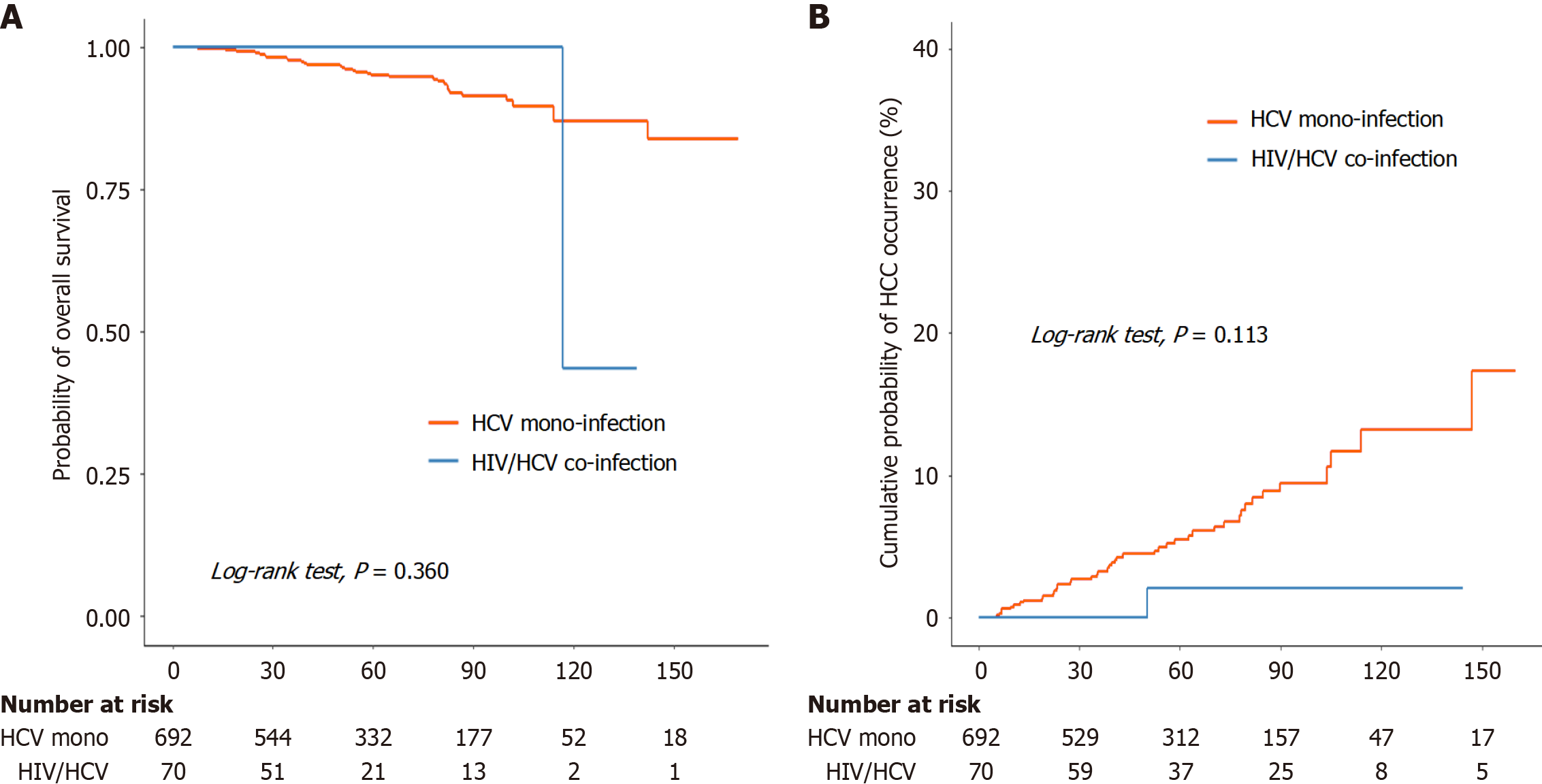
Figure 2 Clinical outcomes in hepatitis C virus patients achieving sustained virologic response stratified by human immunodeficiency virus co-infection status.
A and B: Kaplan-Meier estimates of overall survival (A) and time to the occurrence of hepatocellular carcinoma (B) in hepatitis C virus (HCV) patients who achieved sustained virologic response after treatment, stratified by human immunodeficiency virus co-infection status, after inverse probability of treatment weighting adjustment. Propensity scores of inverse probability of treatment weighting were computed using the age, sex, diabetes mellitus status, HCV treatment method, categorized scores for the fibrosis-4 index, the albumin-bilirubin score, and alpha-fetoprotein levels, presence of liver cirrhosis, Child-Pugh score, and HCV genotype. HCV: Hepatitis C virus; HIV: Human immunodeficiency virus.
- Citation: Park J, Jeong JY, Kim SS, Yoon JH, Eun HS, Choi J, Yoon KT, Jung YK, Park SY, Gwak GY, Kim DY, Kim JH, Lee JW, Kim TY, Jang JW, Yu SJ. Chrono-optimal treatments for human immunodeficiency virus/hepatitis C virus co-infection yield comparable survival outcomes with hepatitis C virus mono-infection. World J Gastroenterol 2026; 32(3): 114176
- URL: https://www.wjgnet.com/1007-9327/full/v32/i3/114176.htm
- DOI: https://dx.doi.org/10.3748/wjg.v32.i3.114176