
















Copyright: ©Author(s) 2026.
World J Gastroenterol. Aug 7, 2026; 32(29): 119106
Published online Aug 7, 2026. doi: 10.3748/wjg.119106
Published online Aug 7, 2026. doi: 10.3748/wjg.119106
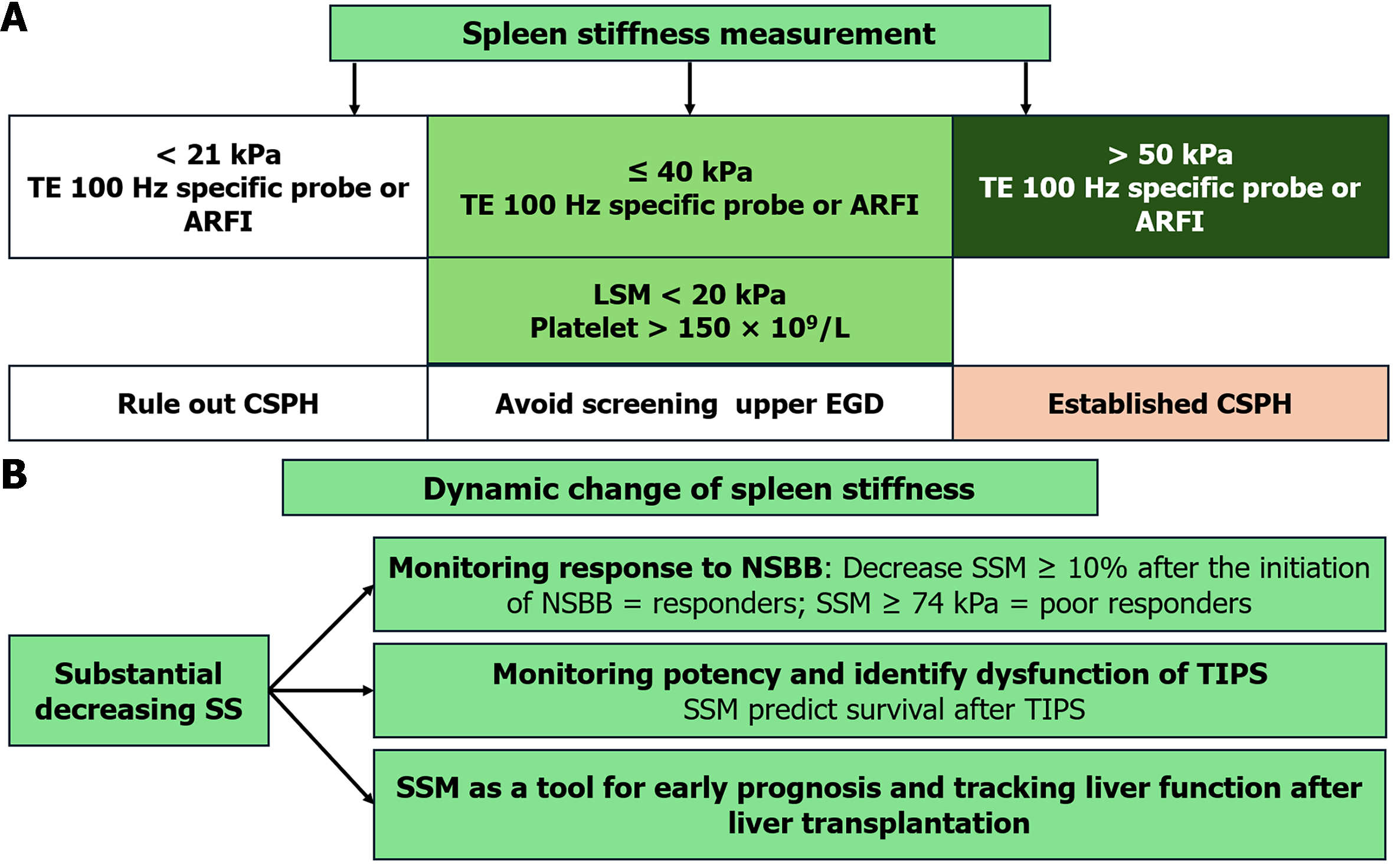
Figure 4 Spleen stiffness measurement and dynamic change of spleen stiffness.
A: Spleen stiffness measurement (SSM). The transient elastography (TE) SSM value < 21 kPa can rule out clinically significant portal hypertension (CSPH), while a value of more than 50 kPa confirms CSPH in patients with viral hepatitis-related compensated advanced chronic liver disease. An SSM of ≤ 40 kPa, a liver stiffness measurement of < 20 kPa, and a platelet count of ≥ 150 × 109/L allow for the omission of upper endoscopy screening; B: Dynamic change of spleen stiffness. A change in SSM ≥ 10% after the initiation of nonselective beta blockers (NSBBs) demonstrates excellent accuracy in identifying NSBBs responders. A SSM of ≥ 74 kPa by TE demonstrates outstanding performance in predicting a poor response to NSBBs. SSM is essential for noninvasively monitoring transjugular intrahepatic portosystemic shunt patency and identifying dysfunction. SSM is a useful tool for early prognosis and tracking liver function after liver transplantation. ARFI: Acoustic radiation force impulse; EGD: Esophagogastroduodenoscopy; TE: Transient elastography; LSM: Liver stiffness measurement; CSPH: Clinically significant portal hypertension; NSBB: Nonselective beta blockers; SSM: Spleen stiffness measurement; TIPS: Transjugular intrahepatic portosystemic shunt; SS: Spleen stiffness.
- Citation: Peltec A, Sporea I. Preventive strategies in hepatology: Role of multiparametric assessment of portal hypertension in chronic liver disease. World J Gastroenterol 2026; 32(29): 119106
- URL: https://www.wjgnet.com/1007-9327/full/v32/i29/119106.htm
- DOI: https://dx.doi.org/10.3748/wjg.119106