
















Copyright: ©Author(s) 2026.
World J Gastroenterol. Aug 7, 2026; 32(29): 119106
Published online Aug 7, 2026. doi: 10.3748/wjg.119106
Published online Aug 7, 2026. doi: 10.3748/wjg.119106
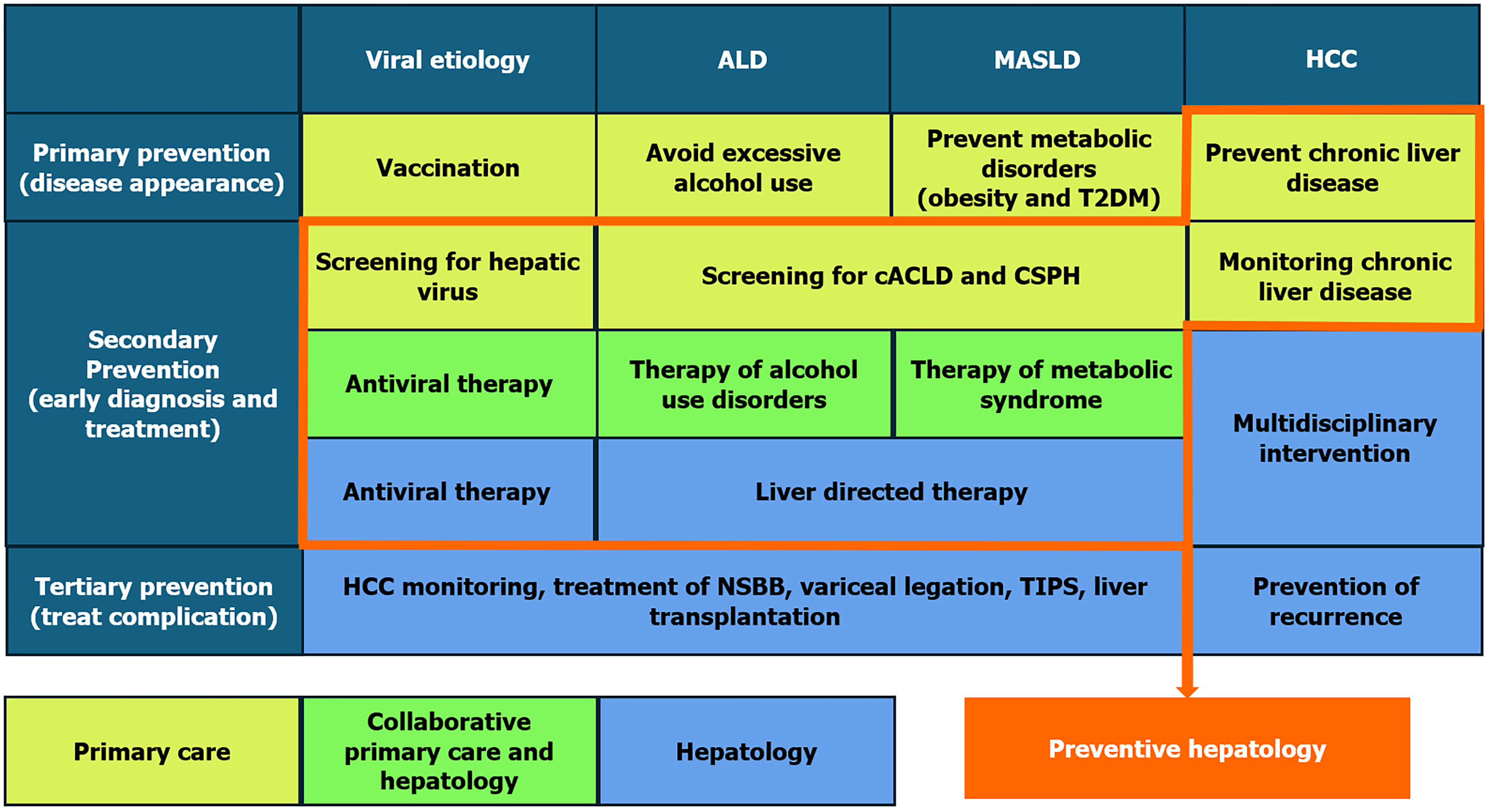
Figure 1 Preventive hepatology.
Preventive hepatology is divided into primary, secondary, and tertiary levels of prevention. While primary prevention focuses on reducing liver disease risk, secondary prevention emphasizes early detection and management to halt disease progression. Tertiary prevention aims to minimize complications and enhance the quality of life in advanced liver disease. Key preventive strategies (highlighted in orange) can be implemented in primary care, by hepatologists, or through collaborative efforts. ALD: Alcohol-associated liver disease; cACLD: Compensated advanced chronic liver disease; CSPH: Clinically significant portal hypertension; HCC: Hepatocellular carcinoma; MASLD: Metabolic-dysfunction associated steatotic liver disease; NSBBs: Nonselective beta blockers; T2DM: Type 2 diabetes mellitus; TIPS: Transjugular intrahepatic portosystemic shunt.
- Citation: Peltec A, Sporea I. Preventive strategies in hepatology: Role of multiparametric assessment of portal hypertension in chronic liver disease. World J Gastroenterol 2026; 32(29): 119106
- URL: https://www.wjgnet.com/1007-9327/full/v32/i29/119106.htm
- DOI: https://dx.doi.org/10.3748/wjg.119106