
















Copyright: ©Author(s) 2026.
World J Gastroenterol. Aug 7, 2026; 32(29): 118090
Published online Aug 7, 2026. doi: 10.3748/wjg.118090
Published online Aug 7, 2026. doi: 10.3748/wjg.118090
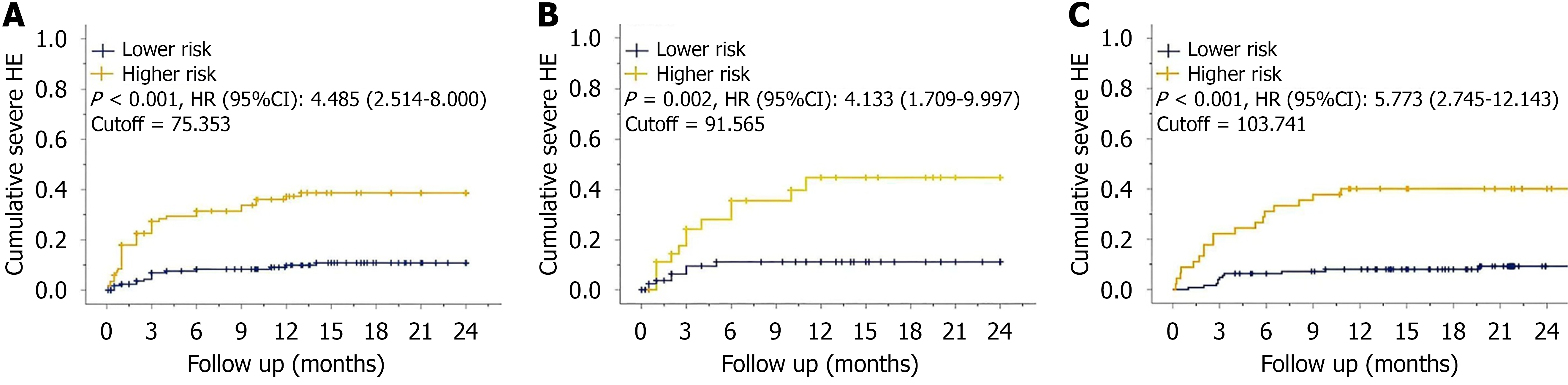
Figure 6 Comparison of the cumulative incidence rates of post-transjugular intrahepatic portosystemic shunt severe hepatic ence
- Citation: Zhang JQ, Yin L, Zhu YJ, Dong L, Hou CL, Tian SJ, Chen P, Huang XZ, Xu H, Chen ZY, Xu XJ, Zhou CZ, Cheng DL. Modified model incorporating sarcopenia and myosteatosis for predicting severe hepatic encephalopathy after transjugular intrahepatic portosystemic shunt: Multicenter study. World J Gastroenterol 2026; 32(29): 118090
- URL: https://www.wjgnet.com/1007-9327/full/v32/i29/118090.htm
- DOI: https://dx.doi.org/10.3748/wjg.118090