















Copyright: ©Author(s) 2026.
World J Gastroenterol. Jul 28, 2026; 32(28): 119462
Published online Jul 28, 2026. doi: 10.3748/wjg.119462
Published online Jul 28, 2026. doi: 10.3748/wjg.119462
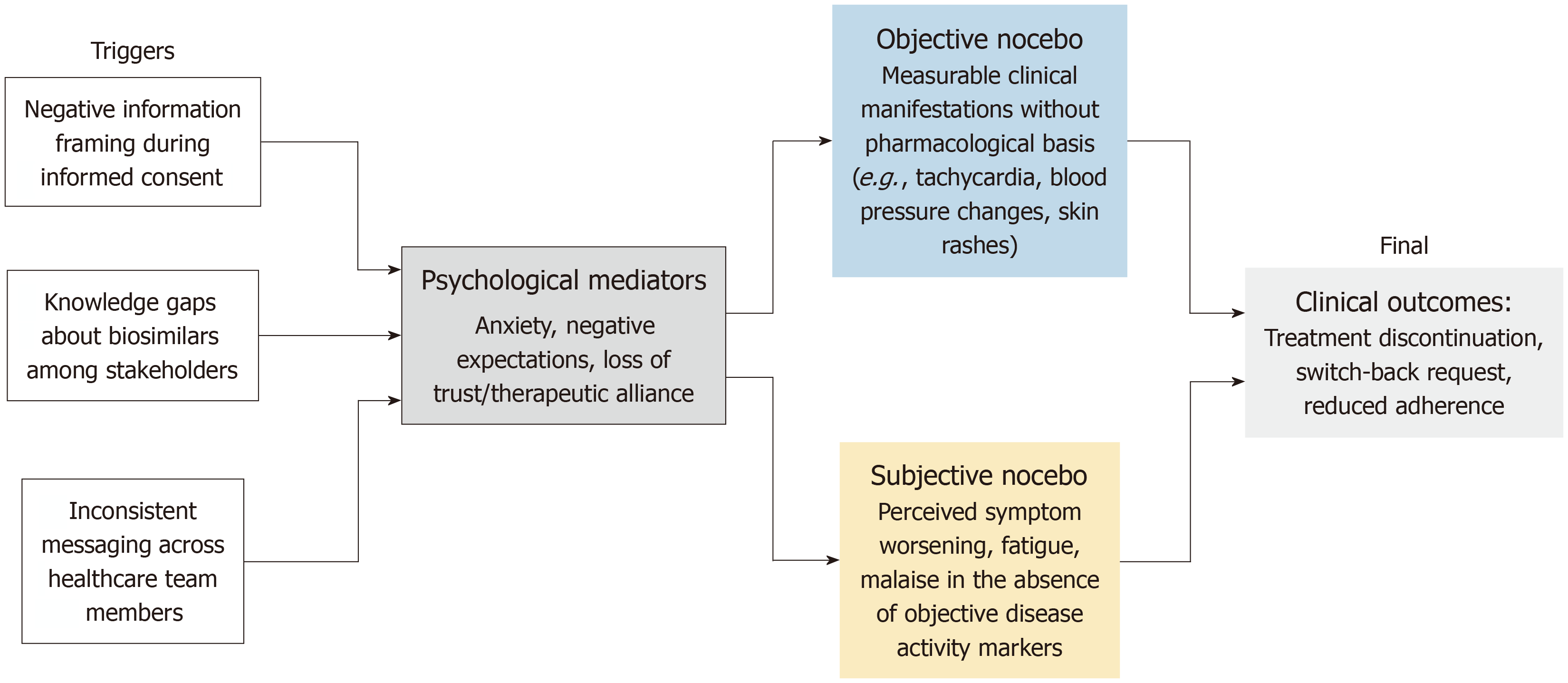
Figure 1 Conceptual model of the nocebo effect in biosimilar-treated inflammatory bowel disease.
This figure illustrates how negative information framing during informed consent, knowledge gaps among stakeholders, and inconsistent messaging across healthcare team members may trigger adverse psychological mediators, including anxiety, negative expectations, and loss of trust. These mediators may contribute to both objective nocebo manifestations, such as measurable adverse events without a clear pharmacological basis, and subjective nocebo manifestations, such as perceived symptom worsening in the absence of objective inflammatory activity, ultimately leading to treatment discontinuation, switch-back requests, or reduced adherence.
- Citation: Nguyen CD, Dang LM. Biosimilars in inflammatory bowel disease: Beyond evidence, toward trust and implementation. World J Gastroenterol 2026; 32(28): 119462
- URL: https://www.wjgnet.com/1007-9327/full/v32/i28/119462.htm
- DOI: https://dx.doi.org/10.3748/wjg.119462