
















Copyright: ©Author(s) 2026.
World J Gastroenterol. Jul 28, 2026; 32(28): 118939
Published online Jul 28, 2026. doi: 10.3748/wjg.118939
Published online Jul 28, 2026. doi: 10.3748/wjg.118939
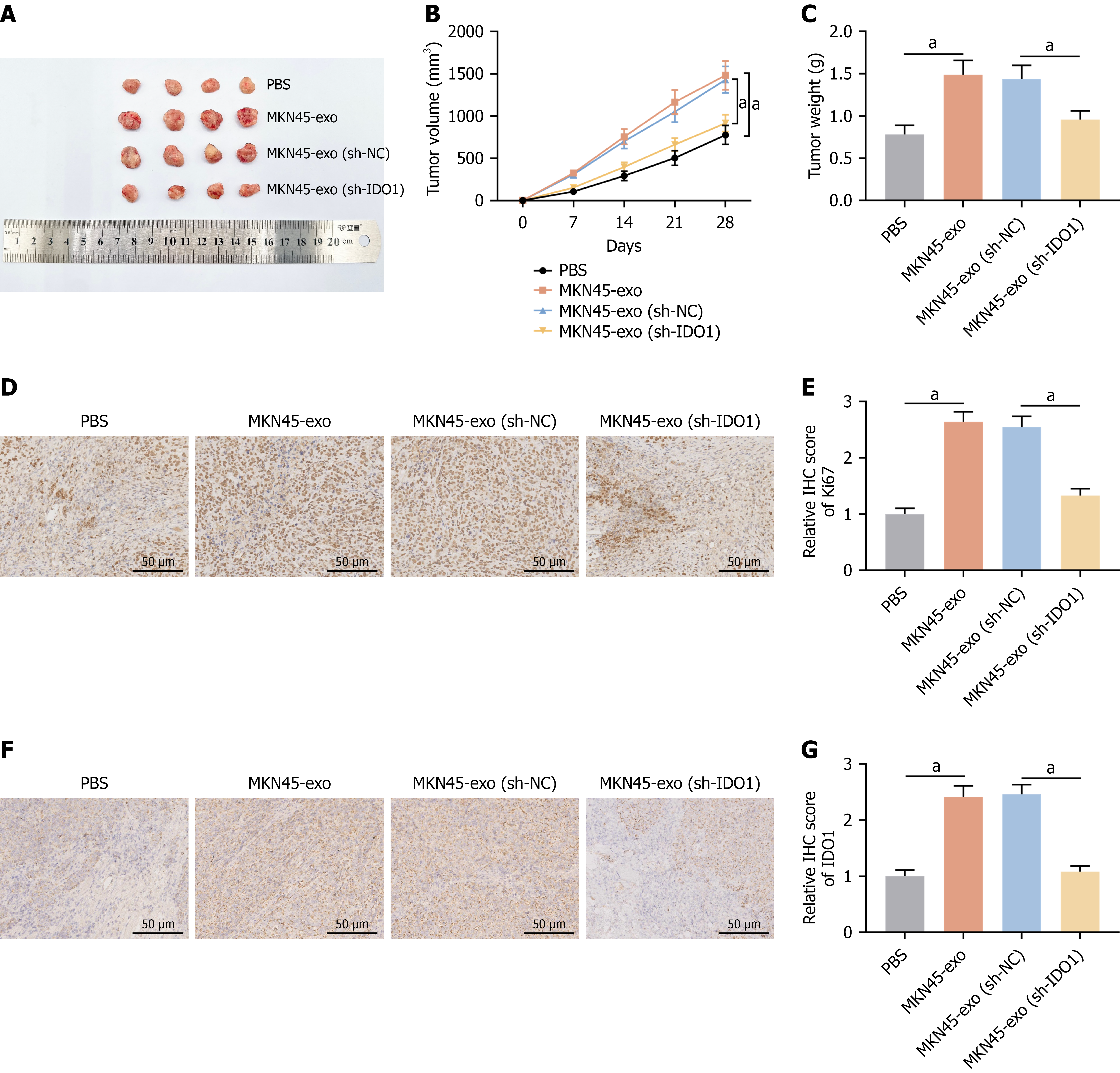
Figure 4 Gastric cancer-derived exosomal indoleamine 2,3 dioxygenase 1 promotes tumor growth in mice.
A subcutaneous tumor mouse model was established and treated with unmodified exosomes, indoleamine 2,3 dioxygenase 1-silenced exosomes, and negative control exosomes, respectively (n = 8 group). A: The excised tumors in four group were imaged; B: Tumor volumes were measured every 7 days; C: The weights of excised tumors were measured; D-G: Ki67 and indoleamine 2,3 dioxygenase 1 protein levels were examined using immunohistochemistry. Data were presented as mean ± SD. aP < 0.01. exo: Exosomal; IDO1: Indoleamine 2,3 dioxygenase 1; IHC: Immunohistochemistry; PBS: Phosphate buffered saline; sh-IDO1: Short hairpin RNA targeting indoleamine 2,3 dioxygenase 1; sh-NC: Short hairpin RNA targeting negative control.
- Citation: Liu YY, Ai JH, Zeng LM, Liu XN, Wu F. Gastric cancer-derived exosomal indoleamine 2,3 dioxygenase 1 drives immunosuppression in gastric cancer by suppressing dendritic cell maturation. World J Gastroenterol 2026; 32(28): 118939
- URL: https://www.wjgnet.com/1007-9327/full/v32/i28/118939.htm
- DOI: https://dx.doi.org/10.3748/wjg.118939