
















Copyright: ©Author(s) 2026.
World J Gastroenterol. Jul 28, 2026; 32(28): 118458
Published online Jul 28, 2026. doi: 10.3748/wjg.118458
Published online Jul 28, 2026. doi: 10.3748/wjg.118458
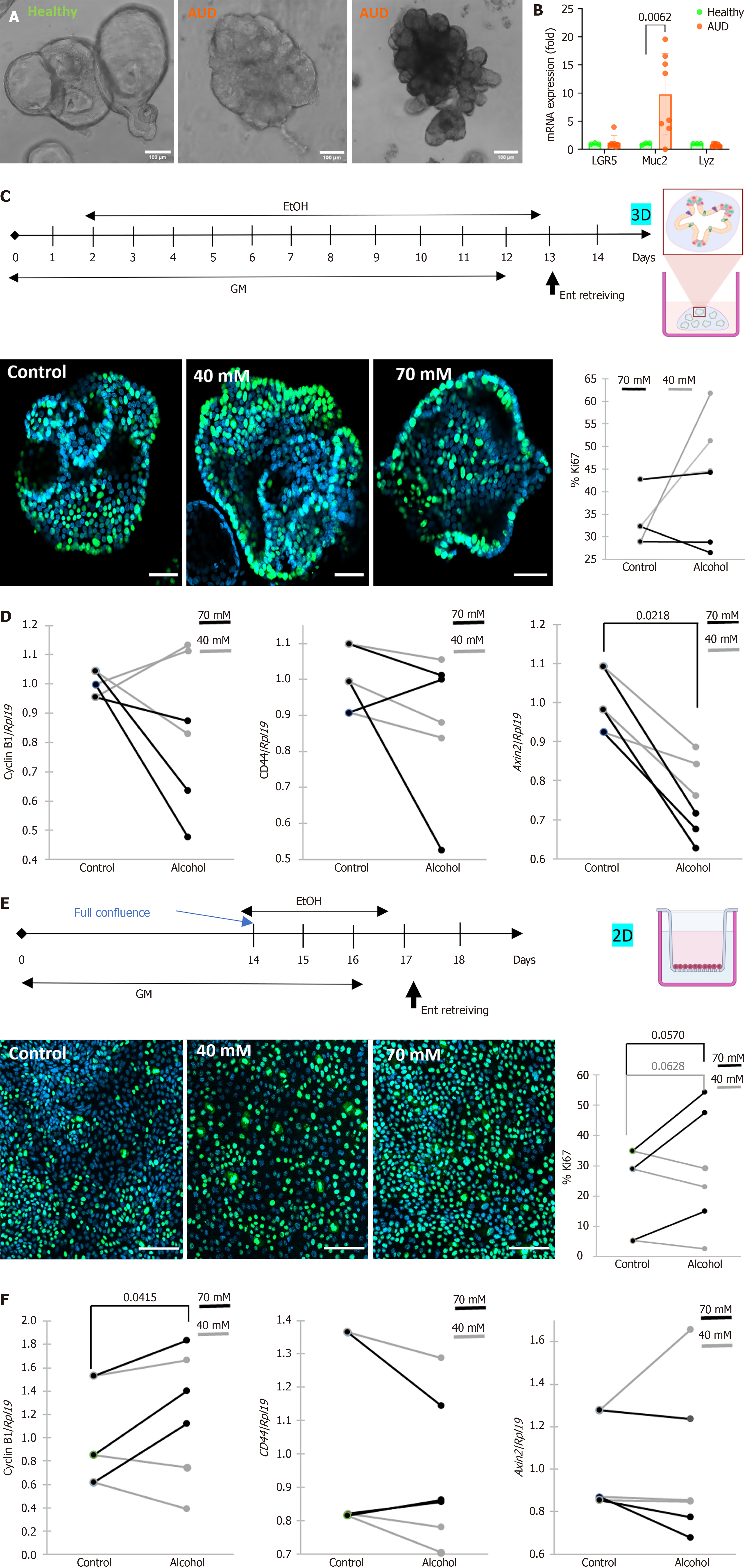
Figure 9 Generation and alcohol stimulation of intestinal enteroids from healthy subjects and alcohol use disorder patients.
A: Alcohol use disorder (AUD)-derived enteroids retained the morphological impairments observed in their host. A subset of AUD enteroids lacked budding structures, whereas another subset showed excessive budding. Images were acquired by optical microscopy at 10 × magnification; B: Gene expression analysis showing unchanged levels of LGR5 (stem cells) and lysozyme (Paneth cells) in AUD-derived enteroids, with a significant upregulation of MUC2, indicating increased goblet cell differentiation. Healthy (n = 3); AUD (n = 8); C: Experimental design of three-dimensional enteroids cultured in Matrigel and treated with 40 mmol/L or 70 mmol/L ethanol from day 2 after passage until full differentiation at day 13. Ethanol-containing medium was refreshed daily; D: Confocal microscopy of fixed and stained three-dimensional enteroids shows no significant differences in Ki67+ proliferating cells (green) across ethanol treatments (black: 70 mmol/L; gray: 40 mmol/L) as well as in the expression of cyclinB1 and Wnt target genes CD44 and Axin2; E: Experimental design of two-dimensional enteroids treated for three days after full monolayer confluence two-dimensional enteroids exposed to 70 mmol/L ethanol exhibited significantly increased proliferation; F: Further supported by upregulation of cyclin B1 mRNA. Expression of Wnt target genes (CD44, Axin2) was not changed upon ethanol exposure. Scale bar (50 μm). Healthy (n = 3). AUD: Alcohol use disorder; 3D: Three-dimensional; 2D: Two-dimensional.
- Citation: Toulehohoun AG, Ambroise J, Illiyas B, Maccioni L, Lupianez J, Manco R, Clerbaux LA, Bouzin C, Schnabl B, Stärkel P. Impairment of the intestinal epithelium barrier through alteration of proliferation and differentiation balance in alcohol use disorder. World J Gastroenterol 2026; 32(28): 118458
- URL: https://www.wjgnet.com/1007-9327/full/v32/i28/118458.htm
- DOI: https://dx.doi.org/10.3748/wjg.118458