
















Copyright: ©Author(s) 2026.
World J Gastroenterol. Jul 28, 2026; 32(28): 118458
Published online Jul 28, 2026. doi: 10.3748/wjg.118458
Published online Jul 28, 2026. doi: 10.3748/wjg.118458
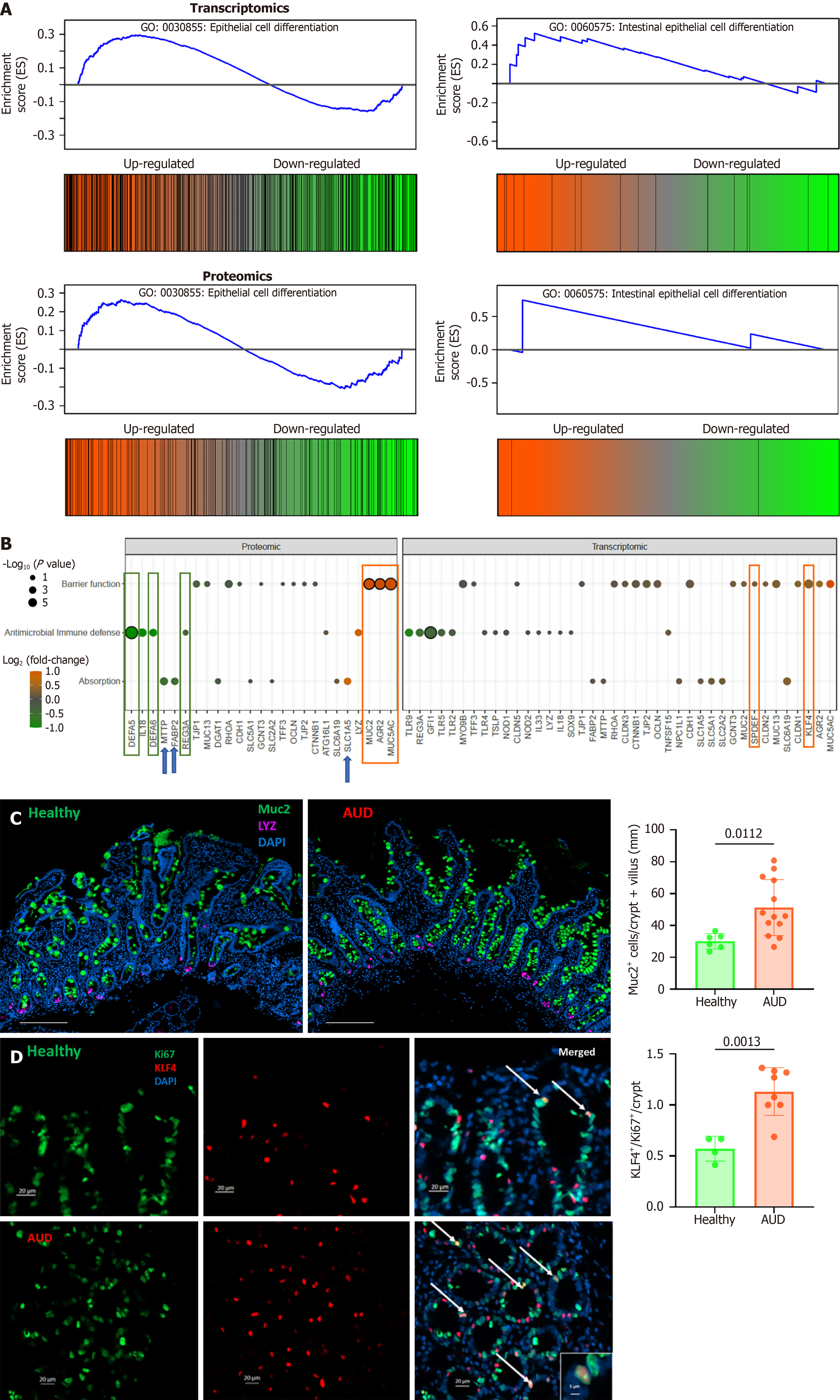
Figure 8 Transcriptomics and proteomics of factors associated with epithelium differentiation and function.
A: Gene Ontology enrichment analysis showing dysregulation of pathways related to epithelial differentiation and intestinal epithelial cell differentiation in alcohol use disorder (AUD) patients; B: Proteomic data show that AUD patients exhibited significantly increased levels of the mucins MUC2 and MUC5AC, as well as AGR2, which supports MUC2 biosynthesis (orange boxes). Proteins involved in antimicrobial immune defense and barrier protection were impaired, with decreased production of Paneth cell-derived defensins DEFA5, DEFA6, and REG3A (green boxes). Dysregulation of absorption was reflected by reduced MTTP and FABP2 protein levels and increased expression of the amino acid transporter SLC1A5 (blue arrows). Finally, transcriptomics also reveals upregulation of genes implicated in terminal differentiation of goblet cells, including SPDEF and Kruppel-like factor 4 (KLF4) (red boxes). Transcriptomics, healthy (n = 15); AUD (n = 43). Proteomics, healthy (n = 7); AUD (n = 15); C: Immunofluorescence staining showing MUC2+ goblet cells (green), lysozyme+ Paneth cells (purple), and DAPI (blue). Quantification of MUC2+ cells reveals an increased number of goblet cells in both crypts and villi of AUD patients. Healthy (n = 6); AUD (n = 13); D: Immunofluorescence staining and quantification of Ki67 (green) for proliferating cells and KLF4 (red), a transcription factor involved in terminal differentiation of goblet cells. DAPI marks nuclei (blue). A significant increased number of Ki67+/KLF4+ double positive cells per crypt in AUD indicating a preferential commitment of cells towards the secretory goblet cells lineage. Scale bar (200 μm). Healthy (n = 4); AUD (n = 8). AUD: Alcohol use disorder; KLF4: Kruppel-like factor 4.
- Citation: Toulehohoun AG, Ambroise J, Illiyas B, Maccioni L, Lupianez J, Manco R, Clerbaux LA, Bouzin C, Schnabl B, Stärkel P. Impairment of the intestinal epithelium barrier through alteration of proliferation and differentiation balance in alcohol use disorder. World J Gastroenterol 2026; 32(28): 118458
- URL: https://www.wjgnet.com/1007-9327/full/v32/i28/118458.htm
- DOI: https://dx.doi.org/10.3748/wjg.118458