
















Copyright: ©Author(s) 2026.
World J Gastroenterol. Jul 28, 2026; 32(28): 118458
Published online Jul 28, 2026. doi: 10.3748/wjg.118458
Published online Jul 28, 2026. doi: 10.3748/wjg.118458
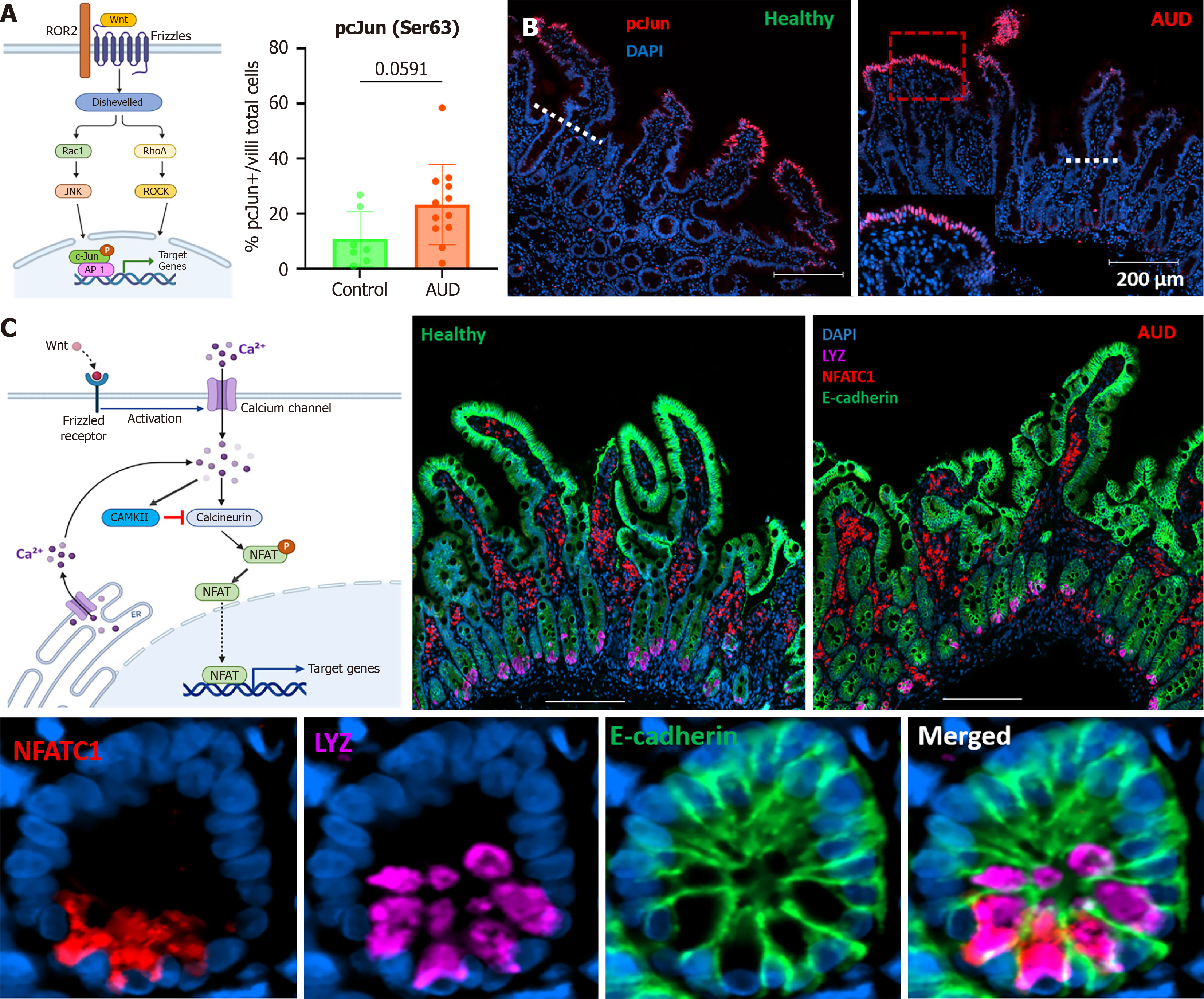
Figure 6 Wnt non-canonical pathways are not involved in hyperproliferation of the crypts in alcohol use disorder.
A: Schematic representation of the non-canonical Wnt/PCP pathway. Binding of Wnt ligands to frizzled receptors leads to downstream c-Jun phosphorylation and gene transactivation; B: Immunohistofluorescence showing phospho-c-Jun (Ser63) (red) localized at the villus tip. Quantification of pc-Jun (Ser63)+ cells normalized to total villus cells indicating increased phospho c-Jun expression in alcohol use disorder patients; C: Schematic of the Wnt/Ca2+ pathway, in which activation triggers NFAT dephosphorylation and nuclear translocation. Immunostaining of NFATC1+ (red) shows co-localization with Paneth cells (purple) stained by lysozyme within the epithelium marked by E-cadherin (green). Scale bar (200 μm). Healthy (n = 5); alcohol use disorder (n = 12). AUD: Alcohol use disorder; LYZ: Lysozyme.
- Citation: Toulehohoun AG, Ambroise J, Illiyas B, Maccioni L, Lupianez J, Manco R, Clerbaux LA, Bouzin C, Schnabl B, Stärkel P. Impairment of the intestinal epithelium barrier through alteration of proliferation and differentiation balance in alcohol use disorder. World J Gastroenterol 2026; 32(28): 118458
- URL: https://www.wjgnet.com/1007-9327/full/v32/i28/118458.htm
- DOI: https://dx.doi.org/10.3748/wjg.118458