
















Copyright: ©Author(s) 2026.
World J Gastroenterol. Jul 28, 2026; 32(28): 118458
Published online Jul 28, 2026. doi: 10.3748/wjg.118458
Published online Jul 28, 2026. doi: 10.3748/wjg.118458
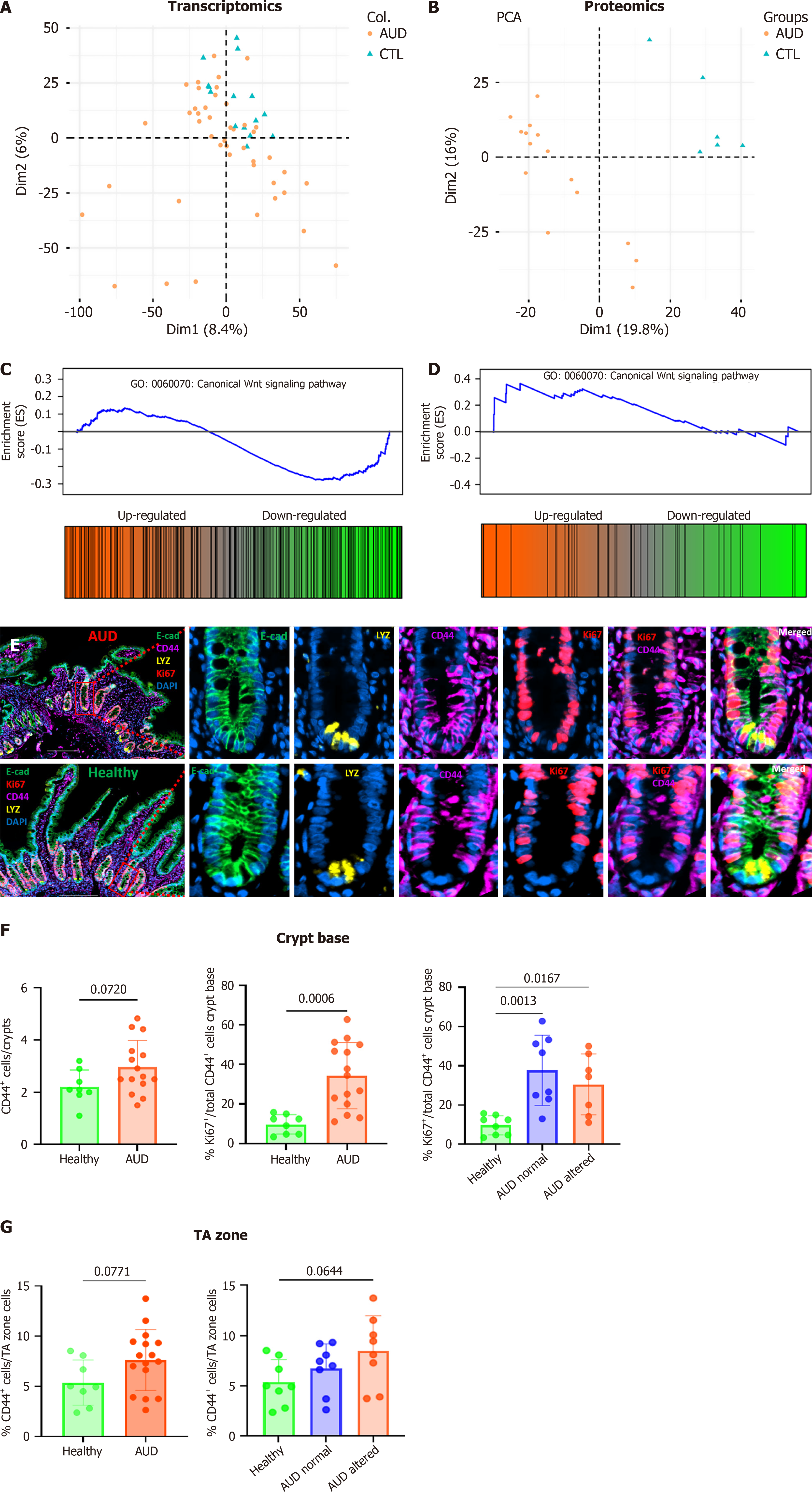
Figure 4 Dysregulation of the Wnt pathway in alcohol use disorder through CD44.
A-D: Principal component analysis of bulk transcriptomic and proteomic data. At transcriptional level, a subset of alcohol use disorder (AUD) patients clusters closely with healthy subjects (A), whereas proteomic data (B) reveal a clear separation between both groups. Gene ontology dysregulation of the canonical Wnt signaling pathway on the transcriptomic (C) and protein (D) level. Transcriptomics, controls/healthy (n = 15); AUD (n = 43). Proteomics, controls/healthy (n = 7); AUD (n = 15); E: Multiplex immunofluorescence staining of duodenal biopsies using E-cadherin (green) for epithelium, Ki67 (red) for proliferating cells, CD44 (purple) as a Wnt/β-catenin target gene, lysozyme (yellow) for Paneth cells, and DAPI (blue) for nuclei; F: Quantification of the number of CD44+ cells at the crypt base. Overall CD44 expression increased in AUD patients, with proliferating, CD44+/Ki67+ double-positive cells, being significantly elevated in both AUD subgroups; G: Quantification of CD44+ cells in the transit amplifying zone. Only a very low number of cells (less than 10%) stained positive for CD44 with numbers tending to be slightly higher in AUD patients with an altered morphology (AUD altered). Data are presented as mean ± SD. Scale bar (200 μm). Healthy (n = 8); AUD normal (n = 8); AUD altered (n = 7). AUD: Alcohol use disorder.
- Citation: Toulehohoun AG, Ambroise J, Illiyas B, Maccioni L, Lupianez J, Manco R, Clerbaux LA, Bouzin C, Schnabl B, Stärkel P. Impairment of the intestinal epithelium barrier through alteration of proliferation and differentiation balance in alcohol use disorder. World J Gastroenterol 2026; 32(28): 118458
- URL: https://www.wjgnet.com/1007-9327/full/v32/i28/118458.htm
- DOI: https://dx.doi.org/10.3748/wjg.118458