
















Copyright: ©Author(s) 2026.
World J Gastroenterol. Jul 28, 2026; 32(28): 118067
Published online Jul 28, 2026. doi: 10.3748/wjg.118067
Published online Jul 28, 2026. doi: 10.3748/wjg.118067
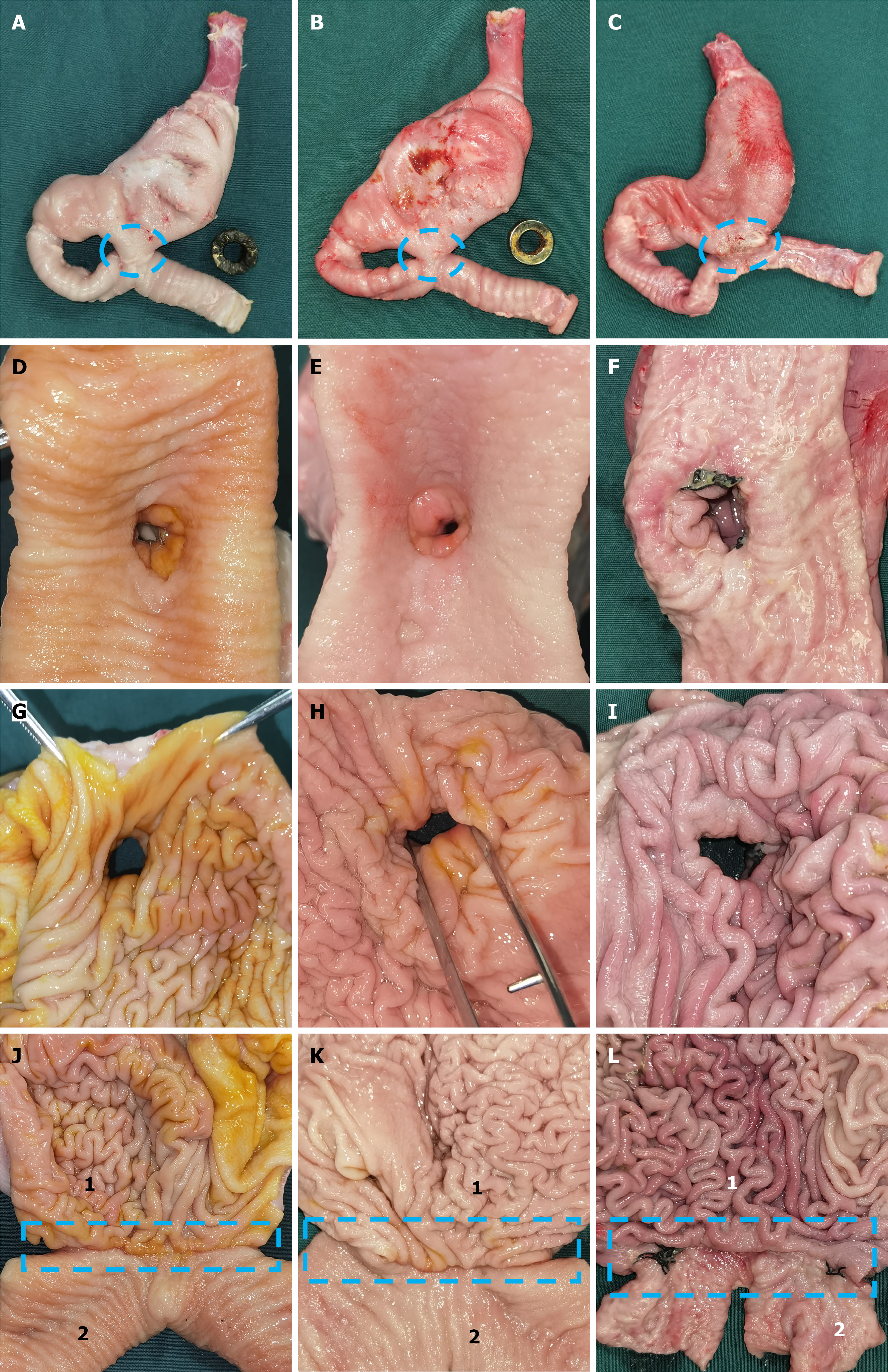
Figure 6 Gross evaluation of anastomosis specimens.
A-C: Images of the serosal surface of the anastomosis: Deformable self-assembling magnetic anastomosis ring (DSAMAR) group (A), conventional magnetic ring (CMR) group (B), and hand-sewn group (C); D-F: Observation of the anastomosis from the duodenal side: DSAMAR group (D), CMR group (E), and hand-sewn group (F); G-I: Observation of the anastomosis from the gastric side: DSAMAR group (G), CMR group (H), and hand-sewn group (I); J-L: Images of the mucosal surface of the anastomosis: DSAMAR group (J), CMR group (K), and hand-sewn group (L). 1 indicates the stomach, and 2 indicates the duodenum.
- Citation: Zhang MM, Xu SQ, Wu HX, Ren HL, Wan JH, Zhong QY, Chen MY, Zhang QF, Gong RM, Yusif-Zada K, Badarch BI, Shi AH, Lyu Y, Liu XM, Yan XP. Comparison of the anastomotic effects of combined-type and whole-type magnetic rings for gastrointestinal anastomosis in beagles. World J Gastroenterol 2026; 32(28): 118067
- URL: https://www.wjgnet.com/1007-9327/full/v32/i28/118067.htm
- DOI: https://dx.doi.org/10.3748/wjg.118067